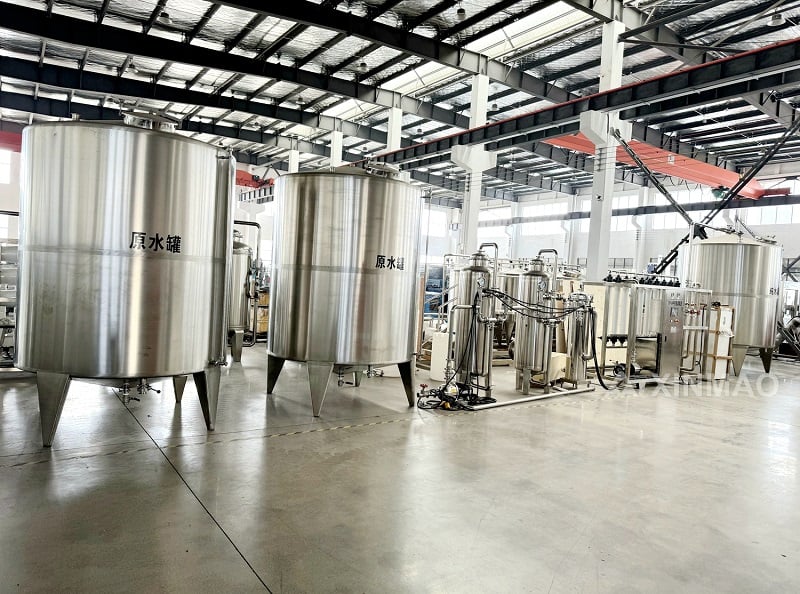
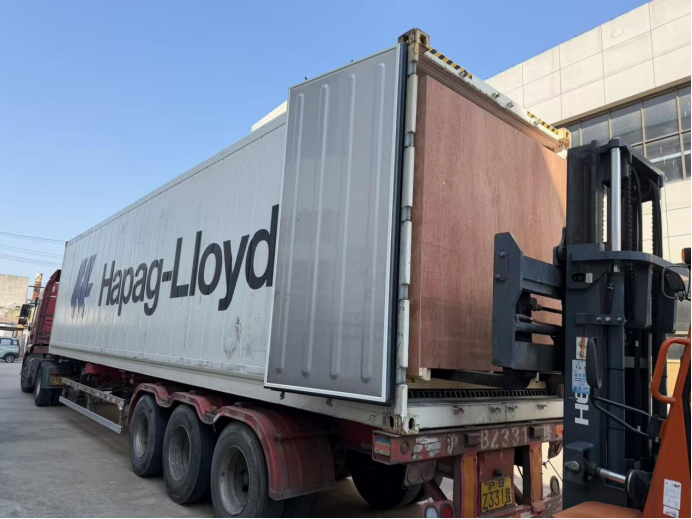
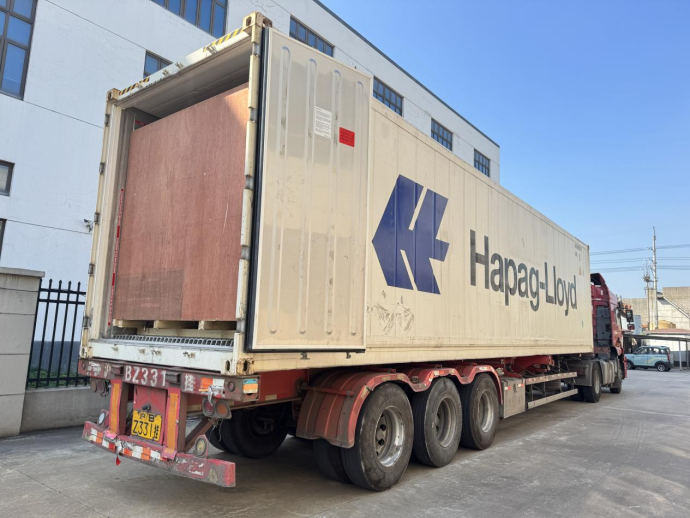
On July 31, 2026, in the sweltering summer heat of Zhangjiagang, a bustling scene unfolded in the modern workshop of Zhangjiagang Xinmao Beverage Machinery Co., Ltd. Today, a 10,000 BPH (bottles/hour) water bottling production line, meticulously manufactured by Xinmao for a Brazilian customer, was being loaded into a container, ready to cross the ocean and journey to the vibrant South American continent.
This production line, embodying the craftsmanship of Xinmao's employees and the trust of its Brazilian customer, is not merely a simple equipment export; it is a microcosm of the deep integration between Chinese manufacturing and the market demands of BRICS countries.

Stepping into the Xinmao workshop, the first thing that catches the eye is a high-hanging red banner – “Quality Guaranteed, On-Time Delivery,” alongside prominent safety warning signs. The floor is clean and tidy, and workers are working in perfect harmony, following the established hoisting plan. The roar of cranes, the clatter of forklifts, and the workers' commands blend together like an industrial symphony.
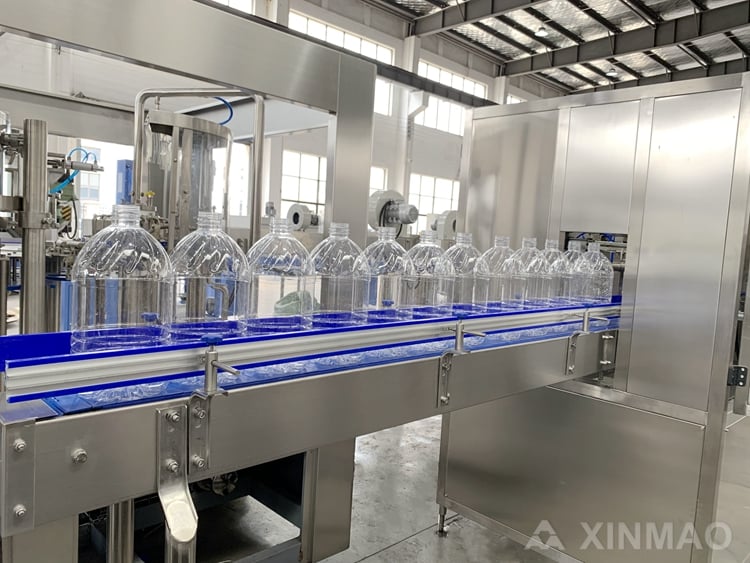
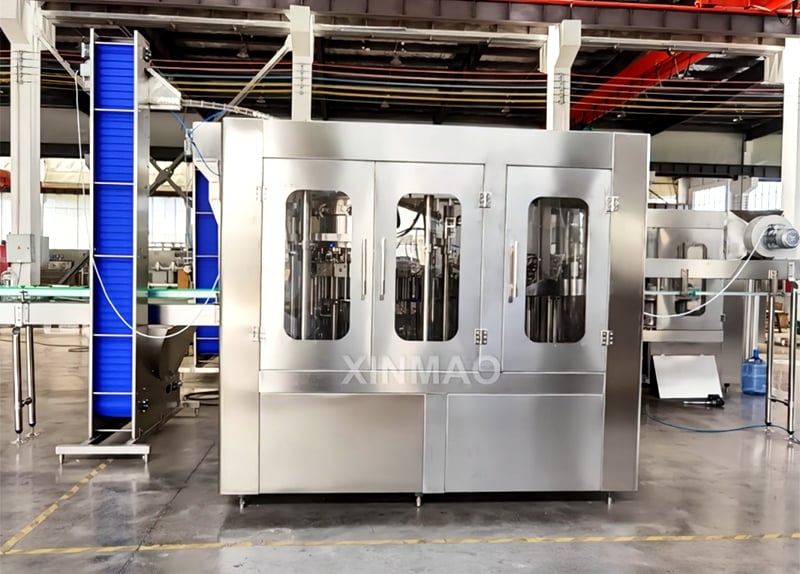
The most visually striking piece of equipment is the core piece of equipment – the CGF24-24-8 three-in-one filling machine. Its massive stainless steel body gleams with a cold metallic sheen, particularly dazzling under the workshop lights. Several experienced operators are carefully maneuvering the hoisting equipment, smoothly moving this multi-ton behemoth to the container opening. Due to the equipment's extremely high precision, even the slightest bump could affect future filling accuracy. The operators are focused, repeatedly calibrating with a level to ensure the equipment is perfectly level the moment it enters the container.
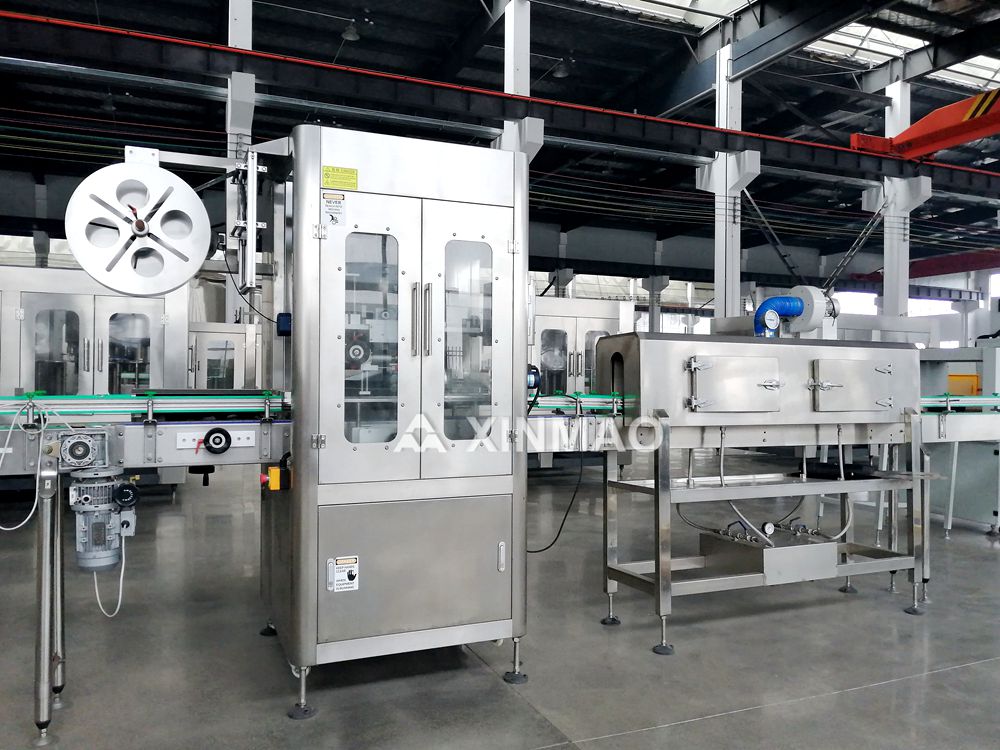
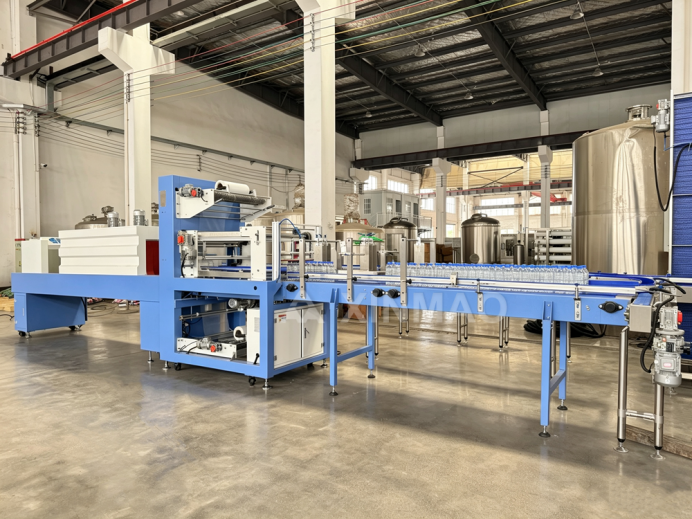
Not far away, the semi-automatic bottle unscrambler and wrapping machine have also completed their packaging. The semi-automatic bottle unscrambler, with its compact structure, is the "vanguard" of the entire production line; while the film wrapping machine is responsible for the final "makeover," wrapping each bottle of water into neat shrink-wrapped packaging. These devices are all wrapped with thick stretch film and equipped with shock-absorbing wooden pallets, sufficient to withstand the turbulence of long-distance sea transport.
The brilliance of this production line lies in its golden combination:
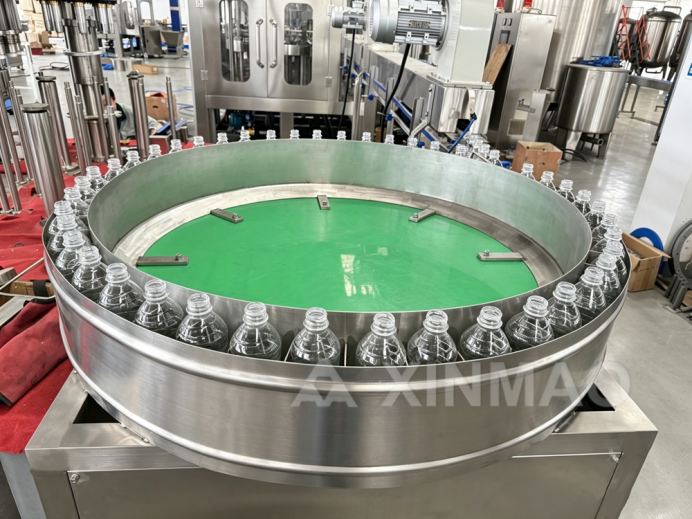
First Station: Semi-Automatic Bottle Scrapper – The Order Maker The haphazardly arranged empty PET bottles are neatly arranged and fed into the conveyor duct by the bottle scraper. Although named "semi-automatic," it plays a crucial "traffic commander" role in this stage, providing a stable and continuous source of bottles for subsequent high-speed operation, greatly reducing the waste of manual handling.
Second Station: CGF24-24-8 Three-in-One Filling Machine – The Heart and Soul
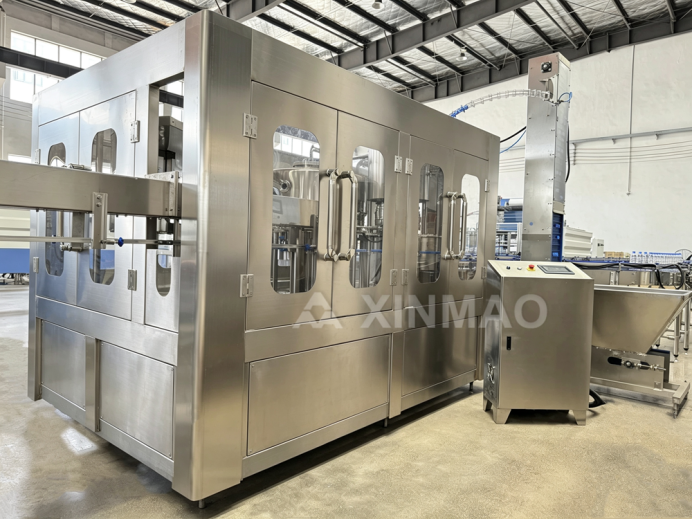
This is the core technological component of the entire production line. The "24-24-8" in the model name represents the number of rinsing heads, filling heads, and capping heads, respectively.
Bottle rinsing system (24 heads): Employs advanced bottle neck clamping rinsing technology, clamping the bottle neck rather than the bottle body for transport. This not only ensures smoother bottle movement but also prevents secondary contamination of the bottle neck, resulting in extremely high rinsing efficiency.
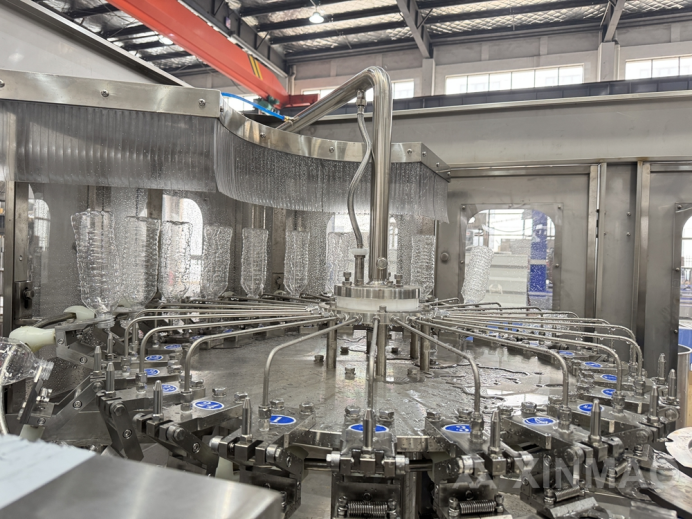
Filling system (24 heads): Utilizes atmospheric pressure filling technology (an optimization of Italian technology). A precise liquid level control valve ensures consistent liquid level in each bottle, with filling accuracy controlled within ±5mm, effectively preventing material waste. All parts in contact with the liquid are made of stainless steel, ensuring hygiene and eliminating blind spots.
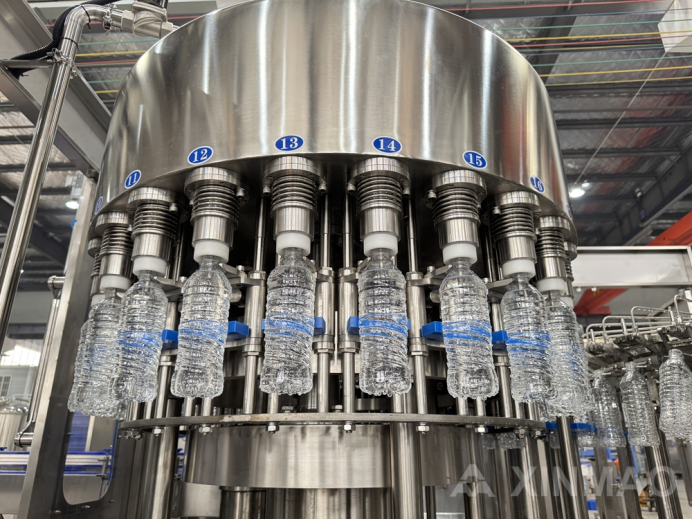
Capping system (8 heads): Employs magnetic constant torque capping technology. This is a flexible capping method—when the capping torque reaches the set value, the magnetic coupler automatically slips, ensuring a tight, secure seal while preventing damage to the cap or bottle neck due to excessive torque, significantly reducing the risk of downtime caused by cap damage.
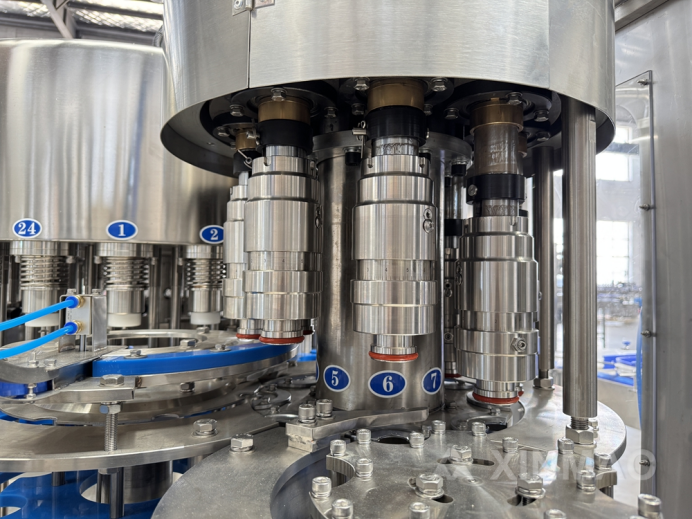
This unit integrates rinsing, filling, and capping. From bottle inlet to outlet, it only requires a rotating star wheel for transfer, reducing intermediate conveying links and bottle tipping rates. It not only occupies less space but also minimizes the coordination risks between the three individual machines.
Third stop: Film wrapping machine – the visual packaging master. The finished bottled water, after filling and capping, enters the film wrapping machine via a conveyor chain. It uses heat-shrink film to wrap a certain number of bottles into compact packaging units. This packaging method is not only dustproof and moisture-proof but also facilitates stacking and transportation, making it popular in supermarket retail channels.
As the last container door closed, cheers erupted in the workshop. This batch of equipment would arrive in South America after approximately 45 days at sea. This was not merely a logistical undertaking, but also a fulfillment of Xinmao Machinery's commitment to "Quality First, Customer Supreme."
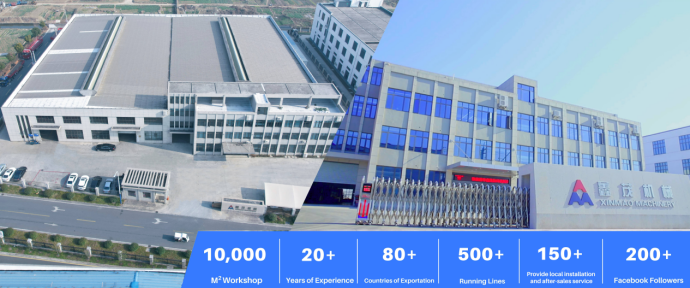
Since its establishment in 2005, Xinmao Machinery's products have been exported to dozens of countries and regions, including Japan, Russia, Southeast Asia, and South America. This 10,000 BPH water production line not only provides Brazil with an efficient and stable drinking water production solution, but also once again demonstrates the competitiveness and brand influence of Chinese beverage machinery equipment in countries along the Belt and Road Initiative and emerging markets.
 Hot News
2026-08-04
2026-07-28
2026-07-31
 EN
EN