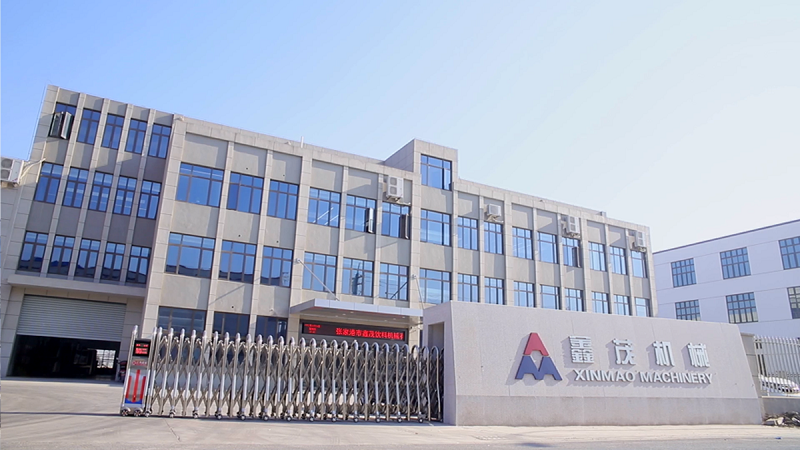
On July 28, 2026, Zhangjiagang was ablaze with summer heat. Today, Zhangjiagang Xinmao Beverage Machinery Co., Ltd. welcomed a group of distinguished guests from afar—a customer delegation from Uzbekistan. Their purpose was clear: to conduct an in-depth inspection of an edible oil bottling production line soon to be exported to Central Asia.
Inside the standard workshop covering more than 10,000 square meters, the machines hummed yet remained orderly, the air filled with the distinctive industrial scent of metal and lubricating oil. The customers lingered beside a brand-new rotary edible oil bottling production line, their eyes filled with a thirst for technological exploration. As the hosts, our task was not only to showcase the equipment but also to explain in simple terms the working principles behind this behemoth, especially its core—the intricate logic of the rotary bottling system.
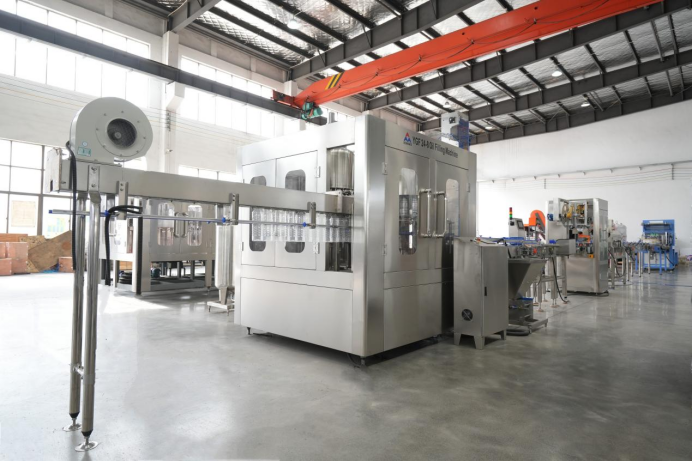
Uzbekistan, a major agricultural producer in Central Asia, has seen a growing demand for edible oil refining and packaging in recent years. Traditional filling lines, characterized by low efficiency and poor precision, can no longer meet the needs of its expanding market. Our rotary filling line from Xinmao offers the core advantage of "continuous, uninterrupted, and highly efficient operation."
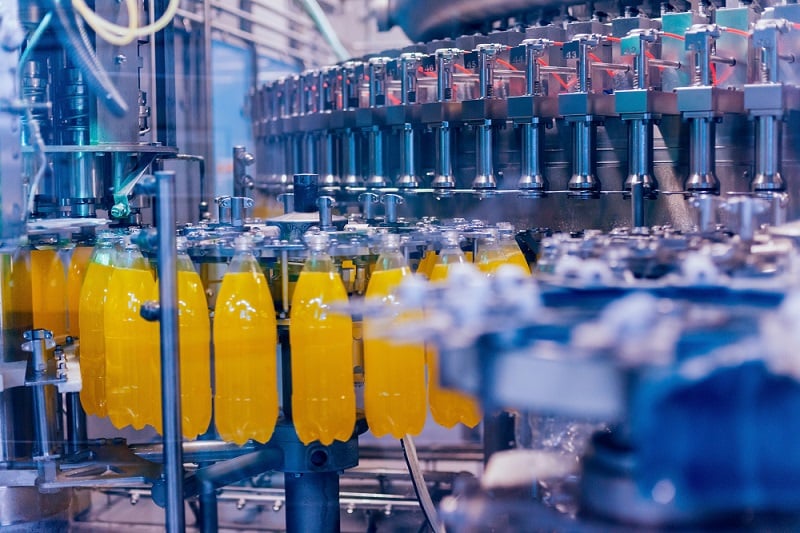
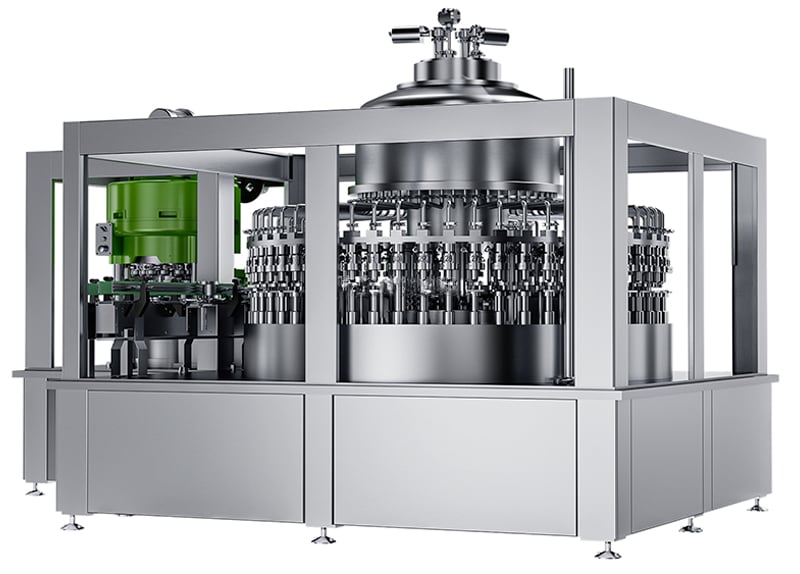
Unlike the intermittent "stop-fill-go" operation of linear filling machines, the rotary filling line's main unit is a large circular turntable. The entire filling process is completed while the turntable rotates continuously, significantly shortening the production cycle. Capacity typically reaches 4,000 to 8,000 bottles per hour or even higher. For our clients' planned large-scale grain and oil mills, this is undoubtedly a powerful tool for cost reduction and efficiency improvement.
Act One: Orderly "Customer Reception" and Positioning (Bottle Feeding and Delivery) Empty bottles, guided by a conveyor belt and air conveyor, are methodically fed into the bottle feeding star wheel of the rotating platform under the guidance of a turntable and screw. The star wheel, like a precise traffic officer, uses arc-shaped notches to evenly separate the initially closely packed bottles, precisely "handing over" each bottle to the bottle holder on the rotating disc. At this point, the evenly distributed notches on the rotating disc tightly hold the bottle neck, ensuring that the bottle remains stable even at high speed, precisely positioned below the filling valve.
Act Two: The "Invisible Hand" of the Core Stage (Rotary Filling Mechanism)
This is the part that customers are most interested in. As the bottles rotate with the turntable into the filling area, the real technological showcase begins.
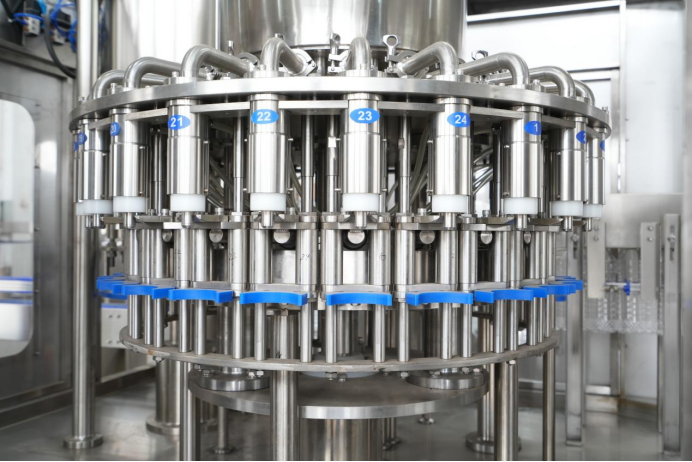
We employ a rotary vacuum filling principle. Utilizing negative pressure balance, high-speed precision filling is achieved. Within a sealed filling chamber, a vacuum pump extracts air to create negative pressure. This negative pressure environment not only allows the oil to flow more smoothly into the bottle, but more importantly, it creates a pressure equilibrium point. After the bottle opening is sealed to the filling head, the system first evacuates the bottle and then opens the oil valve. When the oil level in the bottle rises to a certain height, blocking a dedicated return air pipe for controlling the liquid level, the air above the bottle is no longer extracted, and the pressure rises. When the pressure inside the bottle reaches equilibrium with the pressure inside the oil tank, the oil automatically stops flowing in, thus achieving precise quantitative filling. After filling, the system releases the vacuum and returns to normal pressure, ready for the next cycle. This method enables high-speed, foam-free, and high-precision filling, making it ideal for liquids with a certain viscosity, such as edible oil.
As the rotating disc rotates, a unique lifting mechanism lifts the bottom of the bottle, raising the bottle opening and pressing it tightly against the sealing port of the filling valve, creating a sealed environment to prevent oil vapor evaporation or leakage. At this point, time control and piston stroke control work in tandem: based on the preset filling volume (e.g., 1L, 5L), the system injects a measured amount of edible oil into the bottle through the filling valve by controlling the piston's stroke or the timing of the measuring cup valve's opening.
Regarding the accuracy issue that customers are concerned about, I focused on introducing anti-drip and compensation technology. Edible oil has high viscosity and is prone to dripping and sticking to the bottle walls. Our filling valve is designed with a vacuum back-suction device. At the moment filling is completed and the bottle descends, a slight negative pressure is generated at the valve opening, "suctioning" the last drop of oil remaining at the valve opening back into the pipeline, ensuring filling accuracy (error can be controlled within ±0.5%) while preventing oil contamination of the bottle. This precise mechanical action of "accurate metering and smooth operation" is completed seamlessly during continuous rotation, earning repeated nods of approval from customers.
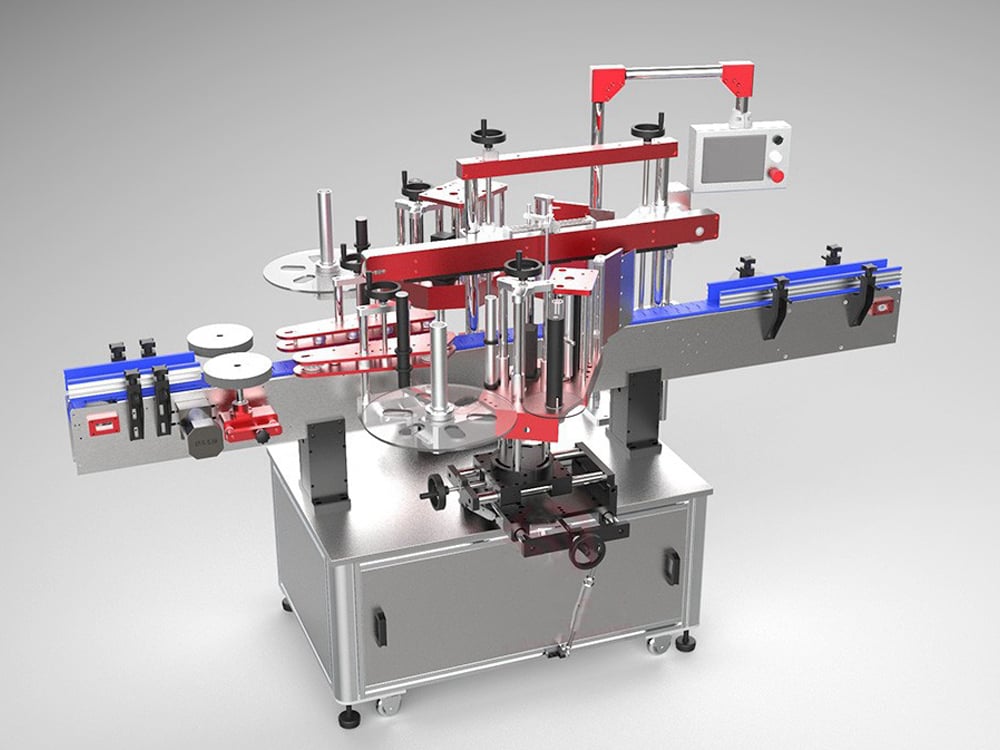
Act Three: Sealing and Bottle Dispensing (Capping and Output) After filling, the bottle continues to rotate with the turntable to the capping area. The cap is automatically placed on the bottle mouth by the cap feeder and cap guide rail. Driven by a cam mechanism or servo motor, the capping head rotates synchronously with the movement of the bottle, tightening the cap. Thanks to photoelectric detection technology that prevents filling and capping without a bottle, even the slightest error can be avoided in advance. Finally, the finished bottles are pushed onto the conveyor belt by the bottle ejector wheel and enter the labeling and boxing process.
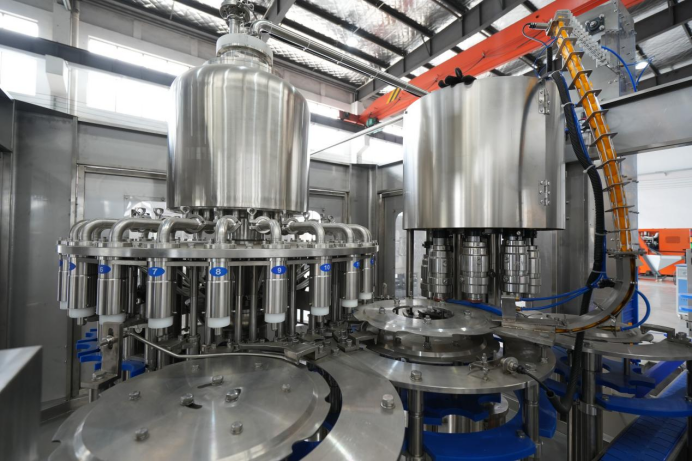
The customers lingered in the workshop, witnessing not only the machines in operation but also the rich manufacturing heritage of Zhangjiagang. We have over 20 years of experience in beverage machinery production and have transferred this technological expertise to the edible oil bottling industry.
Business Manager Mia explained to her friends from Uzbekistan: This production line is extremely compatible. With simple adjustment devices, customers can adapt to PET bottles and glass bottles ranging from 500ml to 2000ml or even larger without replacing complex parts. Furthermore, all parts of the machine that come into contact with materials are made of high-quality 304 stainless steel, fully complying with food hygiene and safety standards
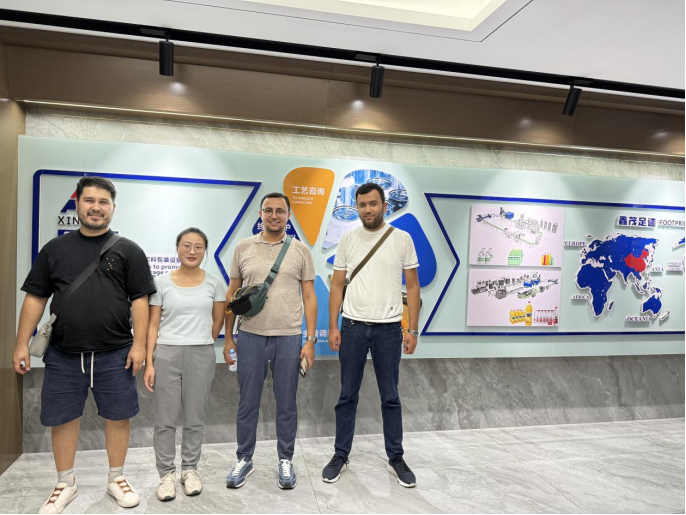
After the exchange, the Uzbek clients took a group photo with us, expressing their high praise for the "precision, efficiency, and cleanliness" of the rotary filling line. This production line, soon to be shipped to Central Asia, embodies not only Xinmao's manufacturing technology but also represents China's contribution to the industrial upgrading of countries along the Belt and Road Initiative through intelligent equipment. From Zhangjiagang to Uzbekistan, what rotates is the machine's turntable, what flows is the confidence in cooperation.
 Hot News
2026-08-04
2026-07-28
2026-07-31
 EN
EN