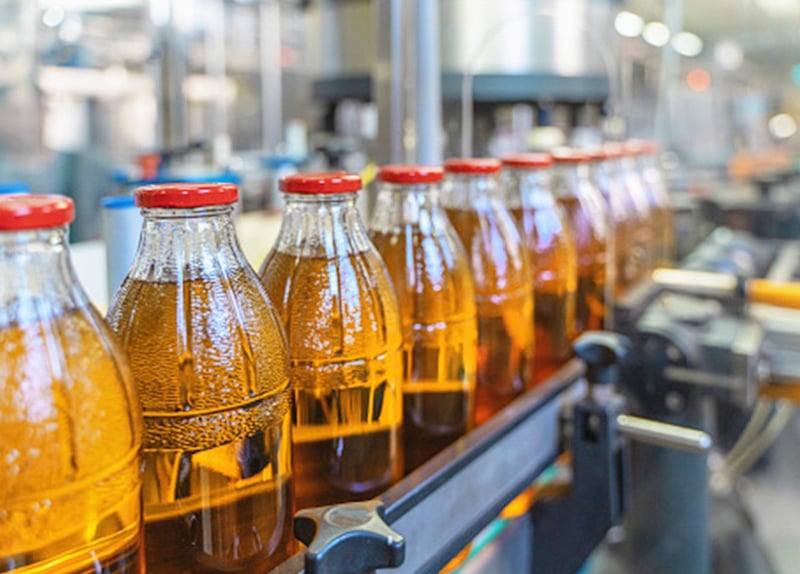
Carbonated beverages hold a significant position in the global beverage market due to their unique refreshing taste and rich effervescent experience. From cola and Sprite to soda water and sparkling water, the production of these beverages places special demands on equipment and technology—low-temperature control, efficient carbon dioxide dissolution, and isobaric filling are all indispensable.
This article will analyze the entire equipment from sugar dissolving to film packaging, following the production line process of Zhangjiagang Xinmao Beverage Machinery Co., Ltd.'s Mauritanian customer case, and gain an in-depth understanding of the technical logic behind the carbonated beverage production line.
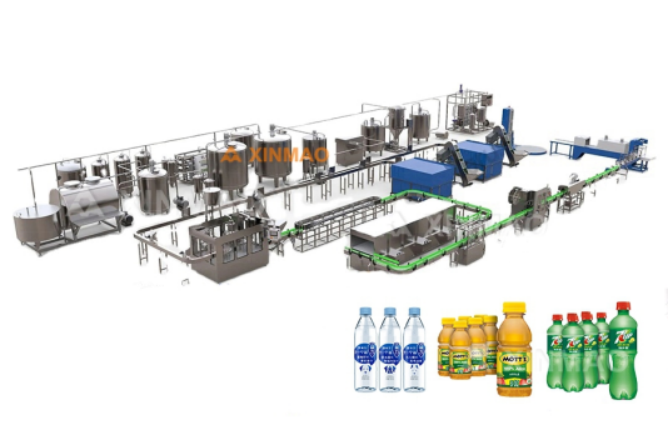
一.Syrup Preparation Section: The Starting Point of Flavor
1.High-shear sugar pot
The working principle of a high-shear sugar dissolving tank can be viewed from two perspectives: "how to heat" and "how to shear."
1.1 Efficient Three-Layer Insulation Structure (How to Heat)
To quickly dissolve sugar, the tank itself acts as a sophisticated heat exchanger. A common structure is a three-layer design:
Innermost Layer: The material layer in direct contact with sugar and water, typically made of food-grade stainless steel.
Middle Layer: The heating jacket, through which steam or heat transfer oil is introduced to heat the material.
Outermost Layer: The insulation layer, filled with insulating material to reduce heat loss, save energy, and improve efficiency.
There are generally two heating methods:
Steam Heating: Steam is generated by a boiler and introduced into the jacket for heating. This method provides rapid heating and convenient temperature control, making it the preferred choice for large-scale production lines.
Electric Heating: Electric heating elements are installed within the jacket, indirectly heating the material by heating the heat transfer oil. This method is more flexible and suitable for factories without steam boilers or with smaller production volumes.
1.2 Core Component: High-Shear Head (How it "Shears")
This is the key difference between it and ordinary sugar pots. The core of the high-shear head is a set of precision rotors and stators.
Work Process: The motor drives the rotor to rotate at extremely high speeds (up to 2800 rpm or more) within the stator. This generates a powerful suction force, drawing the sugar-water mixture from the bottom or center of the pot into the working chamber.
Shearing and Dispersion: As the material passes through the extremely small gap between the rotor and stator, it is subjected to multiple forces, including high-speed shearing, intense compression, liquid friction, impact tearing, and turbulence. These forces instantly pulverize and disperse the sugar crystals in the hot water, forming a uniform and stable syrup. This process is also often referred to as "emulsification" or "homogenization."
Key role in carbonated beverage production
This equipment plays a crucial "first line of defense" role in the entire bottling line: It rapidly and thoroughly dissolves sugar, preventing crystallization: Ordinary stirring may leave sugar crystals behind, which can recrystallize during cooling (crystallization), affecting taste and filling. The high-shear sugar dissolving pot ensures complete sugar dissolution through powerful action, resulting in a more stable syrup.
It improves raw material utilization and taste: The more thoroughly and finely the sugar is dissolved, the smoother and sweeter the final beverage will taste. Some sources indicate that syrup melted using a high-shear head has a better taste.
It facilitates subsequent sterilization processes: Sugar dissolution typically requires heating to above 80°C, which itself is a preliminary sterilization process, killing any heat-resistant microorganisms that may be present in the sugar, reducing the burden on subsequent processes.
It creates conditions for precise ingredient mixing: High-speed shearing can quickly prepare syrups with precise concentrations (e.g., a typical syrup Brix can reach 60 degrees), facilitating precise mixing with treated water, flavorings, acidulants, etc., in the subsequent steps.
Collaborative Workflow with Other Equipment
In the entire batching system, the high-shear sugar dissolving tank does not operate in isolation; it is typically the starting point of the process, working in conjunction with other equipment to prepare the syrup.
Sugar Dissolving: Granulated sugar and hot water at approximately 80-85°C are added to the high-shear sugar dissolving tank in a ratio (e.g., 6:4) for high-speed shear dissolution for approximately 20-30 minutes to obtain crude syrup.
Reaction/Sterilization: The crude syrup is pumped into a reaction tank and kept at approximately 85°C for a period of time (e.g., 30 minutes) for thorough pasteurization.
Filtration: The sterilized syrup is passed through a filter (e.g., a dual-stage filter) to remove any activated carbon, trace impurities, or undissolved particles, resulting in clear refined syrup.
Temporary Storage/Cooling: The refined syrup is temporarily stored in a storage tank and begins cooling, awaiting final mixing with other ingredients in a blending tank.
After this step, the prepared syrup is degassed and cooled (to near 0°C) before being mixed with carbon dioxide under high pressure to form a carbonated beverage, which is then sent to the filling machine for bottling.
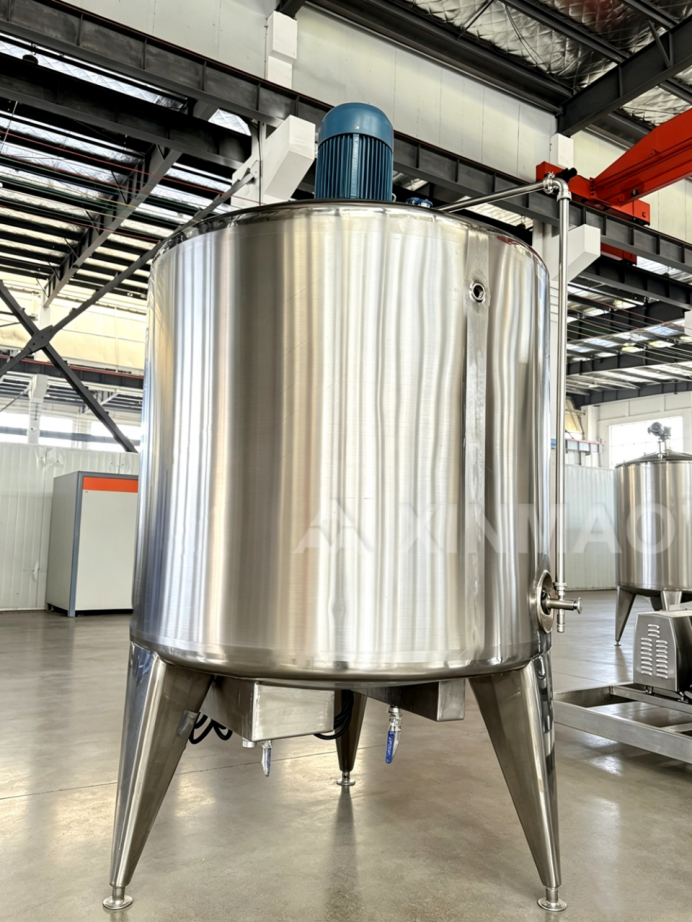
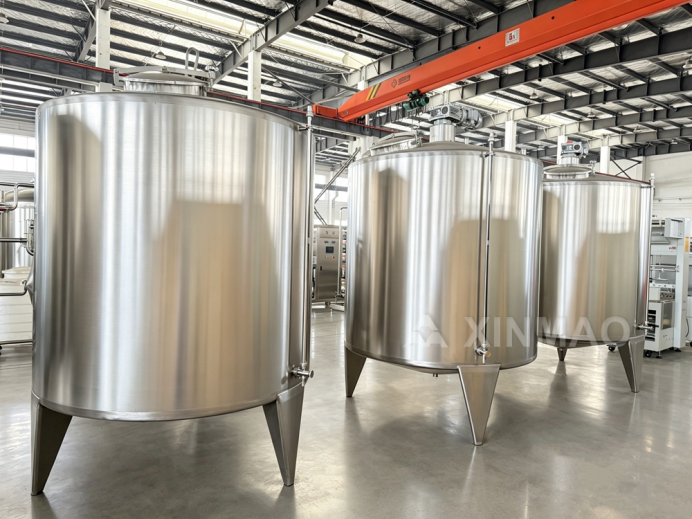
2. Mixing/Storage Tank
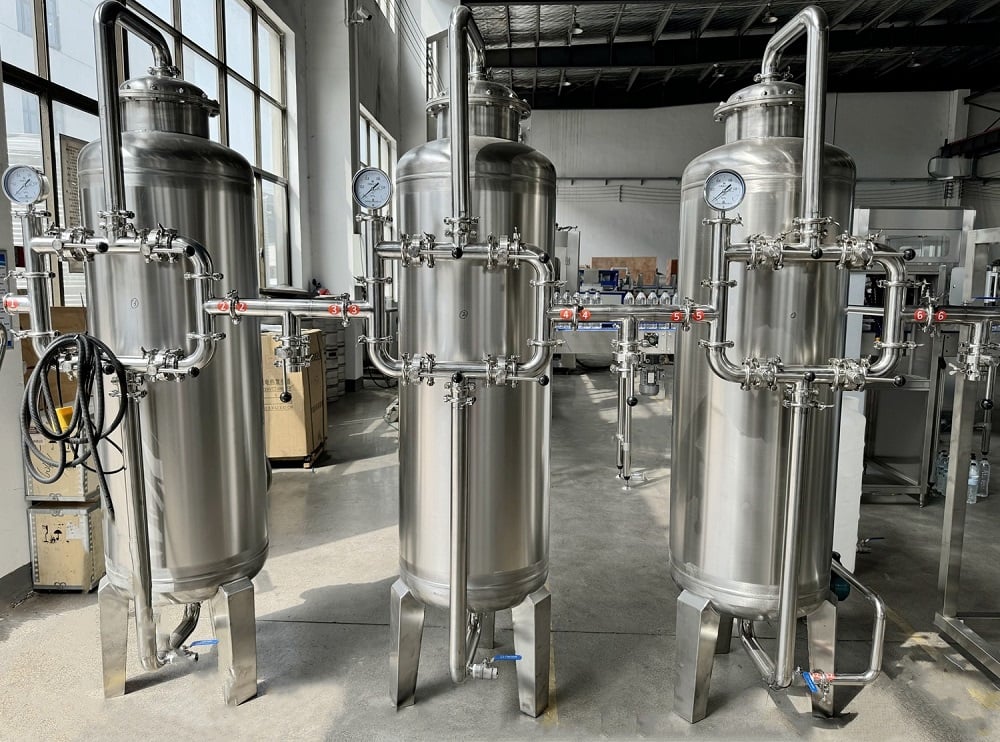
Function: As a mixing tank, it is used to final mix the base syrup, treated water, and various food additives according to the formula ratio to produce a standardized concentration of "blended syrup." As a storage tank, it is used to store the prepared syrup for the next process.
Working Principle: The tank is equipped with a stirrer, which uses rotating blades to tumble and thoroughly mix the materials. The 3-ton capacity determines the batch size for single mixing.
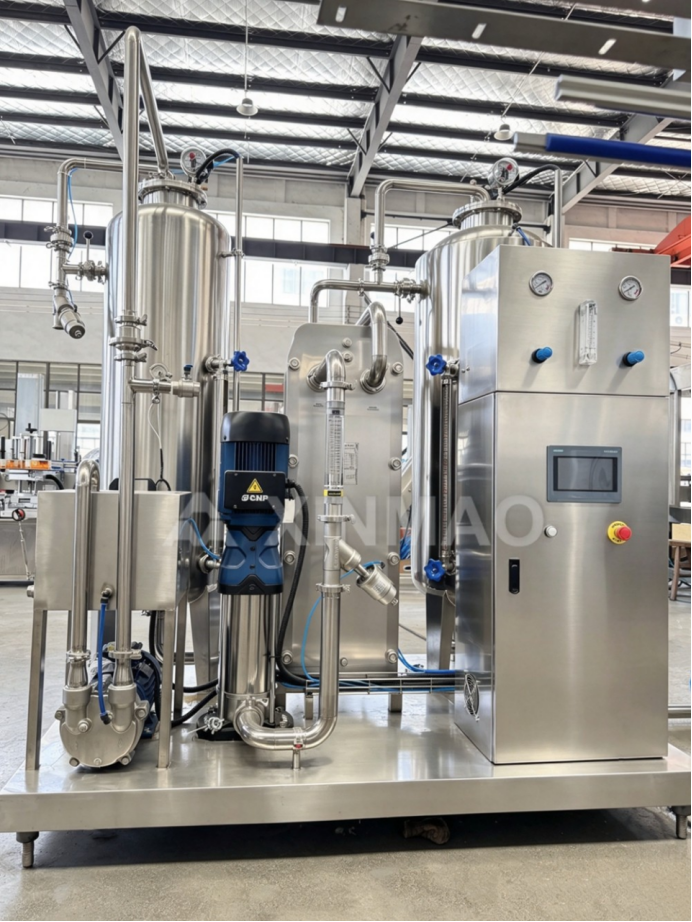
二.Mixing and Carbonation Section: The Soul of Gas
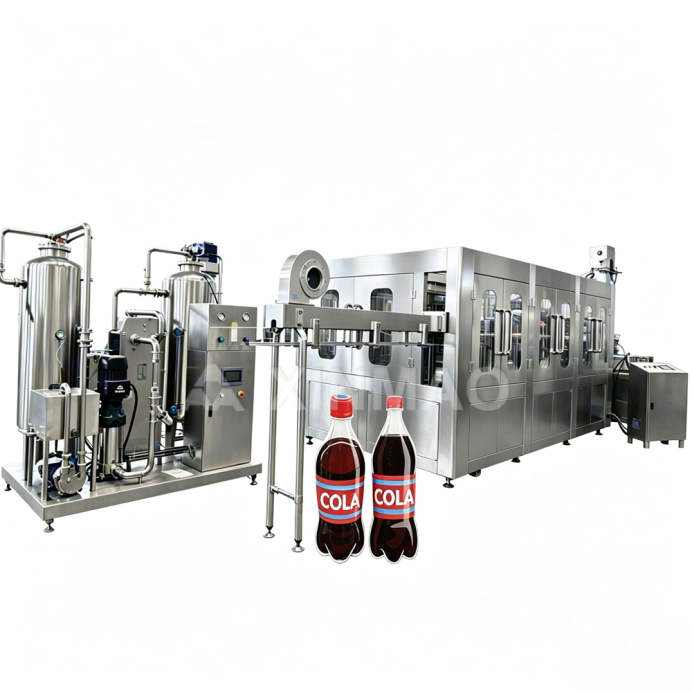
3. Mixer
Function: One of the core pieces of equipment in the production line, performing two key tasks—precisely mixing syrup and water in a specific ratio, and dissolving CO₂ gas into the beverage to create a carbonated drink.
Working Principle: "2 tanks" refers to the two main internal tanks:
Vacuum Deaeration Tank: The mixture first enters this tank, where a vacuum pump removes oxygen—oxygen hinders CO₂ dissolution and affects flavor.
Carbonation Tank (Mixing Tank): The deaerated liquid is pumped in by a high-pressure pump, maintaining a pressure of approximately 0.7-0.8 MPa. An atomizing device at the top sprays the liquid into an extremely fine mist, greatly increasing the contact area with CO₂ and achieving efficient dissolution. The 3-ton capacity means it processes approximately 3 tons of mixture per hour.
Carbonation content directly affects taste: A single-tank mixer can achieve 2.5 times the national standard carbonation content, a three-tank mixer can achieve 3.0 times, and a high-concentration mixer can achieve 3.8 times.
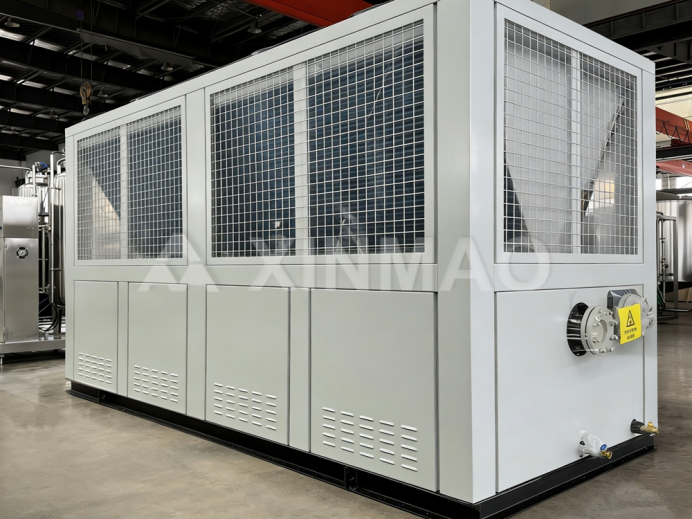
4. Chiller
Function: Provides a continuous and large volume of low-temperature cooling water (typically 0-4℃) for the mixer. Low temperature is essential for efficient CO₂ dissolution.
Working Principle: The refrigerant is cooled through a refrigeration cycle consisting of a compressor, condenser, evaporator, and expansion valve. The cooled chilled water then exchanges heat with the beverage materials through a plate heat exchanger. 60P refers to the compressor power; a higher number indicates stronger cooling capacity.
三.Filling and Capping Section: Ensuring Accuracy and Hygiene
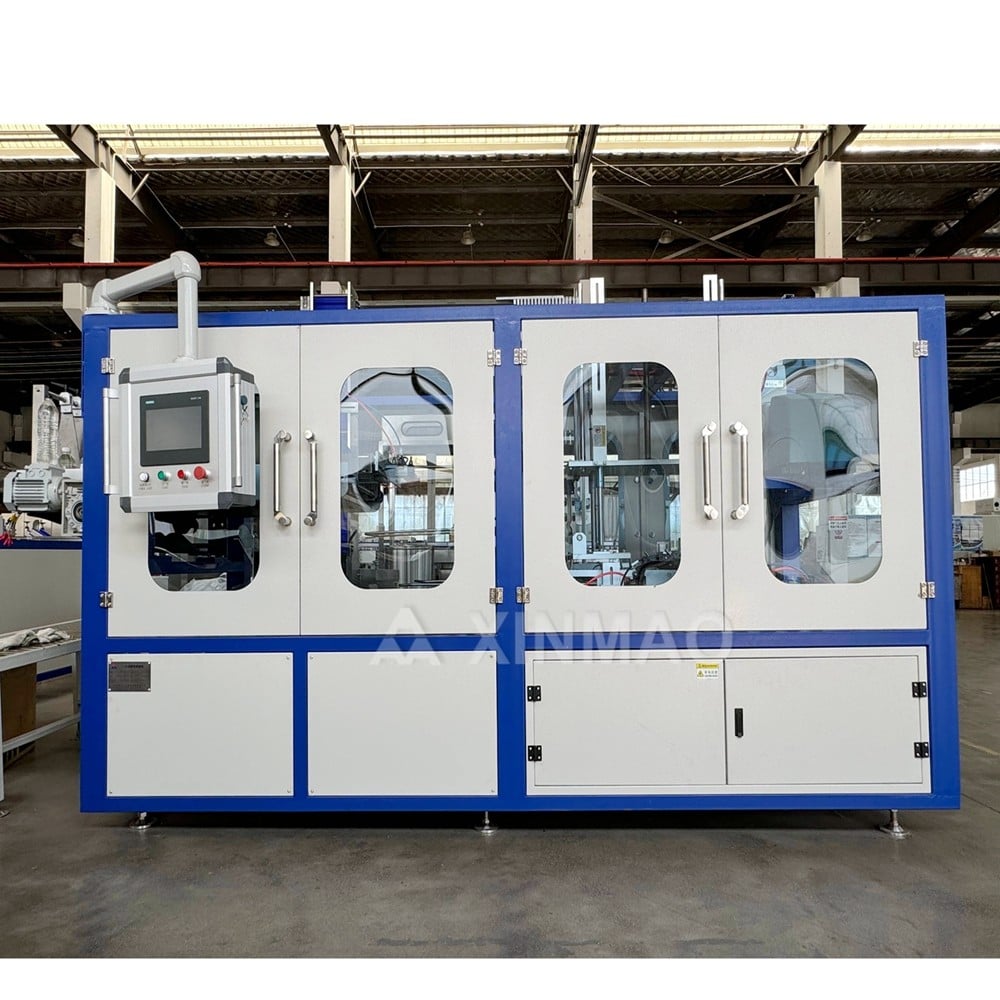
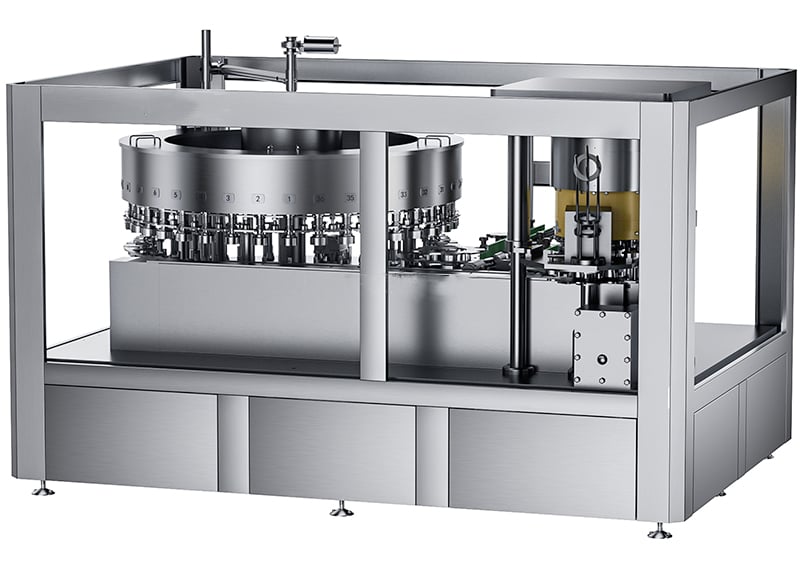
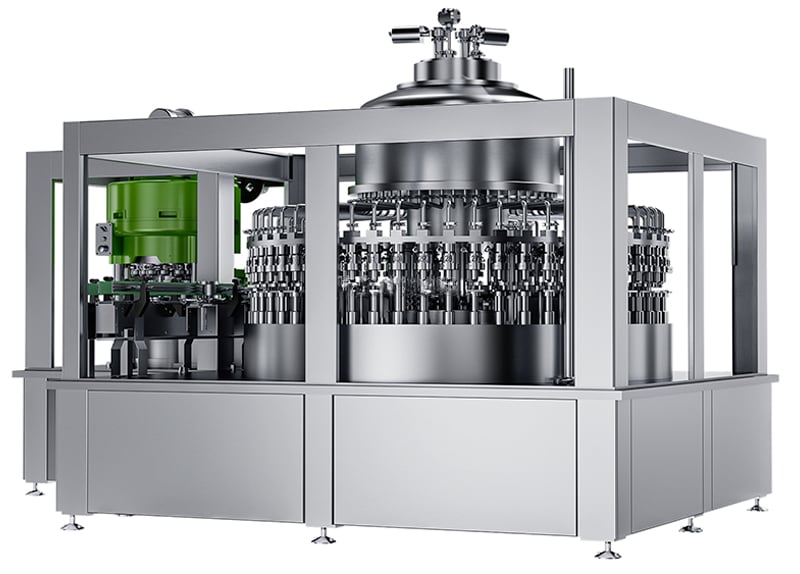
5.Three-in-One Filling Machine (32-head rinsing + filling + capping)
Function: This machine continuously completes three processes—empty bottle rinsing, carbonated beverage filling, and cap tightening—on a single unit, making it the core equipment of the production line.
Working Principle—The core principle is isobaric filling:
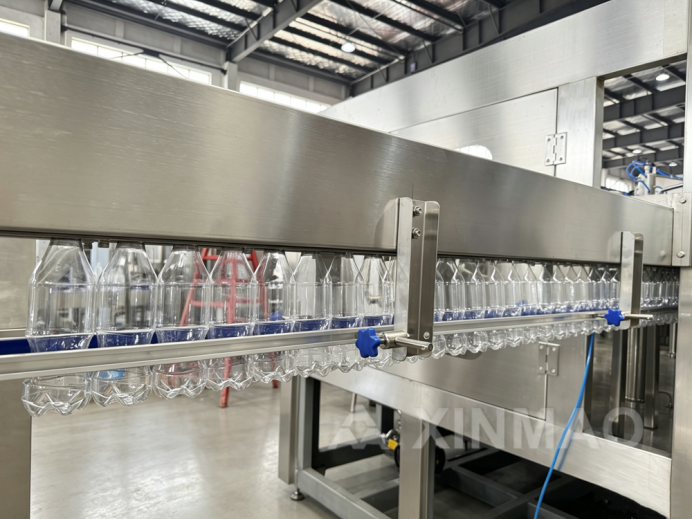
Pneumatic conveying: The pneumatic conveying duct uses a high-speed, clean airflow generated by a blower to propel empty bottles forward quickly and orderly along a specific track, directly connecting to the bottle inlet wheel of the filling machine.
Rinsing: The bottle clamps hold the bottle neck and rotate it 180°. Sterile water is sprayed from the nozzles to rinse the inner wall of the bottle. After draining, the bottle is rotated back to its original position.
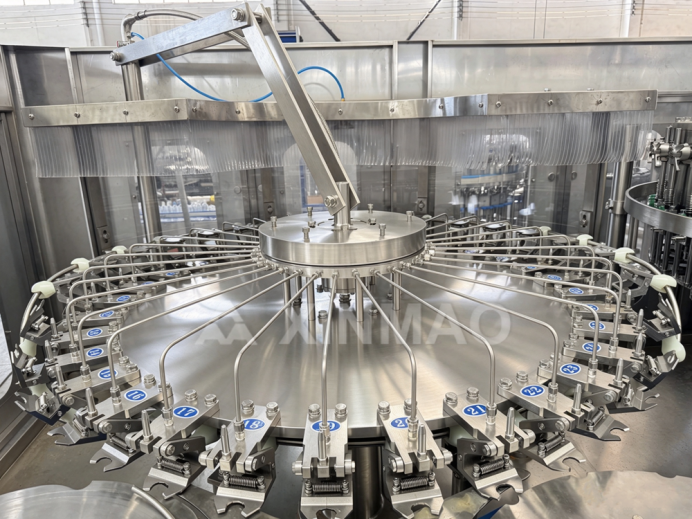
Isobaric Filling:
① The bottle rises, sealing the bottle neck with the filling valve;
② High-pressure CO₂ (same pressure as the liquid cylinder) is first injected into the bottle;
③ Once the pressure inside the bottle equals that in the liquid cylinder, the liquid flows in by gravity;
④ The displaced CO₂ returns to the liquid cylinder through the return pipe;
⑤ Filling stops when the liquid level reaches the end of the return pipe. This method prevents excessive foaming and CO₂ escape, ensuring filling accuracy and carbonation content.
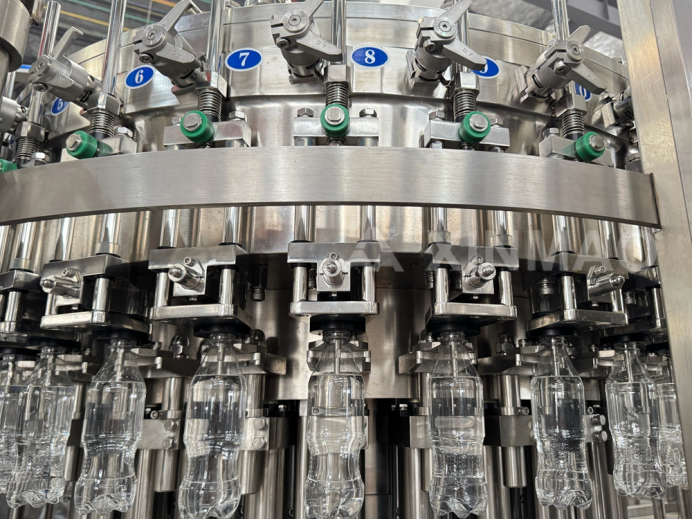
Capping: The cap feeder delivers the caps to the bottle neck, while the capping head rotates simultaneously on its own axis and revolves around a central axis, tightening the caps via a magnetic torque device, ensuring a tight seal without damaging the caps.
The entire machine is PLC controlled and equipped with cap loss detection, automatic stop for jammed bottles, and overload protection.
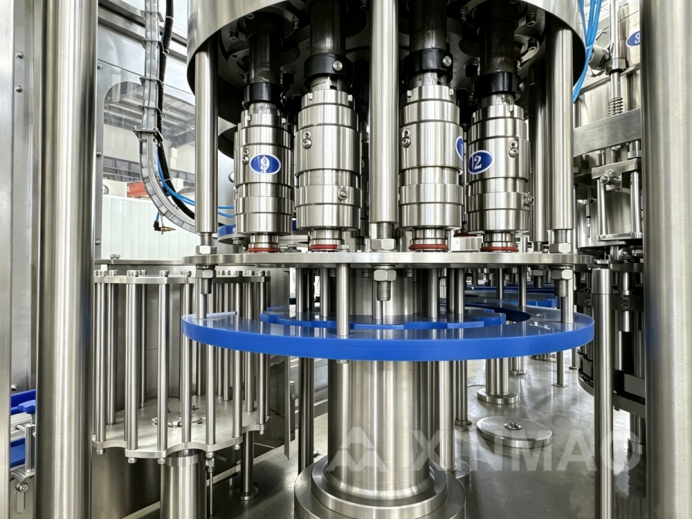
6. Capping Machine
Function: Automatically organizes disordered bottle caps and transports them orderly to the capping station, ensuring continuous production.
Working Principle: Typically uses a centrifugal cap feeder—caps are propelled into the spiral cap-feeding track by the centrifugal force of a rotating disc. A sorting device automatically identifies and rejects upside-down caps, ensuring all caps are delivered in a uniform orientation.
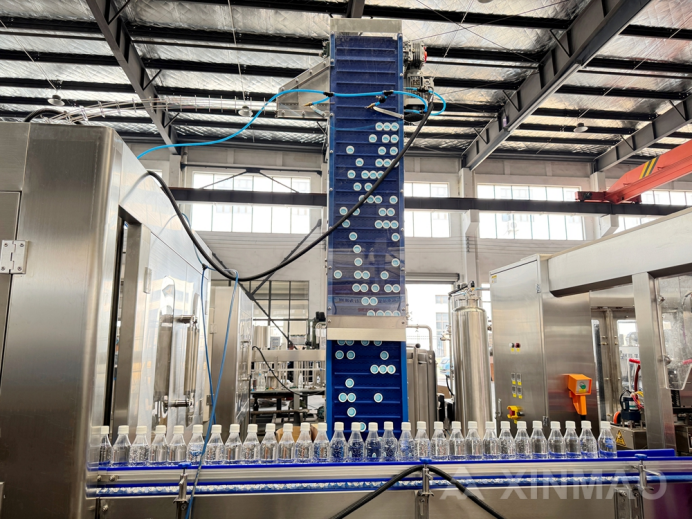
四.Packaging Section: Giving the product its final form
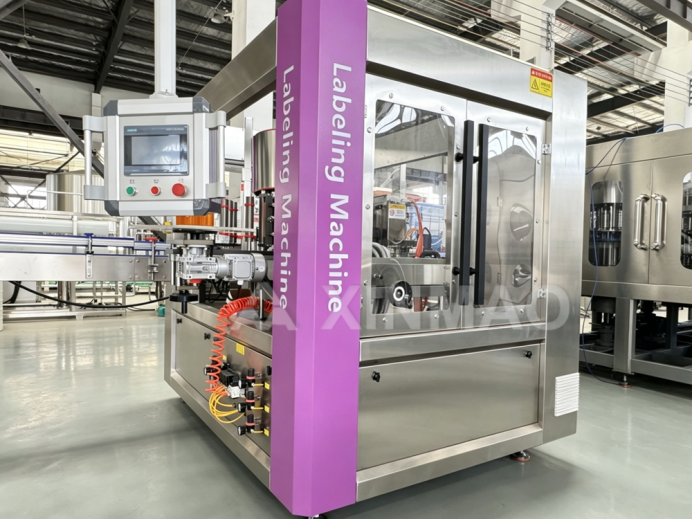
7. OPP Labeling Machine
Function: Affixes OPP (Omnidirectional Polypropylene) ring labels to finished bottles, enhancing product appearance and brand image.
Working Principle: This is a self-adhesive labeling machine—the label roll is peeled off from the backing paper by the label feeder, leaving only the adhesive label. After the sensor detects the bottle's position, the labeling mechanism precisely attaches the label to the bottle, and a smoothing device ensures a flat and adhered fit.
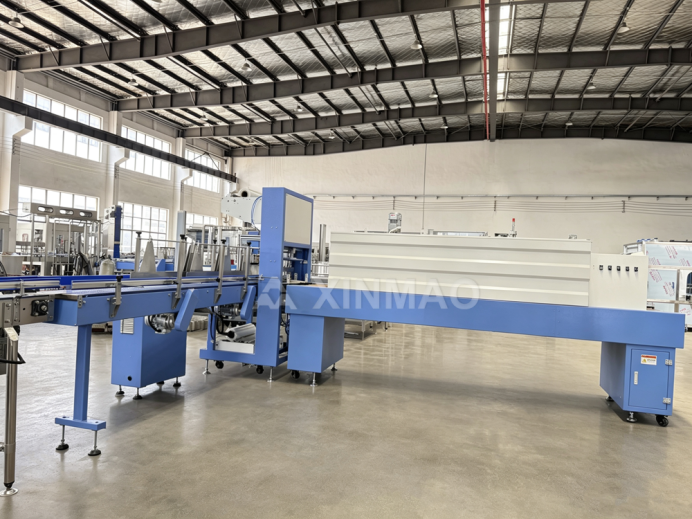
8. Film Wrapping Machine
Function: Groups a certain number of finished bottles (e.g., 6 or 12 bottles), wraps them with heat-shrink film, and heats them to form shrink-wrapped packages that are easy to transport and sell in cases.
Working Principle: The bottle sorting and wrapping mechanism arranges the bottles and wraps them with film, then they enter the heat shrink channel—high temperature (heated by electric heating elements) causes the PE or POF film to shrink rapidly and tightly adhere to the bottle body, forming a stable packaging unit.
五. Cleaning and Protection Section: The Cornerstone of Food Safety
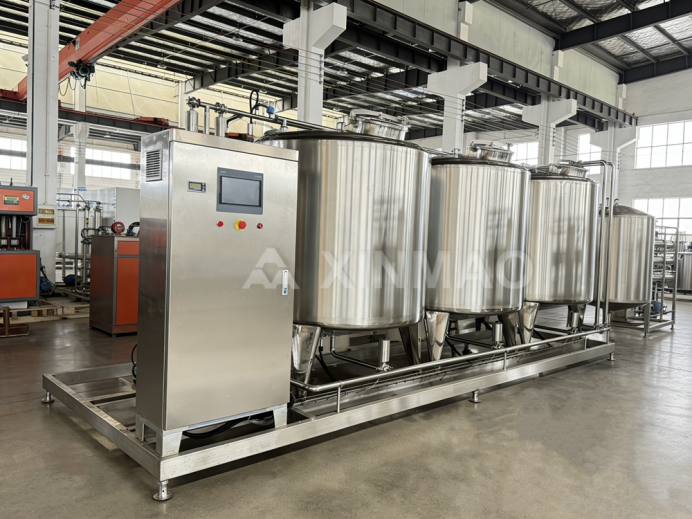
9. CIP Fully Automated Cleaning System (1.5 tons)
Function: Also known as a "Clean-In-Place" system, it automatically and thoroughly cleans and disinfects the inner surfaces of all tanks, pipes, and valves without disassembling the equipment.
Working Principle: The system includes multiple cleaning agent storage tanks (acid, alkali, disinfectant), as well as delivery pumps and control valves. Following a preset program, water → alkali → water → acid → water → disinfectant is pumped into the pipes and equipment to be cleaned in a set sequence at set temperatures, flow rates, and order. This circulates and flushes away residual materials and microorganisms, and finally, sterile water is used for rinsing. The entire process is automatically controlled by a PLC. 1.5 tons refers to the capacity of the cleaning agent storage tanks.
Key points of process parameters
|
Key parameters |
Require |
|
Filling temperature |
0-5℃, the closer to 0℃, the more favorable the CO₂ dissolution. |
|
Filling method |
Isobaric filling to prevent slurry stirring and foaming. |
|
Applicable bottle type |
PET bottles and glass bottles, capacity 200-2000ml |
|
Production line capacity |
2000-36000 bottles/hour, customizable according to customer needs. |
A complete carbonated beverage bottling production line involves the precise coordination of four core stages: syrup preparation, carbonation mixing, isobaric filling, and packaging. Each piece of equipment has its irreplaceable technical role: the sugar dissolving pan lays the foundation for flavor, the mixer gives the carbonated beverage its soul, the three-in-one filling machine ensures hygiene and precision, and the CIP system safeguards food safety.
 Hot News
2026-08-04
2026-07-28
2026-07-31
 EN
EN