A Comprehensive Guide to Water Filling Machines: How to Choose the Best Equipment for Your Business
In the increasingly competitive bottled water market, production efficiency and quality control have become key factors determining a company's success or failure. Filling machines play a crucial role in ensuring efficiency, hygiene, and product consistency. According to a global packaging industry report, the bottled water market is projected to reach $350 billion by 2026, and efficient filling equipment is a core link in this supply chain. Choosing the right water filling machine can significantly improve production efficiency, ensure product consistency, reduce operating costs, and ultimately enhance a company's market competitiveness. Whether you are operating a startup bottling line or managing a large beverage plant, choosing the right filling machine can significantly impact your production quality and operating costs.
In this article, we will explore the main types of filling machines, their working principles, advantages, and how to choose the equipment best suited to your business needs.
Main Types and Working Principles of Water Filling Machines
A filling machine is an industrial piece of equipment used to automatically fill water or similar liquids into containers (usually bottles). These machines are widely used in bottled water plants, beverage plants, and packaging facilities to meet requirements for speed, hygiene, and accuracy. Modern filling machines can handle bottles of various sizes and shapes, including PET bottles, glass bottles, and gallon kegs. They also integrate rinsing, filling, and capping processes into a compact system, minimizing manual labor and maximizing productivity.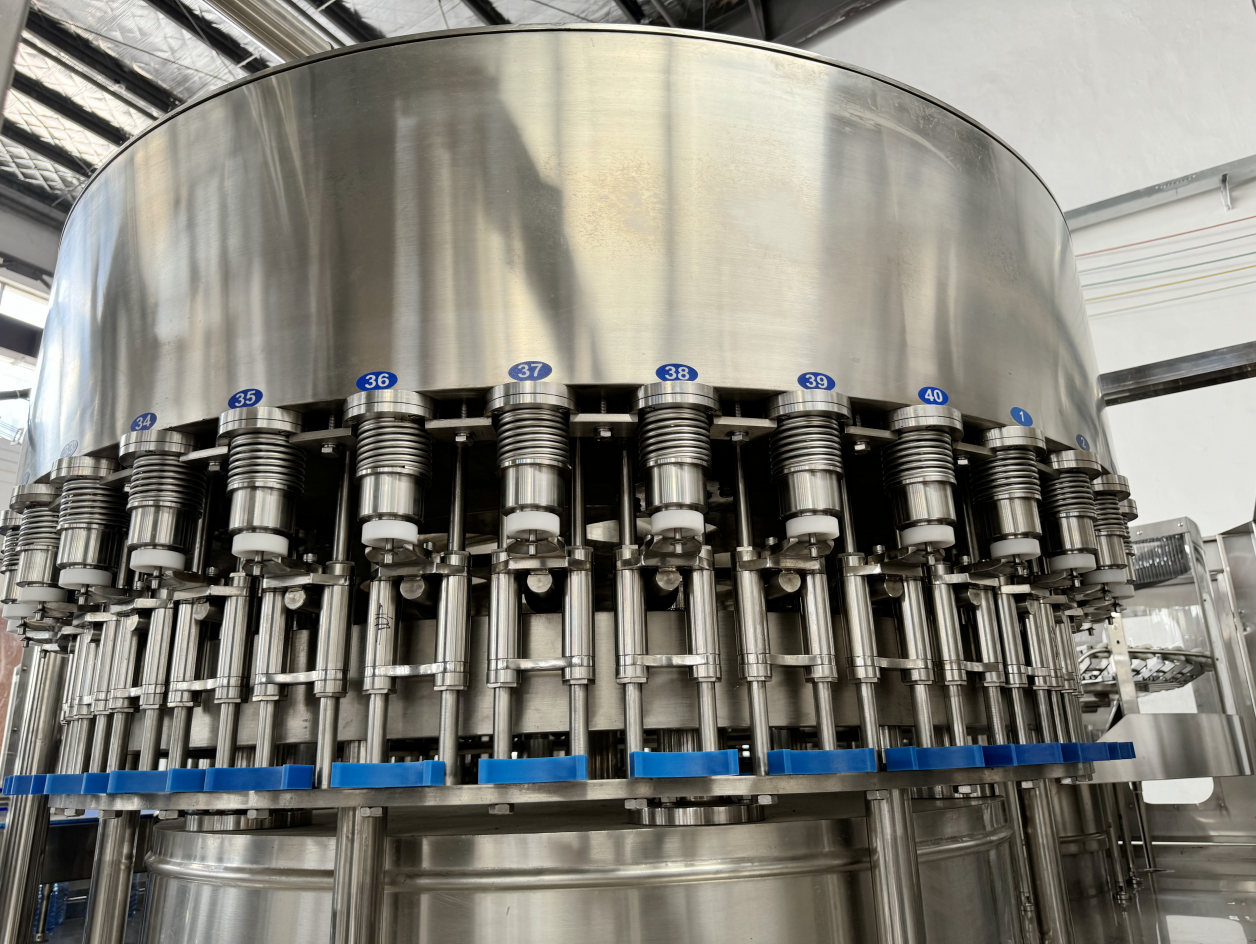
Why Choosing the Right Filling Machine is So Important
Choosing the right type of filling machine directly impacts your:
Production Efficiency – Faster machines can significantly increase output.
Operating Costs – Automation reduces waste of manpower and resources.
Product Consistency – The right machine maintains accurate filling volumes.
Hygiene and Safety – Crucial for bottled water and food-grade products.
Flexibility – Adaptable to different bottle types and liquid viscosities.
For businesses in the bottled water, juice, or beverage industries, investing in the right filling technology can enhance long-term competitiveness and yield a higher return on investment.
Main Types of Filling Machines
Filling machines can be categorized based on their level of automation, bottle type, or filling method. Below are the most common types across various industries.
(1) Fully Automatic Filling Machine
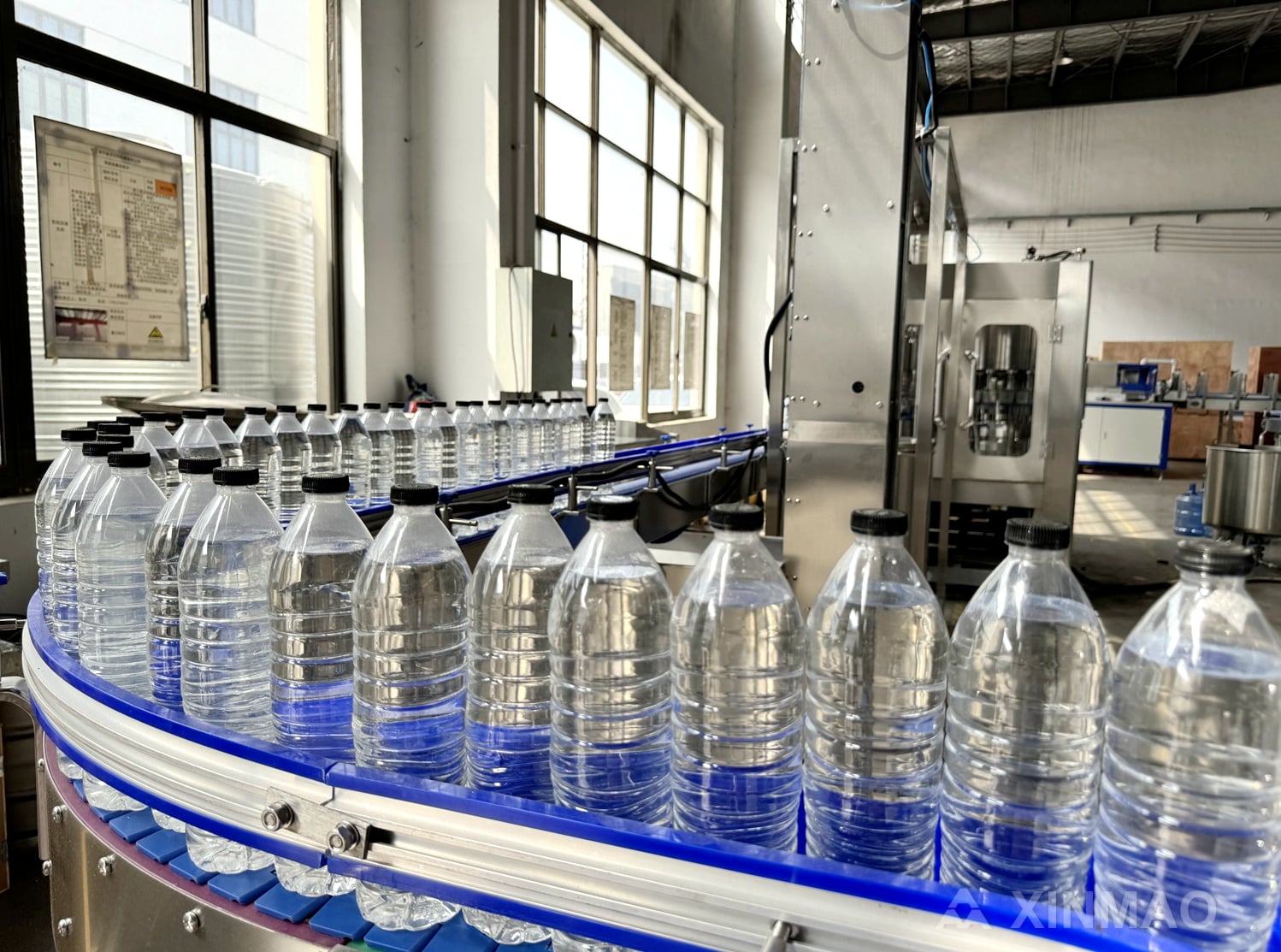
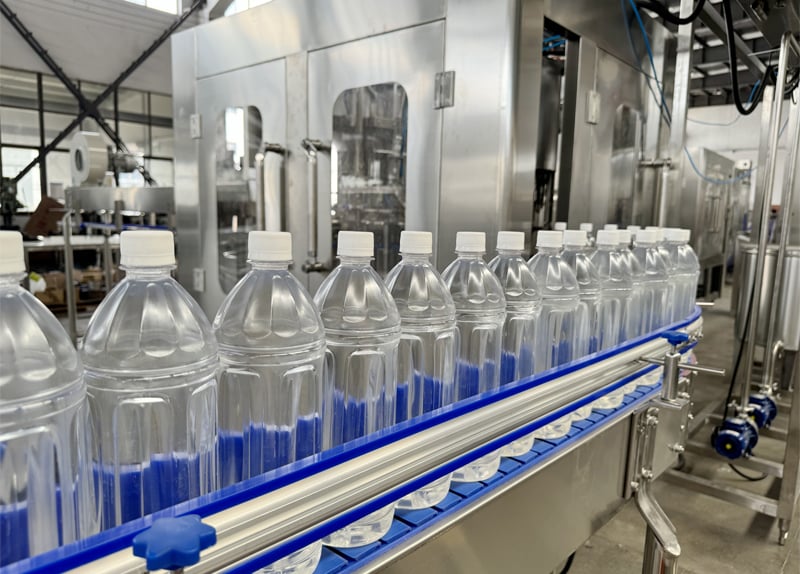
Fully automatic filling machines complete rinsing, filling, and capping automatically without manual intervention. They are ideal for medium to large-sized water plants requiring continuous high-speed production.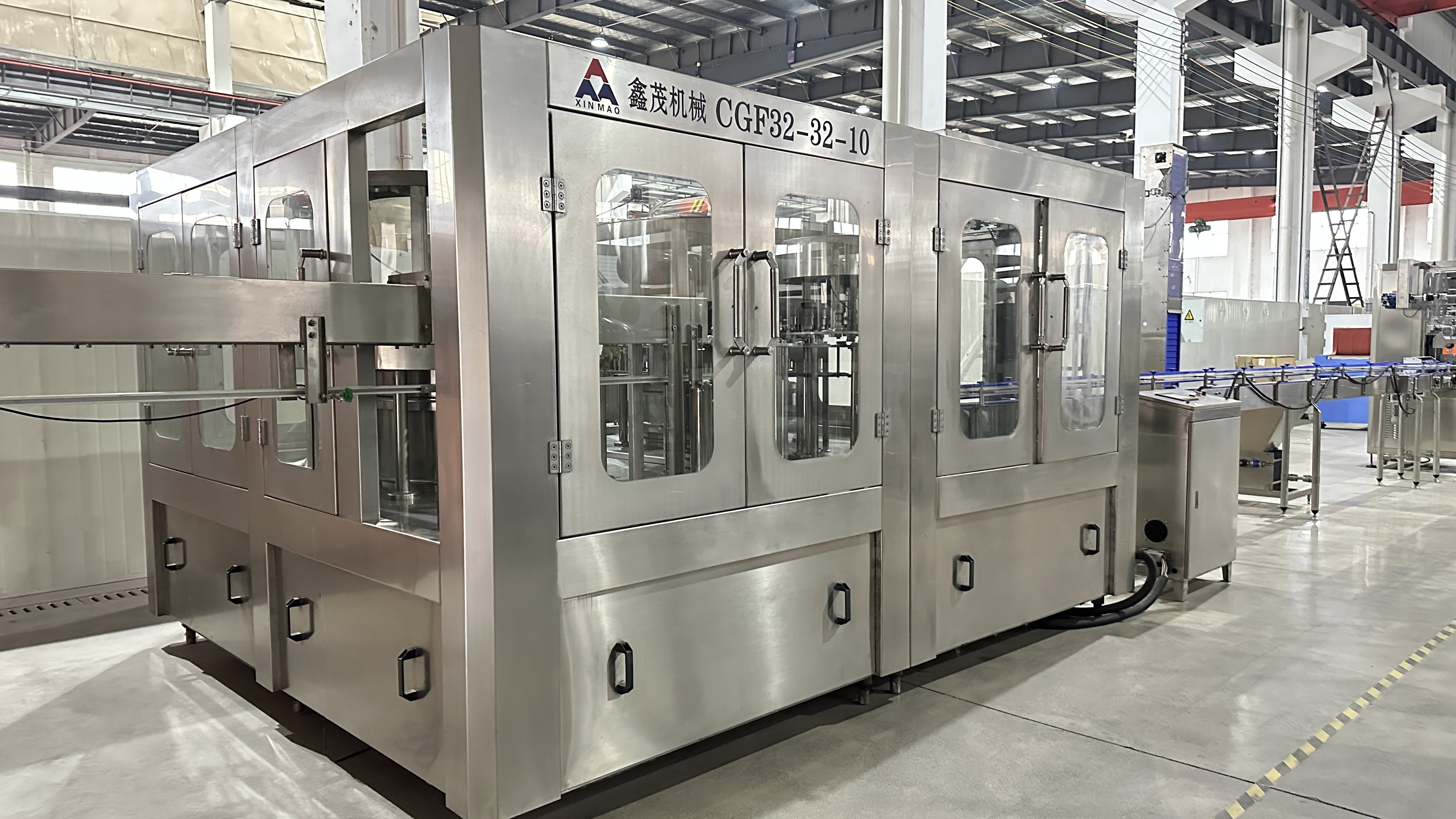
Key Features:
Fully automatic operation
High-precision filling control
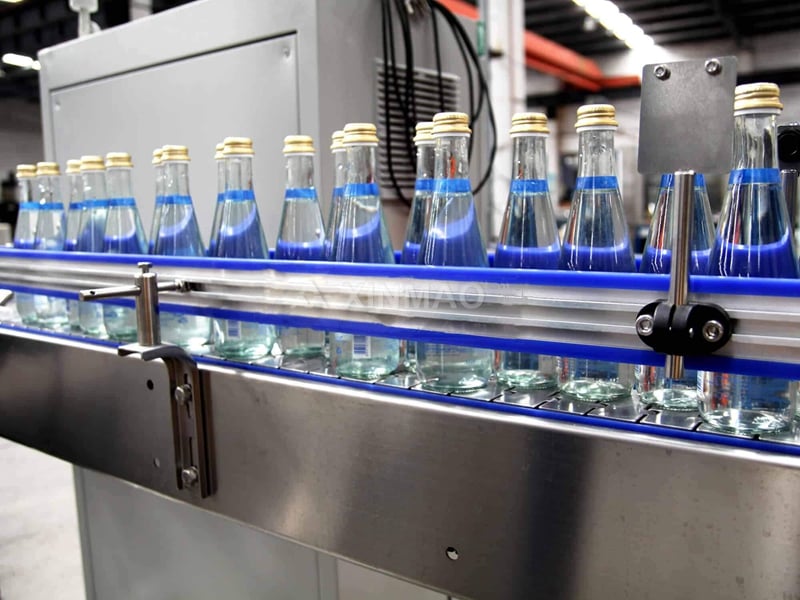
Suitable for PET and glass bottles
Supports bottle sizes from 200 ml to 2 liters
Advantages:
Reduced labor costs
Minimizes human contact, improving hygiene
Stable and reliable performance
Applications: Bottled mineral water, purified water, and flavored water production lines.
(2) Semi-Automatic Filling Machine
Semi-automatic filling machines require manual bottle loading and unloading. This type of machine is economical for small producers or companies just entering the bottled water industry.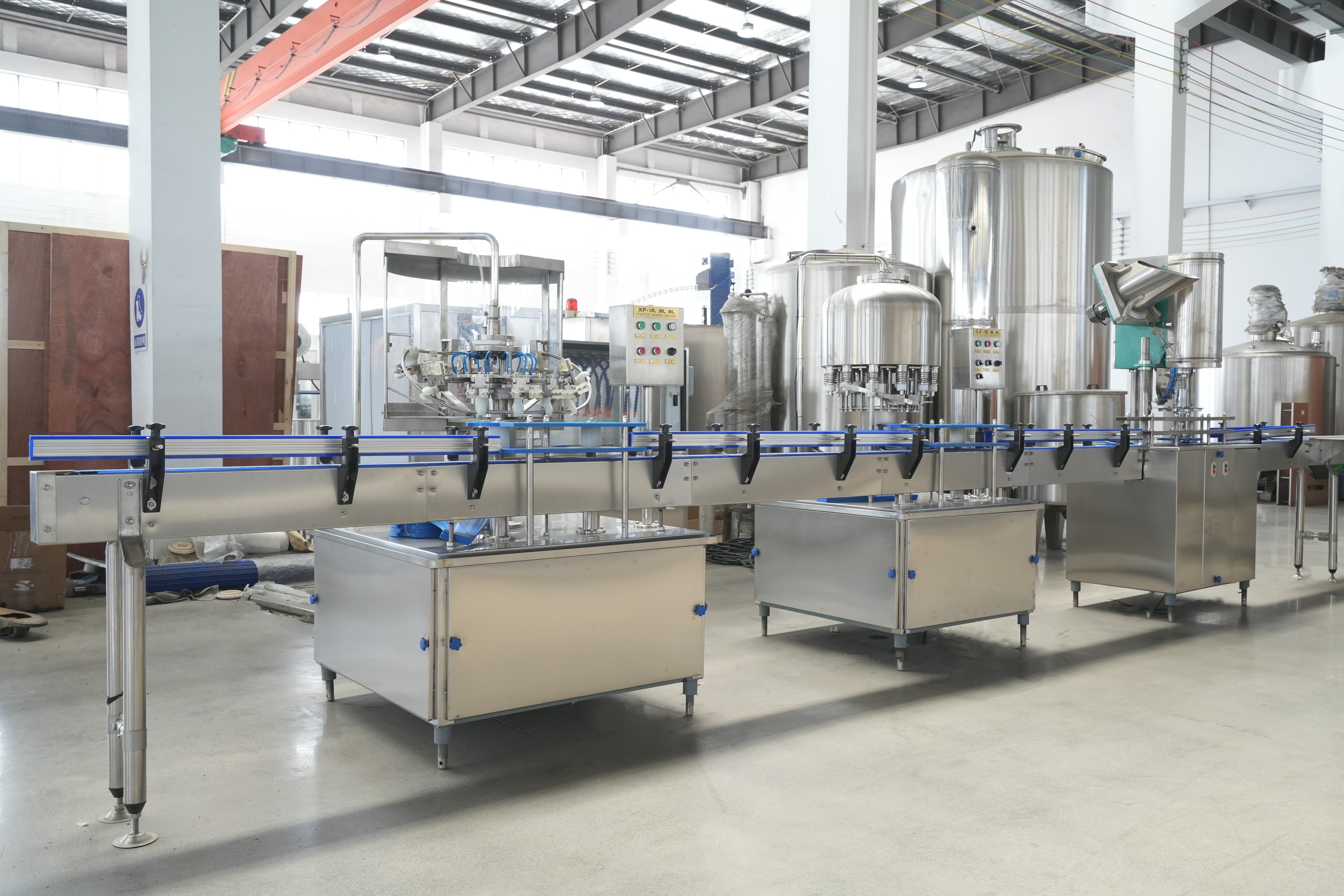
Key Features:
Manual bottle placement
Compact design and affordable price
Easy maintenance
Advantages:
Low initial investment cost
Simple operation
Suitable for customized small-batch production
Applications: Small workshops, pilot projects, and low-volume bottling production.
(3) Three-in-One Single-Unit Filling Machine
This integrated system combines rinsing, filling, and capping—three core processes—into a compact unit. It is designed for high-speed bottling lines where space efficiency and automation are paramount.
Key Features:
Three-in-one modular design
Precision valves enable high-speed filling
Compatible with PET and glass bottles
Advantages:
Saves floor space
Easy to clean and maintain
Reduces the risk of cross-contamination
Applications: High-capacity bottled water production lines and beverage plants.
(4) 3-5 Gallon Filling Machine
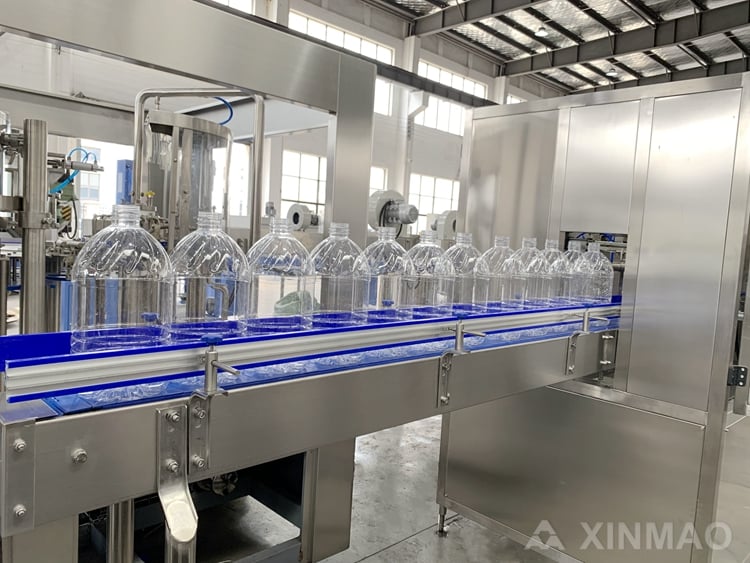
For large containers, such as water jugs used in office or home water dispensers, the 3-5 gallon filling machine is an ideal solution. It is designed for efficient cleaning, filling, and sealing of large-capacity water jugs.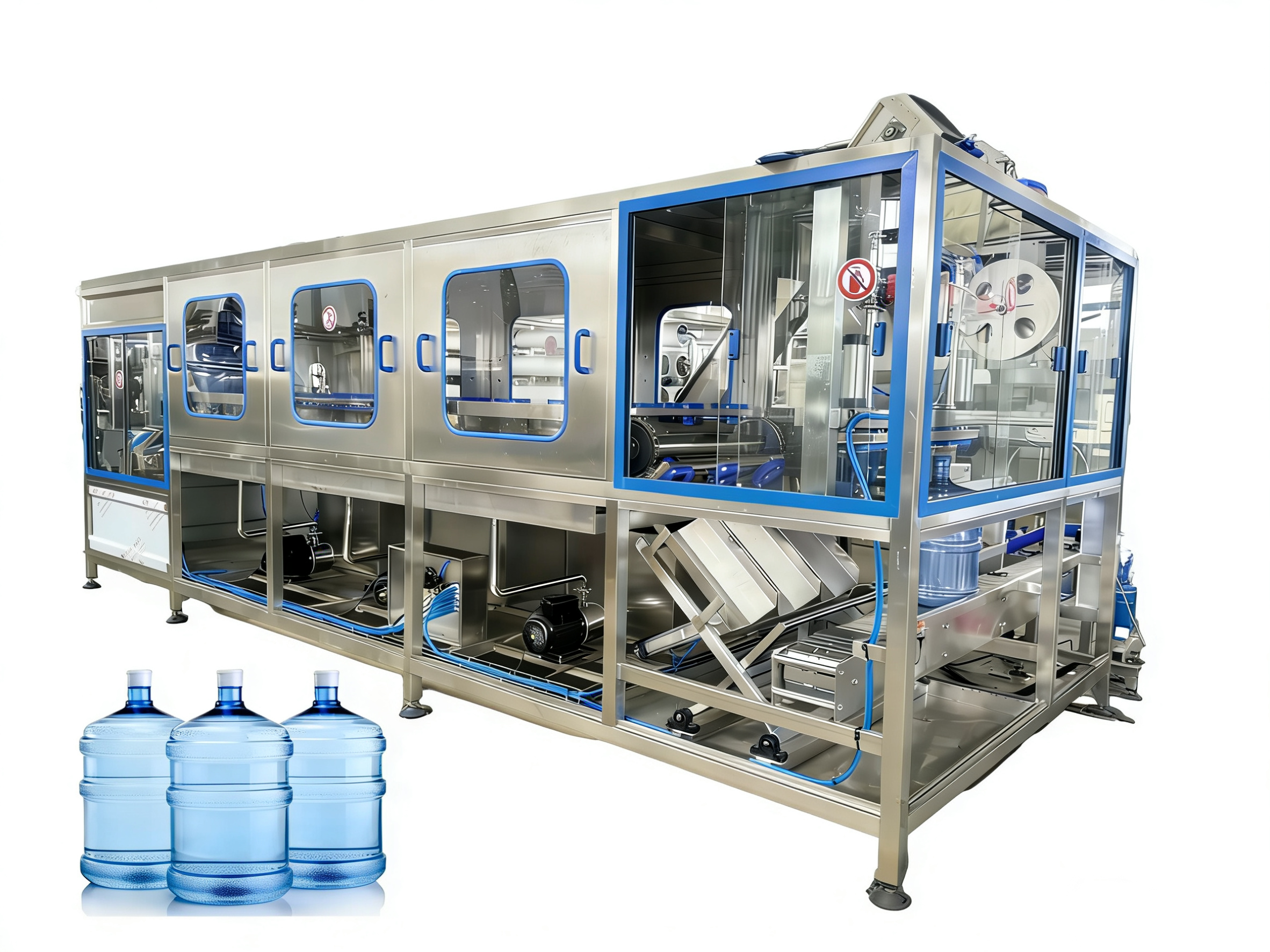
Key Features:
Handles 3 to 5 gallons of bottles
Includes a multi-stage bottle cleaning system
High standards of hygiene control
Advantages:
Reduces the risk of contamination
Ensures a strong seal
Suitable for recyclable and reusable containers
Applications: Bulk water supply companies and commercial water delivery services. Figure
(5) Blow-Fill-Cap Integrated Machine
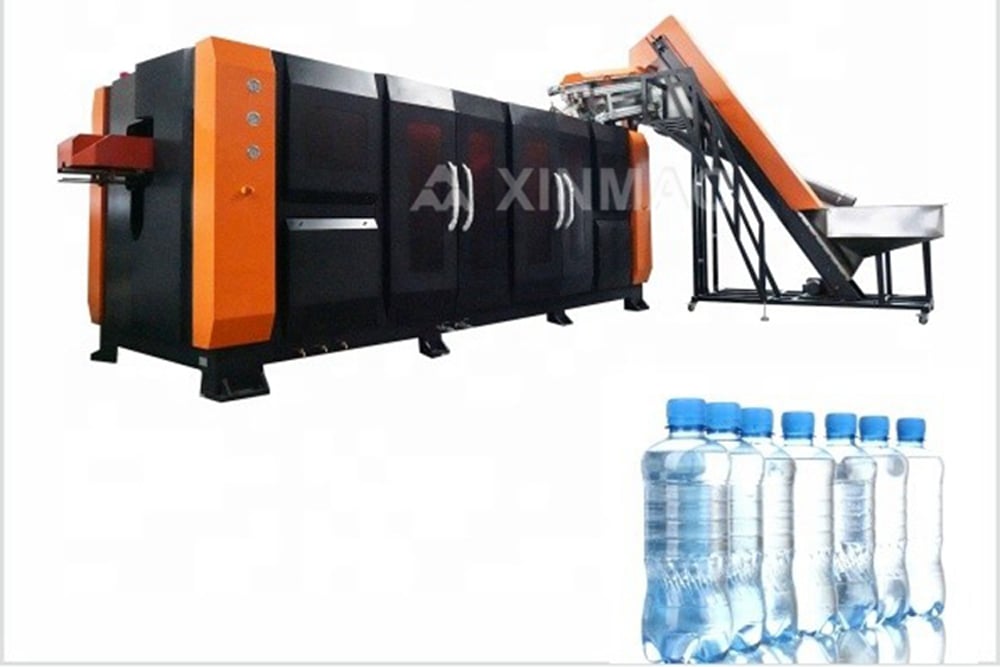
The Blow-Fill-Cap (BFC) system integrates preform blowing, bottle filling, and cap sealing into a single continuous production process. This eliminates the need to transfer bottles between different machines, thus improving efficiency and hygiene.
Key Features:
One integrated system completes the entire production process
Intelligent automated control
Small footprint
Advantages:
Reduced material handling
Energy and space savings
Minimizes contamination and bottle damage
Applications: Premium bottled water production and premium beverage manufacturing.
Figure
(6) Gravity and Pressure Filling Machines
Water filling machines can also be classified according to the filling method:
Gravity Filling Machine: Uses gravity to fill low-viscosity liquids (such as water) into bottles. Cost-effective and suitable for pure water production.
Pressure Filling Machine: Uses air pressure to fill carbonated beverages, ensuring consistent filling level and preventing foaming.
Applications: Gravity filling is suitable for water, while pressure filling is suitable for carbonated beverages.
How to Choose the Right Water Filling Machine
Choosing the best water filling machine depends on several unique factors for your business:
Production Capacity:
Estimate the number of bottles you need to produce per hour or per day. High-speed automated production lines are suitable for large-scale production, while semi-automatic machines are sufficient for small businesses.
Bottle Type and Size:
Choose equipment compatible with your container materials (PET, glass, or gallon drums) and sizes (from 200 ml to 20 liters).
Automation Level:
Fully automatic systems are ideal for high-volume production, while semi-automatic systems are better suited for startups and custom production.
Budget and ROI:
Balance the initial investment with the expected efficiency gains and labor cost savings. The most cost-effective option is one that can support long-term expansion.
Maintenance and Support:
Choose a manufacturer that provides technical support, spare parts, and training. Reliable after-sales service ensures continuous operation and reduces downtime.
Reasons to Choose XINMAO Machine
With decades of industry experience, XINMAO Machine has become a trusted global supplier for the PET plastic packaging and bottled beverage machinery industry.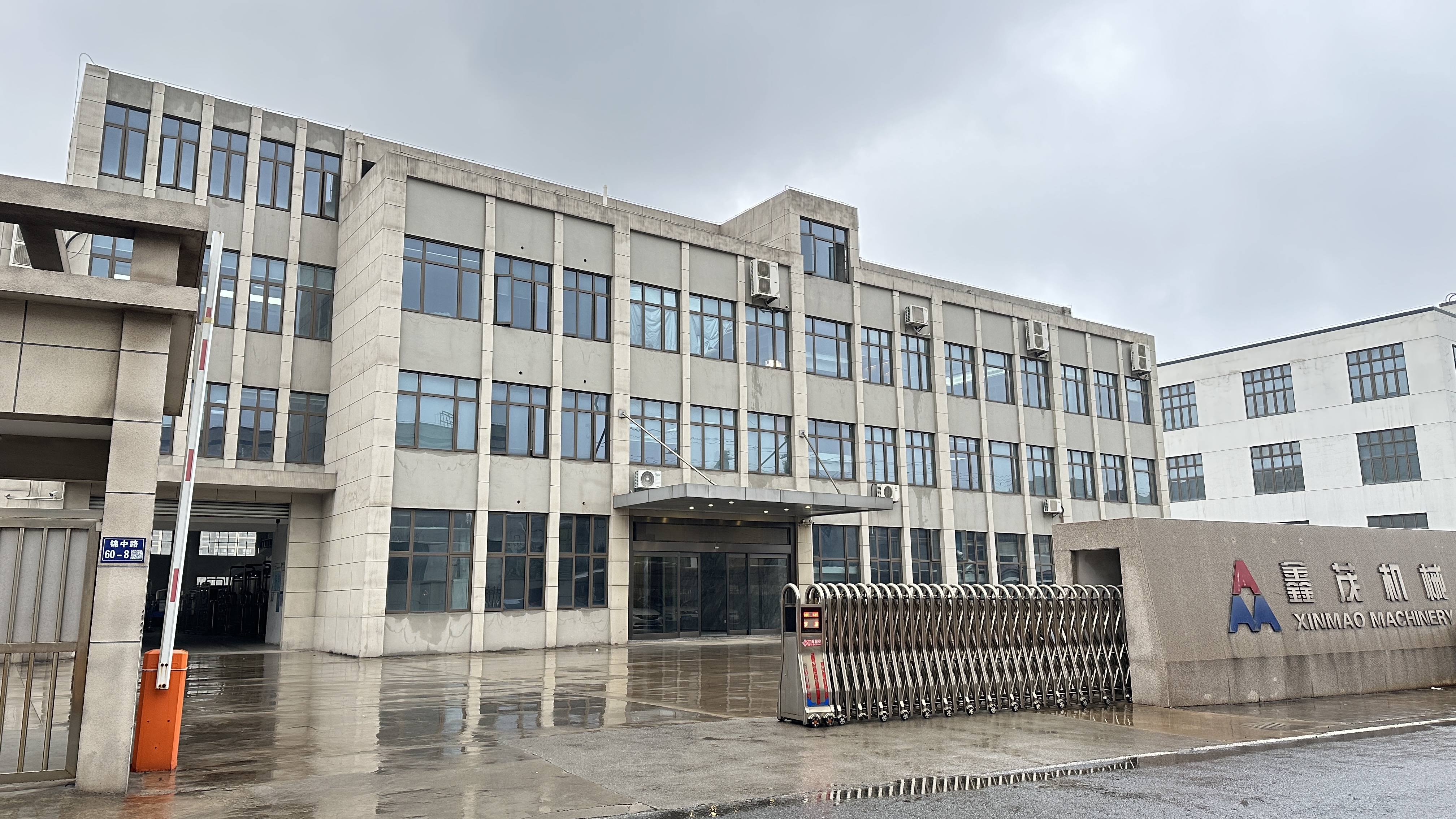
We focus on integrated filling solutions covering the entire production process—from preform feeding, blow molding, labeling, filling to capping. Our intelligent equipment systems enable continuous optimization and superior performance across a variety of beverage production lines.
Our core product lines include:
Water Filling Machines
Juice Filling Machines
Carbonated Soft Drink Filling Machines
3-5 Gallon Filling Machines
Beer Filling Machines
Wine Filling Machines
Blow Molding-Filling-Capping Integrated Machines
Edible Oil and Daily Chemical Product Filling Machines
Water Treatment Equipment
XINMAO Machine, with its advanced technology and deep expertise, helps customers achieve higher productivity, consistent quality, and lower production costs in streamlined and efficient systems. Conclusion: Choosing the right filling machine is not just about selecting the equipment itself, but also about the efficiency, reliability, and future development potential of your business. Understanding your production needs, automation requirements, and future development plans will help you find the perfect solution.
Whether you're setting up a small bottled water production line or upgrading a large beverage manufacturing plant, partnering with a trusted manufacturer like XINMAO Machine ensures you get the best combination of technology, durability, and service.
At XINMAO Machine, we offer more than just machines; we provide complete filling solutions to help your business thrive in a competitive market.
Implementation and Optimization Recommendations
Supplier Evaluation: Select suppliers with a strong industry reputation who offer comprehensive support (installation, training, after-sales). Request visits to existing customers' production lines to understand the actual performance of the equipment.
Trial Run and Testing: Arrange product trial runs before purchase, testing equipment performance using actual bottle types and products.
Employee Training: Invest in operation and maintenance training to ensure your team can fully utilize the equipment's potential.
Continuous Optimization: Establish a Key Performance Indicator (KPI) monitoring system to regularly evaluate equipment efficiency, filling accuracy, and downtime, continuously identifying opportunities for improvement.
Conclusion Choosing the right water filling machine is a strategic decision that directly impacts a company's production efficiency, product quality, and profitability. There is no one-size-fits-all solution; the best choice always depends on the company's specific needs, product characteristics, and market positioning.
In the rapidly changing bottled water market, companies that wisely invest in appropriate filling technologies not only meet current production needs but also lay a solid foundation for future growth. Remember, the best equipment isn't necessarily the most high-end or the most expensive, but rather the one that best suits your company's current situation and vision.
Whether you are a small startup or an established international brand, taking the time to thoroughly analyze your needs, research options, and work with professional suppliers will help you make informed investment decisions, ensuring your water filling equipment becomes a powerful engine for business growth, not a bottleneck.
Your next step: List your specific needs, calculate your investment budget, contact 2-3 professional suppliers for consultation and comparison, and choose the most suitable water filling solution for your business.
 Hot News
2026-08-04
2026-07-28
2026-07-31
 EN
EN