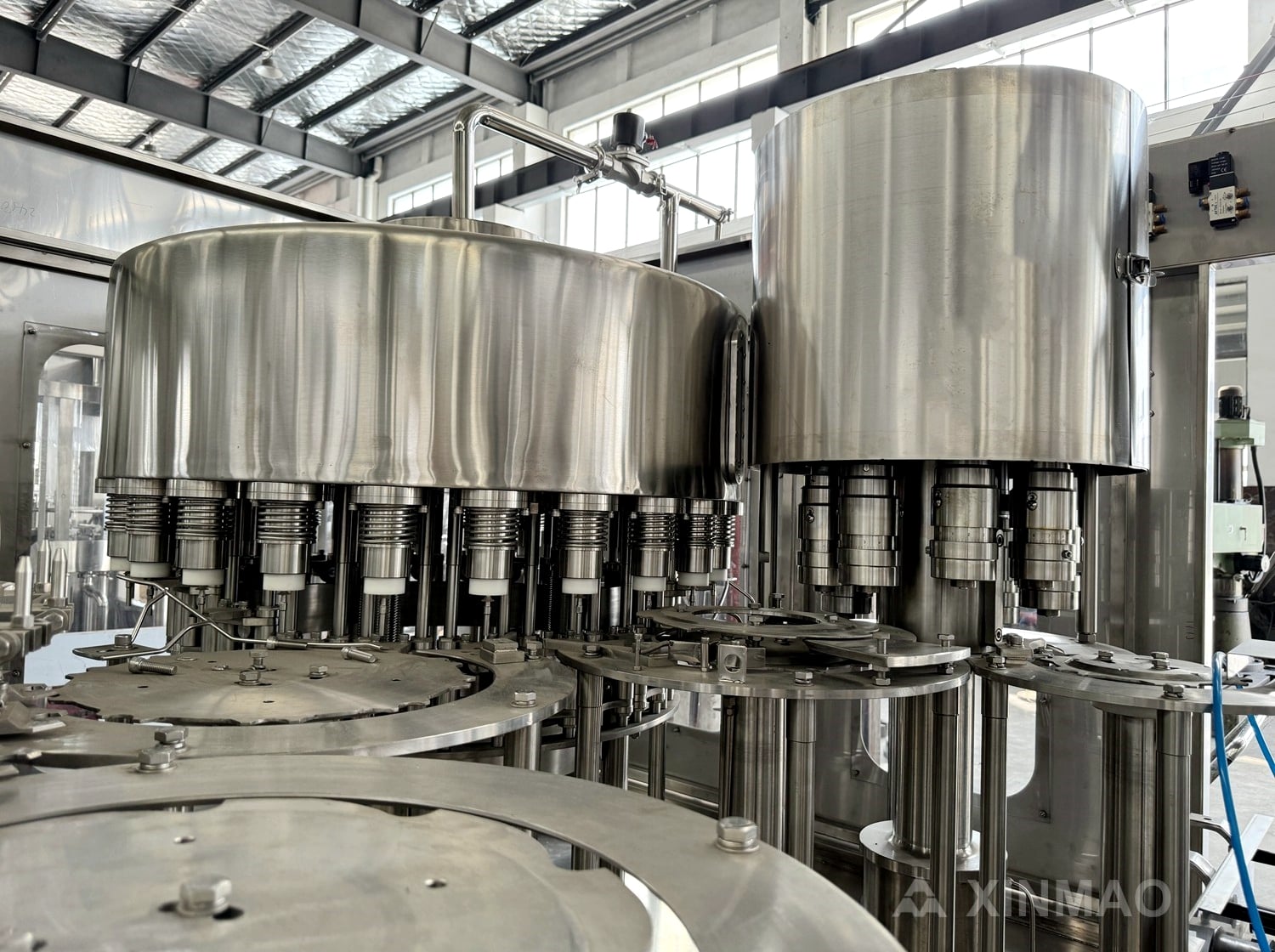
Verify Equipment Identity and Configuration Against Specifications
Cross-Check Nameplate Data, Serial Numbers, and Mechanical Drawings
Begin with a physical walkdown of the bottle water machine. Compare nameplate data—model, serial number, voltage, frequency, power rating, and year of manufacture—against the purchase order and FAT checklist. Document any discrepancies before proceeding to testing. Confirm that all subassemblies (e.g., filling valves, capping heads, conveyor motors) carry vendor-traceable serial numbers supported by certificates of conformance. Review as-built mechanical drawings to verify nozzle pitch, guard placements, utility connection points, piping, wiring, and air supply routing align with the approved layout. If documentation is incomplete or drawing revisions do not match the installed configuration, quarantine the finding and request formal clarification from the vendor prior to advancing.
Confirm Compliance with Food-Grade Standards (FDA 21 CFR, ISO 22000) and URS Requirements
Ensure all product-contact materials are food-grade and accompanied by valid material certifications confirming compliance with FDA 21 CFR Part 177 for polymers and elastomers. Validate that the machine’s hygienic design—including sloped surfaces, crevice-free joints, accessible cleaning paths, and controlled lubrication points—meets ISO 22000 prerequisites for food safety. Cross-reference each User Requirements Specification (URS) item with the vendor’s Design Qualification (DQ) and FAT test evidence. Confirm sensors, seals, and fill nozzles are suitable for potable water contact and pose no risk of leaching or microbial harborage. Verify the control system supports sanitation interlocks, validated cleaning cycles, and configurable alarm thresholds. Log any URS gap—even partial—as a formal deviation requiring documented corrective action before FAT sign-off.
Validate Functional Performance of the Bottle Water Machine Under Load
Synchronized Trial Run with Bottles, Caps, and Simulated Water to Assess Throughput and Timing
Conduct a synchronized trial run at 80–100% of rated speed using actual bottles, caps, and simulated water matching production viscosity and foaming behavior. This exposes timing drift, fill accuracy shifts during acceleration/deceleration, and synchronization issues between filler, capper, starwheel, and conveyors. Record throughput against the vendor’s published performance curve and monitor for jams, cap skew, nozzle drip, or misfeeds. Dual-track conveyors must accommodate multiple bottle sizes without tooling changes while maintaining ≤1% product loss. Reject stations must activate only for verified defects—and false rejections must remain below 2% of good units. Start-stop cycles must not induce underfill or cap looseness. Key performance benchmarks:
| Subsystem | Tolerance | Speed benchmark |
|---|---|---|
| Filling | ±0.5% volume | 450 BPM |
| Capping | ±2% torque | 400 BPM |
| Quality checks | 50 ms per image | 600 BPM |
Test Safety Systems: E-Stops, Guard Interlocks, HMI Alarms, and Emergency Reset Logic
Test every E-stop button, pull-cord, and guard interlock while operating at maximum speed. Activation must immediately halt all pneumatic and servo motion, close fill valves, and log the event in the HMI alarm history with timestamp and zone identification. Opening any guarded access door must interrupt motion within the time limit defined in the machine’s risk assessment—and prevent automatic restart until the interlock is manually reset. Simulate emergency stop loops across multiple stations to confirm the safety PLC or relay enforces a deliberate manual reset sequence—not a simple power cycle. Validate HMI alarm priorities, plain-language messaging, and persistent historical logging for all safety events. Guard interlock bypass for maintenance must require key-switch activation or password-protected access. Finally, confirm post-E-stop restart logic: all axes return to home position, and production resumes only after confirmation that all zones are clear and safe.

Assess Output Quality and Operational Consistency
Measure Fill Accuracy (±0.5%), Cap Torque Uniformity, and Reject Handling Efficiency
During FAT, verify fill accuracy remains within ±0.5% across ≥30 consecutive gravimetric measurements at nominal speed. Calculate mean deviation and standard deviation to assess process stability; if head-to-head variation exceeds ±0.3%, investigate nozzle calibration or flow control. For cap torque, sample randomly across production runs and measure using a calibrated torque meter. Acceptance limits must align with URS-defined cap diameter and liner type—typically 8–18 in-lbs—but never deviate from validated packaging specifications. Introduce known defects (low-fill, missing cap, skewed label) to evaluate reject handling efficiency: the system must capture ≥99% of true defects while keeping false rejection of good units below 2%. Use vision or sensor logs to confirm root-cause tagging accuracy and verify reject station timing prevents accumulation or line jamming.
| Parameter | Test Method | Acceptance Criterion |
|---|---|---|
| Fill accuracy | Gravimetric check, 30 consecutive fills | Mean deviation ≤ ±0.5% |
| Cap torque | Torque meter on random sample | Per URS; typically 8–18 in-lbs |
| Reject efficiency | Introduce known defects and good bottles | Rejects defects; false reject <2% |
Repeat a short production run after a planned stoppage to assess shift-to-shift consistency. Any drift beyond ±0.5% fill deviation or torque range requires vendor investigation and correction before FAT approval.
Review FAT Documentation and Manage Deviations for Bottle Water Machine Approval
Evaluate FAT Report Completeness, Traceability to URS/FS, and GDP Compliance
The FAT report must provide unambiguous traceability from every test result back to its originating URS and Functional Specification (FS) requirement. Inspect raw data sheets, calibration records, and signed test protocols for Good Documentation Practice (GDP) compliance: no blank fields, no uncontrolled cross-outs, no unsigned corrections, and all entries dated and attributable. As-built drawings must reflect the final installed configuration—not just the design intent—because future validation, maintenance, and change control depend on accurate configuration records. A complete report includes test scope, pass/fail determinations, retest summaries, and vendor-signed rectification statements. This level of traceability safeguards downstream Site Acceptance Testing (SAT), commissioning, and long-term asset lifecycle management.
Classify Findings, Maintain Punch List, and Agree on Vendor Corrective Action Timelines
Classify each deviation as critical (impacts safety, regulatory compliance, or core function), major (affects performance, reliability, or URS compliance), or minor (cosmetic or non-functional). Log every finding on a controlled, versioned punch list with photos, test step reference, observed vs. expected outcome, and required corrective action. Finalize vendor commitments—including root-cause analysis, remediation plan, and re-inspection criteria—in writing before FAT closeout. Critical findings affecting fill accuracy, cap integrity, or safety systems must be retested to full acceptance criteria before approval. This disciplined cycle of verification, classification, correction, and revalidation isn’t procedural overhead—it’s the operational foundation for consistent, compliant, and reliable performance once the machine enters production.
FAQ Section
What is FAT, and why is it important?
FAT stands for Factory Acceptance Testing, which is critical for verifying that equipment meets specifications, complies with safety standards, and operates reliably before shipping and on-site setup.
How do you ensure food-grade compliance for bottling equipment?
Food-grade compliance is ensured by validating material certifications (FDA 21 CFR, ISO 22000) and checking hygienic designs like crevice-free joints and accessible cleaning paths.
What are the key performance benchmarks for a bottle water machine?
Key benchmarks include fill accuracy (±0.5%), cap torque uniformity (±2% torque), reject efficiency (≥99% defect detection), and throughput speeds matching vendor specifications across subsystems.
Why is traceability important in FAT documentation?
Traceability ensures every test result links back to URS/FS requirements, aiding future validation, maintenance, and compliance checks.