Core Equipment in a Complete Water Filling Line
A water filling line is not one machine — it is an integrated sequence of equipment stations, each performing a specific function synchronized with the stations before and after it. The core consists of three machines: a bottle rinser, a liquid filler, and a capping machine. Everything else — conveyors, labelers, coders, packers — supports this core.
Bottle Rinsing, Filling, and Capping — The Three-Station Core
A bottle rinser is the first station. Empty bottles invert over rinse nozzles spraying purified or ozone-treated water to remove dust and contaminants. For still water in PET bottles, a water rinse is standard. The filler is the heart of the water filling line. Gravity fillers use the water column’s weight — simple and reliable for still water at moderate speeds. Pressure fillers use pump-driven delivery above 5,000 bottles per hour (BPH). Isobaric fillers pressurize the bottle to match filler bowl pressure before filling — essential for carbonated water. Fill accuracy targets ±1% to ±2% of target volume. The capping station applies closures immediately after filling. A cap sorter orients and feeds caps. Automatic torque monitoring with reject capability for out-of-spec caps is standard on modern lines.
Supporting Equipment — Labeling, Coding, and Packaging
After capping, bottles pass through a labeler — roll-fed, cut-and-stack, or pressure-sensitive — and a date coder printing production date, batch, and expiry. A shrink wrapper or carton packer groups bottles into multipacks, and a palletizer stacks cases. Each supporting station must match the core filling station throughput to avoid bottlenecks in the water filling line.
Upstream and Downstream Integration
Water Treatment, Bottle Blowing, and Conveying
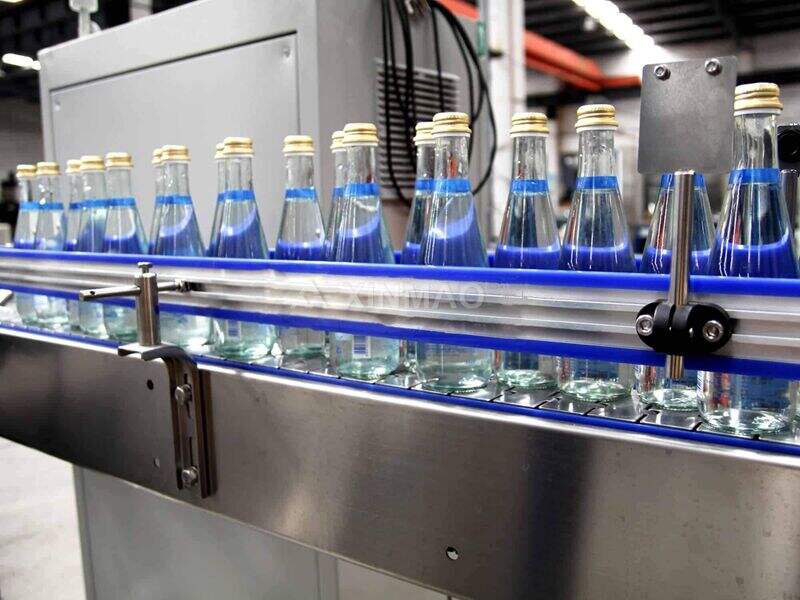
Upstream, a water treatment system — multimedia filtration, carbon filtration, softening, reverse osmosis, and UV or ozone sterilization — produces the purified water entering the filler. The system must deliver at the filler’s required flow rate and pressure. Downstream, conveyors connect every station with precise bottle pitch — spacing between bottles — because the filler, capper, and labeler each expect bottles at specific timing. Drifting pitch causes jams.
Real-World Case — A Startup Plans Its First Line
A West African bottled water startup planned a water filling line for 500 ml and 1,500 ml PET bottles at 3,000 BPH. The initial equipment list omitted the water treatment system. The local source water had high iron and total dissolved solids of 450 mg/L — well above WHO guidelines. A consulting engineer identified that a pretreatment system — manganese greensand filtration, softening, and reverse osmosis — was essential. Adding this $45,000 system to the $120,000 line was the difference between meeting drinking water standards and failing quality testing. The line has operated for three years with consistent quality.
Automation Level and Capacity Planning
Manual, Semi-Automatic, and Fully Automatic Configurations
A manual water filling line suits startups under 500 BPH. Semi-automatic adds powered conveyors and automatic filling for 500 to 2,000 BPH. Fully automatic PLC-controlled lines handle 2,000 to 36,000 BPH. The automation level should match current needs with space for future stations in the layout.
Equipment Selection Criteria
Five Factors to Define Before Procurement
First, define bottle material, size range, and cap type — these determine filler and capper configuration. Second, specify required throughput in BPH and operating hours. Third, analyze source water quality and specify the treatment system needed. Fourth, define label type, multipack format, and pallet configuration. Fifth, confirm floor space and utilities — electricity, compressed air, water supply, drainage — and verify that the facility can support the line’s total power load plus compressed air demand, because underestimating utilities is a common cause of startup delays. A water filling line specified against these factors is a production system; one specified from a generic list is a collection of mismatched machines.
Frequently Asked Questions
What equipment is essential for a complete water filling line?
A complete water filling line requires a water treatment system, bottle rinser, liquid filler, capping machine, labeling machine, date coder, and packaging equipment with conveyors connecting all stations.
What is the difference between gravity and pressure fillers?
Gravity fillers use water column weight — simple for still water at moderate speed. Pressure fillers use pump-driven delivery above 5,000 BPH. Isobaric fillers pressurize the bottle before filling — essential for carbonated water.
How is the right water treatment system determined?
Analyze source water for TDS, iron, manganese, hardness, microbial content, and pH. The treatment specification must reduce every parameter to target product specification at the filler’s required flow rate. Matching treatment capacity to filler demand prevents line stoppages from water starvation.
What capacity water filling line suits a startup?
A startup water filling line typically operates at 500 to 3,000 BPH. Calculate required BPH as: annual target bottles ÷ (operating days × hours per day), then add 20% for growth and inefficiency.
How important is conveyor pitch control?
Conveyor pitch — the precise spacing between bottles — is critical for line operation. The filler, capper, and labeler each expect bottles at specific timing intervals. Pitch drift causes jams at station inlets that stop the entire water filling line. In-feed timing screws and star-wheels maintain correct pitch at each station entry point.
What utilities does a water filling line require?
A water filling line requires 3-phase electricity for motor drives, compressed air for pneumatic actuators, treated water at specified pressure and flow rate, and floor drainage for rinse water and spillage.