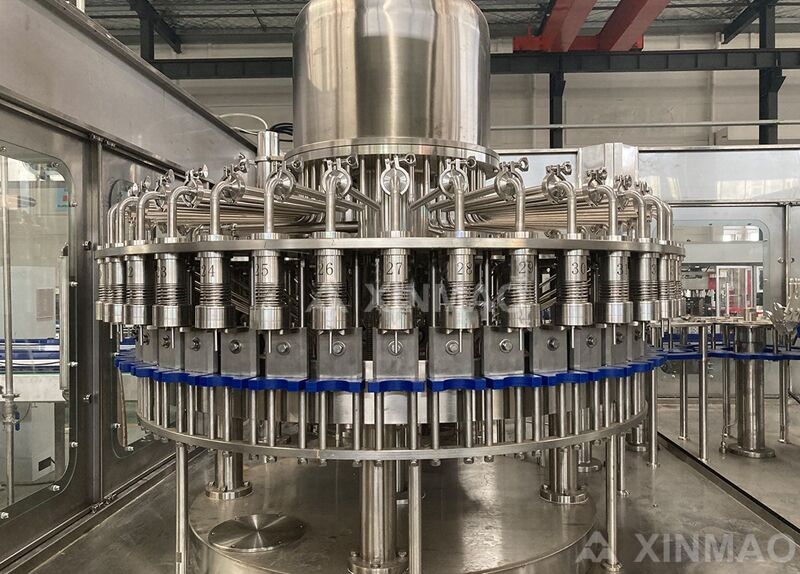
Why Internal Piping Cleanliness Matters for Production Reliability
The Day-to-Day Reality of Contaminated Filling Lines
A shift supervisor at a mid-sized beverage plant watches the third product hold of the week. Quality control flagged off-flavor notes in a bottled tea batch, tracing the source to residual fermentation byproducts clinging to the internal surfaces of the filling circuit. The line stops. The cleaning crew begins the familiar ritual of breaking down pipe sections, removing elbows and valves, scrubbing by hand, reassembling, and running a sanitization cycle. Total downtime: six hours. Lost production: roughly 18,000 units. The root cause is simple — the bottling machine piping had not been cleaned effectively between product changeovers, and the previous cleaning protocol never reached the dead legs and low-velocity zones where biofilm took hold.
Production managers across the beverage, dairy, sauce, and pharmaceutical liquid filling industries face the same dilemma. Manual disassembly for internal pipe cleaning is slow, labor-intensive, and introduces reassembly risks — misaligned gaskets, cross-threaded fittings, and contamination introduced by handling. Yet leaving internal surfaces uncleaned invites product quality failures, regulatory non-compliance, and reputational damage that far outweigh the cost of downtime. The question is not whether to clean, but how to clean a bottling machine thoroughly without taking it apart.
What Happens When Residue Accumulates Inside a Filling System
The internal environment of filling equipment piping is an ideal breeding ground for contamination. Product residues — sugars, proteins, fats, flavor compounds — adhere to stainless steel surfaces within minutes of contact. In low-flow zones such as pipe bends, valve bodies, and sensor ports, these deposits build layer upon layer over successive production runs. The first consequence is cross-contamination between batches. A filling line running a fruit-flavored drink in the morning and a plain water product in the afternoon carries flavor carryover that sensory panels detect at parts-per-billion levels.
More serious than flavor transfer is microbial growth. Once a biofilm establishes itself on an internal pipe wall, it becomes a protected colony. Standard rinse cycles remove surface debris but leave the biofilm matrix intact beneath. Over days or weeks, that colony sheds bacteria into the product stream. For dairy and juice applications, the result is shortened shelf life and potential pathogen risks. For pharmaceutical liquid filling, the consequences escalate to batch rejection under GMP regulations. The pipe that looks clean from the outside may be the single largest quality risk in the entire production line.
How Clean-in-Place Technology Works Without Disassembly
The Fluid Dynamics That Make CIP Effective
Clean-in-place technology replaces manual disassembly with engineered fluid flow. The core principle is straightforward: a cleaning solution circulated at sufficient velocity through a closed piping system generates mechanical shear forces at the pipe wall that dislodge soil deposits. This is not simply flushing — it is controlled hydromechanics. The target flow condition is turbulent flow, characterized by a Reynolds number above 4,000 for water-based solutions in circular pipes. Turbulence creates chaotic eddies and cross-currents near the wall surface, which physically scrub away adhered residues far more effectively than the smooth, parallel streamlines of laminar flow.
Achieving turbulent flow requires careful pump sizing and piping diameter matching. For typical product piping with 38mm to 63mm diameters, the minimum linear flow velocity is approximately 1.5 meters per second for water-based cleaning solutions. Below this threshold, the flow remains in a transitional or laminar regime, and cleaning effectiveness drops sharply — particularly in larger-diameter pipes where achieving turbulence demands proportionally higher volumetric flow rates. This is why CIP system design begins with hydraulic calculations, not chemical selection. A cleaning agent cannot clean what it cannot reach with sufficient mechanical force.
Chemical Selection, Temperature Control, and Contact Time
Four interdependent variables govern CIP performance: mechanical action from flow, chemical concentration of the cleaning agent, solution temperature, and contact duration. The relationship is often described by the Sinner's Circle principle — reducing one factor requires increasing others to maintain equivalent cleaning results. For filling equipment handling sugar-based beverages, a typical cleaning sequence begins with a warm water pre-rinse to remove loose product residues and preheat the pipe walls. The primary wash uses a 1–2% sodium hydroxide solution at 70–80°C, circulated for 15 to 20 minutes, to saponify fats and hydrolyze proteins. An intermediate water rinse clears the alkaline solution before an acid wash — typically 0.5–1% nitric or phosphoric acid at 60–70°C for 10 to 15 minutes — which removes mineral scale, neutralizes residual alkalinity, and passivates the stainless steel surface. A final water rinse brings the piping to a neutral pH and prepares it for sanitization.
Temperature control matters for two reasons. Higher temperatures accelerate chemical reaction rates — roughly doubling cleaning speed for every 10°C increase — but temperatures above 85°C risk denaturing and baking proteins onto surfaces rather than removing them. For dairy and high-protein products, the pre-rinse should use warm rather than hot water, typically 40–50°C, to avoid fixing proteins before the alkaline wash reaches them. Chemical concentration demands equally precise control: too low and cleaning becomes ineffective within practical contact times; too high risks chemical attack on gaskets, pump seals, and elastomeric valve components.
The physical explanation for why CIP works without mechanical brushing lies in boundary layer theory. In any pipe flow, a thin layer of fluid immediately adjacent to the wall — the viscous sublayer — moves more slowly than the bulk fluid. In laminar flow, this sublayer can be hundreds of microns thick, and soil particles within it experience almost no shear stress. Turbulent flow compresses the viscous sublayer to perhaps 5–10 microns, exposing soil deposits directly to the energetic eddies of the buffer layer and turbulent core. The result is a scrubbing action generated entirely by fluid motion, reaching every wetted surface that the flow contacts.
This principle has practical limits. Dead legs — pipe sections with no through-flow, such as branches to pressure gauges or sample ports — cannot be effectively cleaned by main-line CIP circulation because the cleaning solution never enters them with sufficient velocity. The industry guideline per 3-A Sanitary Standards and EHEDG recommendations limits dead leg length to no more than 1.5 times the pipe diameter. Components like diaphragm valves, flow meters, and filling nozzles require specific CIP-compatible designs with minimal internal crevices and full-drain capability. Filling equipment built without these sanitary design principles will frustrate even the best CIP protocol.
Practical CIP Protocols and Real-World Application
A Juice Producer's Transition from Disassembly to Automated CIP
A cold-pressed juice producer in Southern Europe, running three filling lines for glass and PET bottles, had built a cleaning routine around weekend shutdowns. Every Saturday, maintenance teams disassembled the complete product path on each bottling machine — approximately 40 meters of stainless steel piping per line, plus filling valves, manifold blocks, and flow dividers. The full disassembly-reassembly cycle consumed 10 to 12 hours per line, effectively sacrificing an entire production day each week. Despite the effort, quarterly swab testing still returned occasional positive results for yeast on two of the three lines.
The engineering team redesigned the cleaning approach around a dedicated CIP system integrated with the existing filling machinery. Key changes included replacing dead-end tees with flow-through valve manifolds, installing spray balls in buffer tanks, and adding conductivity sensors at return lines to monitor chemical concentration in real time. The new CIP cycle — pre-rinse, alkaline wash, intermediate rinse, acid wash, final rinse, and hot water sanitization — completed in 90 minutes per line without removing a single pipe section. Weekly production capacity increased by 18%. Swab test results after three months showed zero positive yeast detections across all sampling points. The capital investment in CIP-ready modifications recovered through production uptime alone within eight months, excluding the additional value of reduced quality holds and extended product shelf life.
Step-by-Step CIP Procedure for Bottling Equipment Piping
A standard CIP cycle for beverage bottling machine piping follows a structured five-phase sequence. Phase one is the pre-rinse, using filtered water at 40–50°C circulated for 5–8 minutes or until the return line runs visually clear. This step removes bulk product residue and pre-warms the system. Phase two is the alkaline detergent wash: 1–2% caustic soda at 70–80°C, circulated for 15–20 minutes at a flow velocity no lower than 1.5 m/s. Conductivity monitoring at the return line confirms that chemical concentration remains within specification throughout the cycle — a drop below 0.5% triggers an automatic dosing correction or cycle extension.
Phase three is an intermediate water rinse at ambient temperature for 3–5 minutes, or until return-line conductivity drops below 100 µS/cm, indicating that residual alkaline solution has been flushed. Phase four applies the acid wash: 0.5–1% nitric or phosphoric acid at 60–70°C for 10–15 minutes. This step removes inorganic scale, neutralizes any remaining alkaline residue, and restores the passive chromium oxide layer on stainless steel surfaces. Phase five is the final rinse with filtered water, continuing until the return-line pH matches the supply water within 0.2 units. For lines handling microbiologically sensitive products, a hot water sanitization step at 85–90°C for 20 minutes follows the final rinse. The complete cycle runs 60 to 90 minutes depending on pipe length, diameter, and product type.
Clean verification has moved beyond visual inspection alone. ATP bioluminescence swab testing provides results in under 30 seconds by detecting organic residue from microbial and food sources on internal surfaces. An ATP reading below 10 relative light units per swab indicates a level of cleanliness suitable for food-contact surfaces. For more rigorous validation, protein residue test kits give semi-quantitative results for specific allergen or product residue concerns.
Microbiological sampling remains the gold standard for regulatory compliance. Swab samples taken from identified risk points — valve seats, gasket grooves, sensor ports — and incubated on selective media provide colony count data within 48–72 hours. A well-designed CIP protocol on properly engineered piping should consistently deliver total aerobic plate counts below 10 CFU per swab. Conductivity and turbidity sensors integrated into the CIP return line offer real-time trending: a stable, low-conductivity, low-turbidity reading across the final rinse signals that the piping has reached chemical and particulate cleanliness. These three verification layers — rapid ATP screening, periodic microbiological sampling, and continuous inline monitoring — create a defensible cleanliness record for audit purposes.
Key Design Features for CIP-Ready Filling Machinery
Procurement teams specifying new filling equipment should evaluate sanitary design features that directly affect cleanability without disassembly. Orbital welding of pipe joints, with internal weld bead control to below 0.2mm protrusion, eliminates the crevices where manual-welded seams trap residue. Pipe slopes of at least 1:100 toward drain points ensure complete self-draining — standing rinse water after a CIP cycle is a contamination vector. Dead legs in instrument connections must conform to the 1.5D rule or, better, use flush-mounted diaphragm seals that present no dead volume to the product stream.
Valve selection matters equally. Mix-proof double-seat valves allow simultaneous product and CIP flow through separate paths without cross-contamination risk, eliminating the need to disassemble manifold blocks for cleaning. Elastomer materials — EPDM, FKM, PTFE — must carry documentation confirming compatibility with the full range of cleaning chemicals at operating temperatures. A supplier should provide a complete CIP design specification including minimum flow velocity requirements per pipe diameter, pump performance curves, and validation test data rather than general assurances that the equipment is "CIP-compatible." Ask to see hygienic design certificates from organizations such as EHEDG or 3-A, which verify that the equipment design has been independently tested for cleanability.
A single-product, single-shift operation can typically follow a production-day-end CIP cycle with a weekly deep clean that extends acid wash contact time. Multi-product lines or those running extended shifts require a full CIP cycle between product changeovers, with additional intermediate hot water flushes every 4–6 hours during continuous production. Facilities processing dairy or high-protein products should add a periodic enzymatic clean — once weekly or biweekly, depending on production volume — using protease-based detergents at 50–60°C to degrade protein films that alkaline washes alone may not fully remove.
Gasket and seal inspection belongs on a quarterly maintenance schedule. Even materials rated for CIP chemical exposure degrade over time — hardening, cracking, or swelling at a rate determined by operating temperature and chemical concentration. A gasket that passes visual inspection but shows measurable compression set has lost its ability to seal properly, creating a hidden niche for product accumulation. Maintaining a log of CIP cycle parameters — time, temperature, conductivity, and final rinse turbidity — allows trend analysis that catches declining cleaning performance before quality deviations occur. A gradual upward drift in final rinse conductivity over successive cycles, for example, often signals an aging gasket or a developing biofilm that the standard cycle is no longer fully removing.
Frequently Asked Questions
What is the most effective CIP cleaning chemical for beverage bottling machines?
Sodium hydroxide at 1–2% concentration and 70–80°C is the primary cleaner for organic residues in beverage bottling applications. Followed by nitric or phosphoric acid at 0.5–1% for mineral scale removal and stainless steel passivation, this two-step sequence addresses both organic and inorganic fouling in a bottling machine piping system.
How often should a bottling machine internal piping undergo a full CIP cycle?
Single-product lines require a full CIP cycle at the end of each production day. Multi-product line operations demand CIP between product changeovers, with additional intermediate hot water flushes every 4–6 hours during continuous runs to prevent residue buildup in low-velocity zones.
Why does turbulent flow matter more than chemical concentration in pipe cleaning?
Turbulent flow generates mechanical shear at the pipe wall that physically dislodges soil deposits. Without sufficient turbulence — typically requiring flow velocities above 1.5 m/s in product piping — cleaning chemicals cannot reach the pipe surface effectively, regardless of their concentration. Chemical action alone, without adequate mechanical force, leaves residues intact beneath the viscous boundary layer.
Can CIP effectively clean dead legs and sensor ports in filling equipment?
Dead legs longer than 1.5 times their pipe diameter cannot be effectively cleaned by main-line CIP circulation because the cleaning solution does not achieve turbulent flow within them. CIP-ready bottling machine designs eliminate or minimize dead legs, using flush-mounted sensors and flow-through valve arrangements to ensure every wetted surface receives adequate flow velocity.
How can a production team verify that internal piping is clean after a CIP cycle?
ATP bioluminescence testing gives immediate feedback, with readings below 10 RLU indicating food-contact cleanliness. Microbiological swab sampling provides regulatory-grade verification within 48–72 hours. Inline conductivity and turbidity sensors on the CIP return line offer continuous monitoring — stable low readings signal that chemical and particulate residues have been fully flushed.
What temperature is best for the pre-rinse step before chemical cleaning?
A warm water pre-rinse at 40–50°C removes bulk product residues without denaturing proteins onto pipe surfaces. Cold water pre-rinses are less effective at removing fats and oils, while hot water above 60°C risks thermally fixing protein-based soils to stainless steel walls before the alkaline detergent wash can reach and dissolve them.
Do different product types require different CIP protocols for bottling equipment?
Yes. Sugar-based beverages respond well to standard alkaline-acid cycles. Dairy and high-protein products benefit from an additional enzymatic clean using protease detergents at 50–60°C to degrade protein films. High-mineral-content products may require increased acid wash frequency or concentration to control scale buildup in the bottling machine piping.
When should gaskets and seals in a filling system be replaced as part of CIP maintenance?
Quarterly inspection of all elastomer components is recommended, with replacement triggered by hardening, cracking, swelling, or measurable compression set. Even CIP-rated materials degrade over time from repeated exposure to cleaning chemicals at elevated temperatures, and a compromised gasket creates a protected niche for microbial growth that standard CIP cycles cannot reach.
Choosing a Reliable Filling Equipment Partner
A filling line that cleans reliably without disassembly starts with equipment engineered for the task, not retrofitted to accommodate it. The most effective approach to CIP integration is selecting machinery designed from the ground up with sanitary principles — orbital-welded joints, sloped pipe runs, minimal dead legs, and valve manifolds that allow full-flow cleaning of every product-contact surface. A manufacturer with documented engineering capability in hygienic design should provide hydraulic flow modeling data, surface finish certifications (typically Ra ≤ 0.8 µm for product-contact surfaces), and third-party cleanability validation from organizations such as EHEDG or 3-A.
XINMAO builds filling and packaging machinery with integrated CIP compatibility as a standard design consideration, supporting production environments from beverage and dairy to sauces and liquid pharmaceuticals. Global supply chain capability and in-house engineering resources allow tailoring of pipe routing, valve configuration, and CIP circuit layout to match specific production requirements rather than forcing the customer to adapt their cleaning protocol to a fixed equipment design. When evaluating filling machinery suppliers, request complete CIP performance specifications — not just compatibility claims — and verify that the manufacturer maintains documented quality management systems covering surface finish inspection, welding procedure qualification, and hydrostatic testing of completed assemblies. A well-engineered bottling machine with fully documented CIP capability represents a procurement decision that pays for itself through reduced downtime and consistent product quality across years of operation.