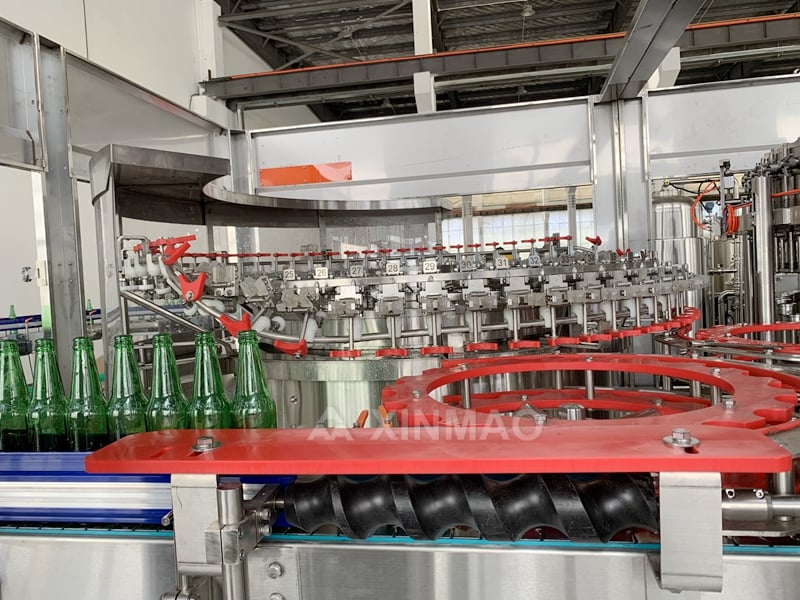
Beyond the Sticker Price: How Hidden Costs Inflate Total Cost of Ownership for Beverage Filling Equipment
Direct maintenance expenses: Service contracts, spare parts, and labor over a 5-year lifecycle
Total Cost of Ownership (TCO) begins with direct maintenance costs that seldom appear on the initial quote for beverage filling equipment. Service contracts typically cover preventive visits, calibration, and priority response—but annual premiums often rise 6–10% after the first year. Spare parts such as fill nozzles, seals, and wear rings can add $12,000–$25,000 over five years if a facility does not stock critical items in-house. Labor is another multiplier: two technicians spending six hours per week on routine upkeep at $45–$65 per hour equals $28,000–$40,000 annually. Installation, training, and validation add 10–15% to the machine price, while energy, labor, and maintenance collectively consume 15–25% of machine value each year. Ignoring these line items can easily double or triple the five-year TCO versus the sticker price.
Indirect production losses: Fill inaccuracy, foaming, and dripping from worn seals or uncalibrated sensors
Worn seals and uncalibrated sensors create production losses that never appear on maintenance work orders. A single dripping fill stem seal on a 24-head filler wastes several liters per 8-hour shift—and contaminates bottle exteriors. Uncalibrated level sensors or flow meters cause overfill and underfill; foaming—often triggered by worn back-pressure valves, turbulent flow, or incorrect fill speed—reduces effective container volume and slows the entire line. On a 12,000-container-per-hour line, a 0.2% fill-volume drift wastes roughly 190 containers’ worth of product per shift. These losses are frequently misclassified as raw material variance rather than equipment condition, delaying corrective action. Over five years, such indirect losses can exceed direct parts costs.
Downtime economics: Hourly production loss and troubleshooting labor ($1,200–$3,500/hour)
Unplanned downtime on high-speed beverage filling equipment typically costs $1,200–$3,500 per hour, according to 2026 downtime benchmarks for beverage packaging lines. A 10,000-bottle-per-hour water line may lose $1,200/hour; a 24,000-can-per-hour carbonated line can exceed $3,500/hour. Troubleshooting labor adds further expense: senior controls technicians or vendor remote support often bill $100–$300/hour, and root-cause investigations routinely take 4–8 hours. For example, a 90-minute stoppage at a $2,000 hourly margin—plus two technicians working four hours at $75/hour—totals $3,600. Because these costs rarely appear in maintenance budgets, they often surface as unexplained variances in monthly P&L statements. Over five years, repeated short stoppages can accumulate into six-figure losses—even without major component failure.
Sanitation Demands: How CIP Requirements Drive Up Beverage Filling Equipment Maintenance Frequency and Labor
Chemical corrosion, gasket degradation, and valve fouling in CIP-intensive environments
Chemical corrosion, gasket degradation, and valve fouling are hidden cost multipliers in CIP-intensive beverage filling equipment. Sugar, pulp, yeast, and beerstone residues make filler circuits more failure-prone—especially under aggressive caustic washes, acid rinses, and hot sanitizing cycles. These processes repeatedly stress stainless steel surfaces, elastomer seals, and valve seats. Gaskets swell, dry, and crack after repeated exposure, losing compression set and creating slow leaks that undermine fill accuracy and microbial control. Diaphragm and seat valves accumulate mineral films—including beerstone and calcium oxalate—that prevent full closure, forcing more frequent rebuilds. When CIP temperature, flow velocity, or chemical concentration drifts outside specifications, fouling accelerates—turning routine sanitation into a source of unplanned repairs. Monitoring seal condition and valve stroke after each cycle helps catch early degradation before sanitation demands become production-stopping failures.
Regulatory-driven disassembly, verification, and documentation adding 1.5–2.5 hours/shift
Regulatory-driven disassembly, verification, and documentation add 1.5–2.5 hours per shift to sanitation-related maintenance on high-speed filling lines. Even when automated CIP completes without alarm, operators must often partially disassemble fill heads, collect swab samples, and verify absence of product residue or biofilm. Under food safety rules—including the Food Safety Modernization Act (FSMA), 3-A Sanitary Standards, and European Hygienic Engineering & Design Group (EHEDG) guidelines—every cleaning cycle must be traceable: chemical concentration, temperature, flow rate, cycle time, and corrective actions all require review and sign-off. This verification recurs after product changeovers, allergen switches, or any deviation. The resulting labor often hides in sanitation budgets rather than maintenance work orders—yet it consumes skilled technician hours, delays line startups, and raises overtime when documentation errors force re-cleaning or extended hold times.

Critical Component Wear: Valves, Seals, Pumps, and Sensors as Recurring Cost Drivers in Beverage Filling Equipment
Seal and diaphragm valve failure: Leakage, cross-contamination risk, and 40% rise in unscheduled maintenance
Seals and diaphragm valves are among the most frequently replaced components in beverage filling equipment—controlling product flow, fill accuracy, and hygienic separation. When elastomer seals, O-rings, and valve seats wear, small leaks become common—creating cross-contamination risk and product waste. In carbonated and hot-fill lines, worn diaphragm valves can also cause foaming, pressure instability, and inaccurate fill volumes. Maintenance logs from high-speed operations show that neglected seal and diaphragm wear raises unscheduled maintenance by up to 40%. Emergency repairs force line stoppages, and unplanned downtime costs far more than scheduled replacement. Routine inspection every 12 to 18 months helps detect hardening, cracking, or erosion before failure—reducing contamination events and preserving tight fill tolerances.
Maintenance Strategy Impact: Why Predictive and Reliability-Centered Approaches Reduce Long-Term Beverage Filling Equipment Costs
Preventive vs. predictive ROI: Vibration analysis and sensor drift monitoring cut unplanned downtime by 37%
Preventive maintenance follows fixed intervals—but often replaces parts too early or misses early wear between checks. A predictive approach uses vibration analysis and sensor drift monitoring to flag degrading valves, pumps, and seals before they fail. This condition-based strategy cuts unplanned downtime by 37% and reduces maintenance costs by up to 30%, according to recent plant studies. Facilities using condition-based monitoring also achieve 85% longer operational life than reactive repair programs, per the 2026 Beverage Maintenance Guide. Instead of replacing seals on a calendar schedule, technicians monitor specific vibration signatures and fill-weight drift—then schedule work only when needed. That reduces emergency parts orders, protects fill accuracy, and avoids the hidden cost of unnecessary labor. For filling lines, predictive maintenance transforms ongoing maintenance from recurring overhead into a controlled, data-driven investment—lowering TCO and maximizing line availability.
FAQ
What is Total Cost of Ownership (TCO) in beverage filling equipment?
Total Cost of Ownership (TCO) refers to all costs associated with owning and operating beverage filling equipment over its lifecycle. These costs include direct expenses like maintenance, spare parts, and labor, as well as indirect costs like downtime and production losses.
How do service contracts contribute to TCO?
Service contracts cover preventive maintenance, calibration, and priority response for beverage filling equipment. However, annual premiums often increase over time, adding to long-term ownership costs.
What are some common hidden costs in beverage filling equipment maintenance?
Hidden costs include spare parts replacement, labor for routine upkeep, indirect production losses from worn components, and unplanned downtime expenses.
Why is predictive maintenance better than preventive maintenance?
Predictive maintenance uses condition-based monitoring to detect component degradation before failures occur. This approach reduces unplanned downtime by up to 37% and cuts unnecessary replacement costs.
What challenges do CIP-intensive environments pose?
CIP environments require frequent sanitation, which can lead to chemical corrosion, gasket degradation, and valve fouling. These issues add to maintenance frequency and costs.
Table of Contents
- Beyond the Sticker Price: How Hidden Costs Inflate Total Cost of Ownership for Beverage Filling Equipment
- Sanitation Demands: How CIP Requirements Drive Up Beverage Filling Equipment Maintenance Frequency and Labor
- Critical Component Wear: Valves, Seals, Pumps, and Sensors as Recurring Cost Drivers in Beverage Filling Equipment
- Maintenance Strategy Impact: Why Predictive and Reliability-Centered Approaches Reduce Long-Term Beverage Filling Equipment Costs
-
FAQ
- What is Total Cost of Ownership (TCO) in beverage filling equipment?
- How do service contracts contribute to TCO?
- What are some common hidden costs in beverage filling equipment maintenance?
- Why is predictive maintenance better than preventive maintenance?
- What challenges do CIP-intensive environments pose?