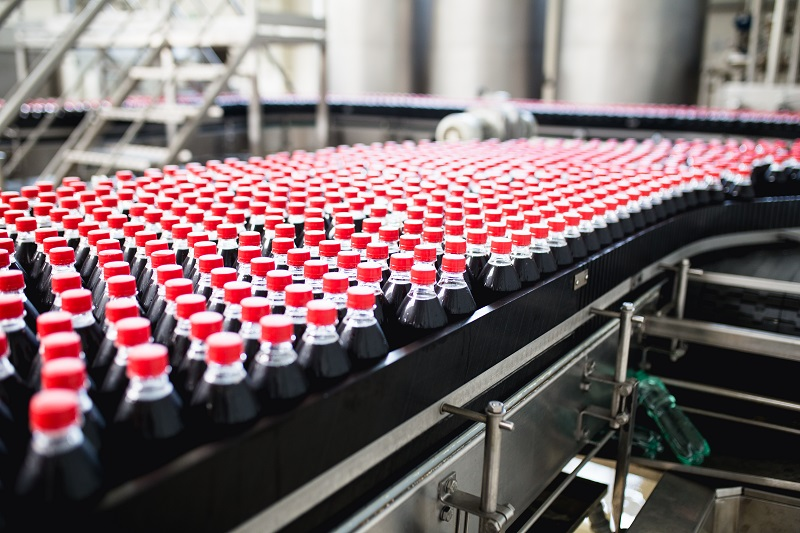
Why Smart Buyers Choose Advanced Mesin Filling Botol Over Budget Alternatives
A mesin filling botol — the Indonesian and Malaysian term for a bottle filling machine — represents a capital investment that determines a beverage producer's output capacity, product quality, and maintenance costs for the next 10–15 years. Choosing the cheapest available machine saves 15,000–30,000 at purchase and costs 50,000–100,000 in lost production time, product waste, and replacement parts over the machine's service life. The difference between an entry-level mesin filling botol and an advanced system is not the brand name on the control panel. It is the specifications that determine whether the machine fills 10,000 bottles with consistent volume or wastes 300 of them to overfill and underfill every shift.
Zhangjiagang Xinmao Drink Machinery (Xinmao Machinery) produces advanced mesin filling botol solutions through its DCGF-series rinsing-filling-capping 3-in-1 monoblock design, engineered for carbonated soft drinks, sparkling water, and still beverages in PET, glass, and can formats at speeds from 1,000 to 36,000 BPH. The core technology — isobaric filling — pressurizes the bottle to match the filler bowl's internal CO₂ pressure before the filling valve opens, so the carbonated liquid flows into the bottle under gravity without turbulence, foam formation, or CO₂ breakout. The result is a fill level accurate to ±1.5 mm across every bottle in the production run — the 99% fill accuracy that Xinmao Machinery's PLC-controlled systems maintain across shift-long operation without operator adjustment.
What Makes an Advanced Mesin Filling Botol "Advanced"
Material Specifications That Prevent Downtime
The components that contact the beverage — filling tank, filling valves, product piping — determine whether the mesin filling botol produces consistently safe, contamination-free product or becomes a source of quality holds and sanitation shutdowns. Advanced systems use 304-grade stainless steel for all product-contact surfaces, with electropolished internal finishes (Ra ≤ 0.8 μm) that prevent bacterial adhesion and biofilm formation. The filling valves use food-grade EPDM or silicone seals that maintain elasticity through CIP (clean-in-place) cycles at 85°C without hardening, cracking, or leaching plasticizer into the product — a failure mode common in budget machines using generic rubber seals that degrade within 12–18 months. Xinmao's DCGF-series machines use these advanced materials throughout, compliant with food-safety standards for export markets including ISO 9001 and CE certification.
Real-World Application: An Indonesian Bottled Tea Producer's Upgrade
A ready-to-drink tea producer in Indonesia had been running a budget mesin filling botol for three years — a machine purchased primarily on price that filled 3,000 BPH but required constant fill-level adjustment and produced approximately 4% overfill waste (tea overflowing the bottle neck before capping, sticky residue accumulating on the conveyor, and product loss that translated to roughly $12,000 per year in wasted tea concentrate).
The producer upgraded to a Xinmao DCGF-series mesin filling botol with isobaric filling adapted for still beverages (gravity fill mode with precise valve shutoff). Fill accuracy improved to ±1 mm (essentially zero overfill), eliminating the 4% product waste entirely. The PLC-controlled recipe system stored fill parameters for three different bottle sizes — 250 ml, 330 ml, and 500 ml — reducing changeover time from 45 minutes to under 15 minutes. The producer recovered the higher equipment investment in 14 months from eliminated product waste and faster changeover alone, and the machine has now run for five years without a single filling-valve seal replacement — a maintenance item that the budget machine required every 18 months.
Frequently Asked Questions
What is the difference between isobaric and gravity filling?
Isobaric filling pressurizes the bottle to match the filler bowl pressure before opening the filling valve — essential for carbonated beverages because it prevents CO₂ breakout and foaming. Gravity filling uses atmospheric pressure — suitable for still beverages (water, juice, tea) where no dissolved gas is present. Xinmao's mesin filling botol machines support both modes.
What filling speed do I need for my production volume?
Calculate: annual production volume ÷ operating days per year ÷ operating hours per day × 1.2 (20% capacity buffer for growth and peak demand). A producer targeting 10 million liters per year, operating 300 days × 8 hours, needs approximately 5,000 L/hr — equivalent to 10,000 BPH at 500 ml. Xinmao offers custom speeds from 1,000 to 36,000 BPH.
What bottle types can an advanced mesin filling botol handle?
PET bottles (most common for water, CSD, juice), glass bottles (premium beverages, beer, wine), and aluminum/tin cans (energy drinks, carbonated beverages). Each container type requires specific filling-valve adaptations and handling systems. Xinmao's DCGF-series supports all three formats.
What is a 3-in-1 monoblock filling machine?
A 3-in-1 monoblock integrates bottle rinsing (cleaning the bottle interior with treated water or ionized air), filling (dispensing the beverage to the target volume), and capping (applying and torquing the closure) into a single machine frame with a shared bottle-handling starwheel. This eliminates the conveyor connections between separate machines that add floor space, transfer points, and potential contamination exposure. Xinmao's DCGF-series uses this monoblock design.
How do I maintain fill accuracy over time?
Calibrate filling valves every 500 operating hours by running a fill-volume test on 20 consecutive bottles. Check valve seals for wear (replace every 2,000–3,000 hours or when fill-volume variation exceeds ±2%). Clean the filling tank interior weekly with CIP solution. Xinmao provides maintenance schedules with every mesin filling botol installation.
What after-sales support does Xinmao Machinery provide?
Pre-installation: factory acceptance testing, layout drawings, utility specifications. Installation: on-site supervision by Xinmao engineers, operator training (2–3 days). Post-installation: 24/7 remote support, spare-parts availability from the Zhangjiagang headquarters, and local service through 150+ service points globally. Xinmao has delivered turnkey beverage production lines to over 80 countries including Indonesia, Malaysia, and across Southeast Asia.