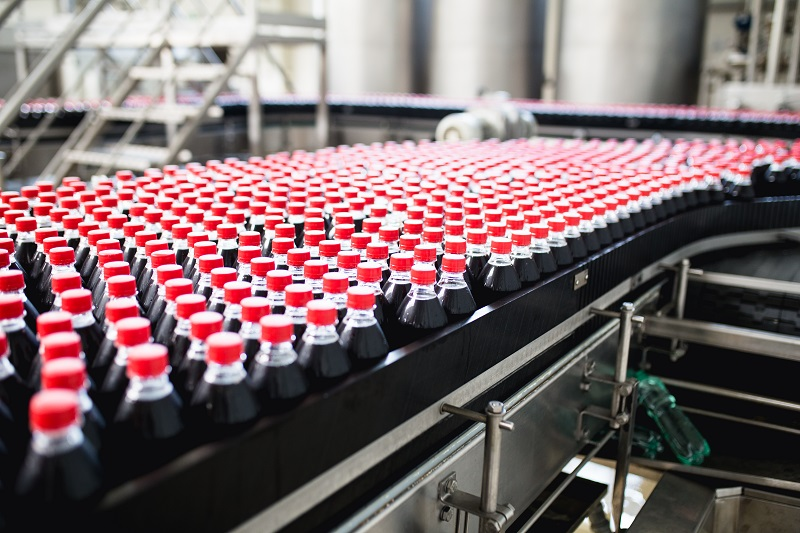
Why Constant Pressure Is Critical for Carbonated Drink Filling Machine Performance
Impact of pressure fluctuations on carbonation loss, fill volume accuracy, and product shelf life
Maintaining constant pressure in a carbonated drink filling machine is foundational to beverage quality and production efficiency. Even minor pressure variations—just 0.2 bar—trigger premature CO₂ release from solution, resulting in up to 8% carbonation loss per batch (Ponemon 2023). This instability directly compromises fill volume accuracy: underfilled containers risk noncompliance with trade regulations, while overfilled units inflate packaging costs and waste CO₂. Critically, pressure drops also permit oxygen ingress, accelerating oxidative flavor degradation and microbial proliferation—reducing average shelf life by 30%. Consistent pressure control prevents this cascade, ensuring uniform carbonation, precise fills, and extended market viability.
Thermodynamic link: CO₂ solubility, Henry’s Law, and the necessity of isobaric conditions
Carbon dioxide solubility follows Henry’s Law: gas dissolution in liquid is directly proportional to its partial pressure at constant temperature. For carbonated beverage filling, this means stable CO₂ retention hinges on maintaining isobaric conditions between the brite tank and container. When pressure falls during transfer, dissolved CO₂ rapidly nucleates into bubbles—causing foam eruptions that halt production and waste product. Modern systems apply counter-pressure equalization before liquid transfer to establish thermodynamic equilibrium, satisfying Henry’s Law requirements. This scientifically grounded approach eliminates foaming-related downtime and preserves target carbonation, preventing an estimated $740k in annual losses per line (Ponemon 2023).
Isobaric Filling Mechanics: How Carbonated Drink Filling Machines Achieve Pressure Stability
Isobaric filling is the engineering standard enabling carbonated drink filling machines to sustain pressure stability during liquid transfer. By enforcing identical pressure environments between storage and container prior to filling, it prevents CO₂ desorption and foam formation.
Pre-fill counter-pressure equalization between brite tank and container
The process begins with the empty container sealed against the filling valve. CO₂ is injected until internal pressure matches the brite tank—typically 2–4 bar. This equalization establishes the isobaric condition required for stable CO₂ solubility under Henry’s Law. Only once pressure equilibrium is verified does liquid transfer initiate.
Precision operation of isobaric valves — timing, sealing integrity, and CO₂ replenishment control
Specialized valves perform three coordinated functions:
- Microsecond-level timing: Synchronized opening/closing prevents transient pressure differentials
- Hermetic sealing: Dual-seal designs maintain chamber integrity up to 6 bar
-
Dynamic gas replenishment: Continuous low-flow CO₂ injection offsets dissolved gas loss during filling
Together, these controls deliver fill volume accuracy within ±0.5% and carbonation consistency within ±0.2 volumes CO₂.
Automated Pressure Regulation Systems in Modern Carbonated Drink Filling Machines
Modern carbonated drink filling machines rely on closed-loop automation—not manual adjustment—to meet stringent pressure stability requirements. Intelligent control architectures continuously monitor and correct pressure in real time.
Real-time PID-controlled feedback loops using high-speed pressure sensors and servo-pneumatic valves
At the core is a Proportional-Integral-Derivative (PID) controller integrated with a PLC. High-speed pressure sensors at the brite tank and fill valve feed live data to the controller, which compares actual values against the setpoint. The PID algorithm computes precise correction signals, directing servo-pneumatic valves to adjust gas flow in milliseconds. These valves maintain system pressure within ±0.01 MPa—even amid disturbances like container changeovers or ambient temperature shifts. As a result, carbonation loss remains below 0.05% per cycle, and fill-volume variation stays under ±0.5%, safeguarding both product integrity and CO₂ efficiency across high-speed runs.
Minimizing CO₂ Loss and Foam During Filling: Pressure-Optimized Process Design
Flow dynamics tuning — fill nozzle geometry, liquid velocity, and backpressure coordination
Optimizing flow dynamics is essential to suppress CO₂ loss and foam. Fill nozzle geometry governs flow regime: turbulent flow increases CO₂ loss by up to 72% compared to laminar alternatives (Beverage Production Journal 2023). Gradual-taper nozzles reduce velocity impact zones and preserve dissolved CO₂ integrity.
Effective backpressure management synchronizes three parameters in real time:
- Fill nozzle diameter (to regulate exit velocity)
- Liquid column height (to manage flow momentum)
- Counter-pressure gradients (to sustain isobaric conditions)
Gradual flow ramp-up profiles—implemented by leading manufacturers—cut initial turbulence by 50% versus constant-speed filling, achieving 98.6% CO₂ retention. Real-time backpressure compensation accounts for liquid displacement effects, while thermal stability (±1.5°C) further anchors carbonation levels. This holistic coordination ensures operational reliability without compromising sensory or shelf-life performance.
FAQ
What is Henry's Law and how does it relate to carbonation?
Henry's Law states that the amount of gas dissolved in a liquid is proportional to its partial pressure above the liquid, provided the temperature remains constant. In carbonated drink filling, maintaining consistent pressure ensures CO₂ stays dissolved and minimizes loss.
How does pressure fluctuation impact beverage quality?
Pressure fluctuations can lead to carbonation loss, inaccurate fill volumes, and oxygen ingress, which reduces shelf life and compromises beverage flavor and microbial stability.
What are the key controls in isobaric filling machines?
Isobaric filling machines use features like counter-pressure equalization, microsecond timing for valves, hermetic sealing, and dynamic CO₂ replenishment to ensure pressure stability and product quality.
How do modern systems regulate pressure in carbonated drink filling machines?
Modern systems use closed-loop automation with PID controllers, high-speed pressure sensors, and servo-pneumatic valves to monitor and adjust pressure in real time for consistent carbonation and precise filling.
Why is flow dynamics tuning crucial during filling?
Flow dynamics tuning minimizes CO₂ loss and foam by optimizing nozzle geometry, liquid velocity, and backpressure coordination, preserving carbonation and enhancing product reliability.
Table of Contents
- Why Constant Pressure Is Critical for Carbonated Drink Filling Machine Performance
- Isobaric Filling Mechanics: How Carbonated Drink Filling Machines Achieve Pressure Stability
- Automated Pressure Regulation Systems in Modern Carbonated Drink Filling Machines
- Minimizing CO₂ Loss and Foam During Filling: Pressure-Optimized Process Design
- FAQ