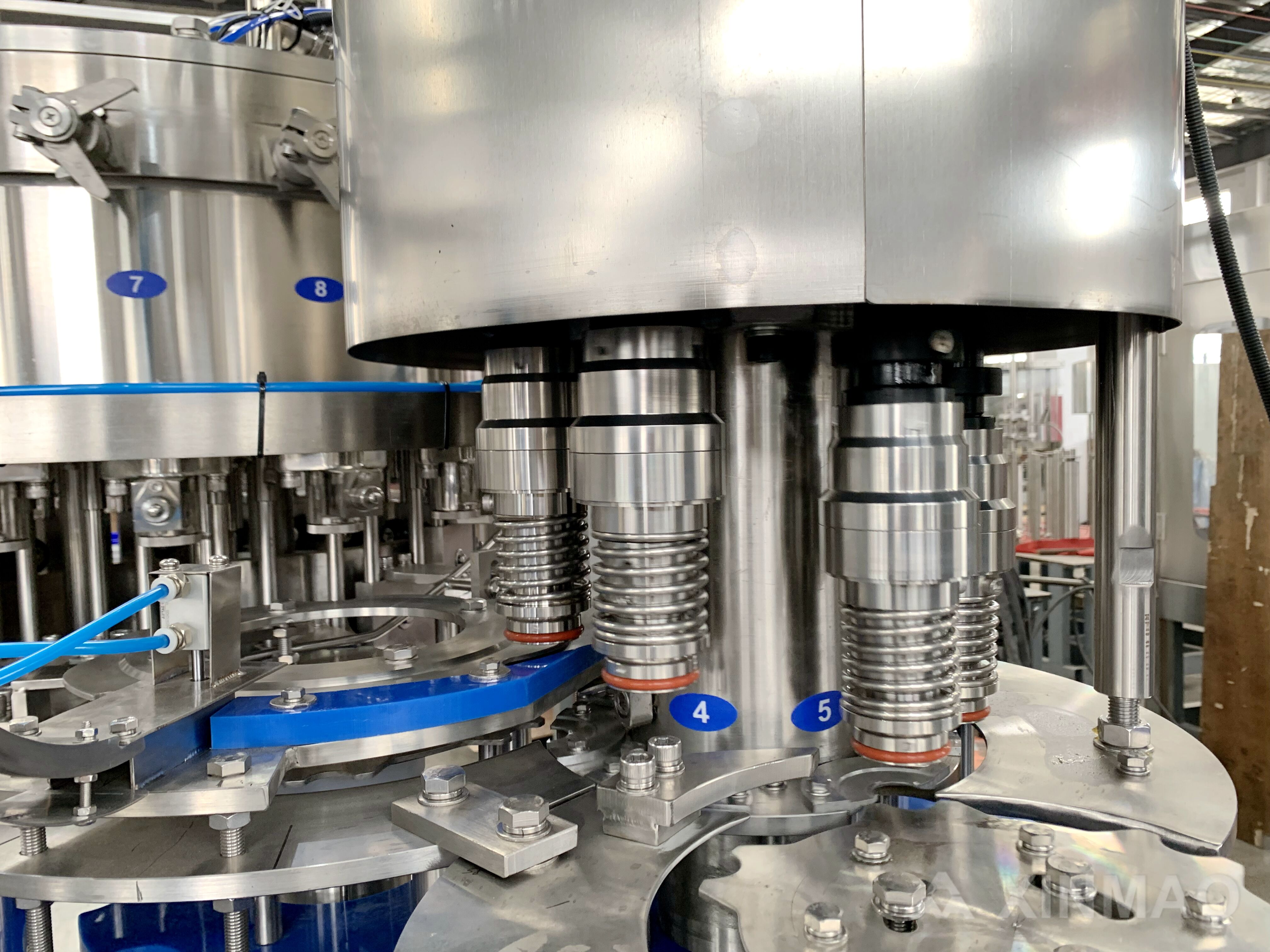
Throughput Performance: Speed, Consistency, and Carbonation Integrity
Bottles Per Hour (BPH) Benchmarks Across Machine Types
Most manual soft drink filling machines manage around 150 to 250 bottles per hour and need someone standing right there all the time placing bottles, starting fills, and tightening lids. The semi automatic versions bump this up to between 800 and 1500 BPH because they handle the actual filling automatically but still rely on people to load and unload containers manually. When we get to fully automated rotary fillers though, these bad boys can crank out over 6000 bottles an hour thanks to their continuous operation, built in conveyor belts, and caps that sync right up with the filling process. That kind of speed difference means about 24 times what the basic manual machines do. And it's not just about numbers either. Faster processing cuts down on labor costs per bottle and streamlines several steps into one, which is why serious producers who care about volume simply cannot ignore automation anymore.
How Carbonation Stability Impacts Fill Consistency and Line Uptime
Keeping CO2 levels steady is really important for getting consistent fills in carbonated drinks. When people fill bottles manually, they're at the mercy of changing air pressure around them, which can lead to losing about 3% of carbonation every single minute. That's bad news because it causes those annoying foam overflows that stop production dead in its tracks. Automated systems solve this problem by keeping everything under constant pressure between 30 and 40 psi during filling. They also work with temperature controlled areas to keep things from foaming up unexpectedly. With these systems in place, CO2 losses drop below half a percent, and factories see around 20% less unexpected downtime compared to when workers do it by hand. What does all this mean? Bottles get filled more accurately, each batch tastes pretty much the same, and there are way fewer rejects because of flat drinks or spills.
Total Cost of Ownership and ROI for Soft Drink Filling Machines
Upfront Investment: Manual Fillers ($2K–$15K) vs. Fully Automatic Lines ($50K–$500K+)
For those just getting started, manual soft drink filling equipment is pretty affordable, usually costing between two thousand and fifteen thousand dollars. These work great for new businesses, folks who package products for others trying out different items, or small craft producers making limited runs. Then there are semi-automatic models that sit somewhere between twenty to thirty grand. They give operators some automation benefits without needing to invest in an entire production line. When it comes to fully automatic rotary fillers, prices start climbing from fifty thousand upwards, sometimes reaching half a million or more for top-of-the-line systems capable of handling carbonated drinks at high speeds. These premium setups often come with features like built-in cleaning systems, visual quality checks, and advanced formula controls. According to industry reports, nearly seven out of ten small operations end up spending too much on automated machinery before they really need it. That highlights why matching investment levels with actual market demand makes so much business sense for growing companies.
Long-Term Savings: Labor Efficiency, Waste Reduction, and Downtime Mitigation
Soft drink bottling operations that switch to automated filling equipment typically see a drop in reliance on manual labor somewhere between 40% and 60%. This allows workers to move away from monotonous repetitive work into roles focused on monitoring, keeping equipment running smoothly, and ensuring product quality remains consistent. The machines fill containers with much greater accuracy around plus or minus half a milliliter which means about 15% less wasted product compared to older manual methods where variance could reach plus or minus three milliliters. Plus, the modern sealed valves not only cut down on contamination risks but also mean production lines experience roughly 20% fewer interruptions. A recent report from Beverage Production Quarterly points out that even semi automatic systems can pay for themselves within just over a year to maybe 18 months thanks to those efficiency improvements, all while avoiding the hefty upfront costs associated with going fully automated right away.
Precision, Hygiene, and Regulatory Compliance in Soft Drink Filling
Fill-Accuracy Standards: ±0.5 mL (Automatic) vs. ±3.0 mL (Manual) for Carbonated Beverages
Getting the fill right matters a lot when it comes to carbonated drinks. If there's even a slight error, the whole pressure balance inside the container gets messed up. That can lead to either not enough liquid (which breaks regulations) or too much that causes foaming and waste. Most automatic filling machines hit around plus or minus 0.5 milliliters, which keeps everything stable, labels correct, and satisfies those FDA requirements about how much product should be in each container. Manual systems aren't nearly as accurate though, typically off by about 3 milliliters on average. This creates problems with wasted product and higher rejection rates at quality checks. According to last year's Beverage Industry Report, just switching to automated fill controls cuts down on product giveaways by roughly 4.7% per year. For smaller operations still relying on manual methods, this difference can really add up over time.
FDA and ISO 22000 Requirements for Sanitary Design and Microbial Control
Soft drink filling systems that meet compliance standards need to follow FDA guidelines for hygienic design. This means using stainless steel components, typically grade 304 or 316, with surface finishes no rougher than 0.8 microns Ra. The equipment also needs sloped surfaces so water doesn't pool anywhere. ISO 22000 certification requires companies to implement proper clean-in-place (CIP) procedures. These automated cleaning processes eliminate the need to take apart equipment manually, which cuts down on mistakes made by workers during cleaning. Sealless valves represent another important advancement, as they help stop bacteria from getting into the system at those tricky connection points where contamination often starts. None of these safety measures should be considered optional extras. When products get recalled due to contamination issues, manufacturers face serious financial hits averaging around $740k per incident according to the Ponemon Institute report from last year. Worse still, about seven out of ten such incidents can actually be traced back to basic design flaws or poor cleaning practices right in the filling area itself.
Operational Flexibility and Scalability for Growing Brands
For beverage companies looking to grow past small batch production runs, being able to adapt to changing market needs becomes really important. Traditional manual filling systems aren't very flexible at all. When manufacturers need to switch between different bottle sizes, adjust carbonation levels, or modify product formulas, they typically spend several hours on retooling and getting everything calibrated properly. The newer automated soft drink filling machines come with modular designs and standard connection points that make it much easier to reconfigure operations quickly. Just adding extra filler valves, exchanging certain components, or bringing in inline capping and labeling units can boost output from around 5,000 bottles an hour up to over 30,000 without having to replace major pieces of equipment. What makes these systems particularly valuable is their ability to handle ongoing quality monitoring during production, tweak recipes on the fly, and meet various local regulations regarding labels, carbonation requirements, and safety specifications when expanding into foreign markets where standards differ significantly from what's used domestically.
FAQ
What are the benefits of using fully automated soft drink filling machines?
Fully automated machines drastically increase throughput up to 6000 bottles per hour, reduce labor costs, improve fill accuracy, and minimize unexpected downtime due to their advanced features like built-in cleaning systems and pressure controls.
How do automated systems help maintain carbonation stability?
Automated systems maintain consistent CO2 levels by operating under constant pressure between 30 and 40 psi and utilizing temperature-controlled environments, reducing CO2 losses to less than half a percent.
Are the initial costs for automated systems justified by long-term benefits?
While the upfront costs for automated systems are significantly higher, they offer long-term savings in labor efficiency, waste reduction, and downtime mitigation, often paying off within a year to 18 months.
Why is fill accuracy important in carbonated beverage production?
Achieving precise fill levels ensures regulatory compliance, reduces product waste, and avoids problems such as foaming and pressure imbalance in containers.
What are the regulatory requirements for soft drink filling machines?
Machines must follow FDA guidelines and ISO 22000 standards for hygienic design and microbial control, using materials like stainless steel and implementing clean-in-place (CIP) procedures.
Table of Contents
- Throughput Performance: Speed, Consistency, and Carbonation Integrity
- Total Cost of Ownership and ROI for Soft Drink Filling Machines
- Precision, Hygiene, and Regulatory Compliance in Soft Drink Filling
- Operational Flexibility and Scalability for Growing Brands
-
FAQ
- What are the benefits of using fully automated soft drink filling machines?
- How do automated systems help maintain carbonation stability?
- Are the initial costs for automated systems justified by long-term benefits?
- Why is fill accuracy important in carbonated beverage production?
- What are the regulatory requirements for soft drink filling machines?