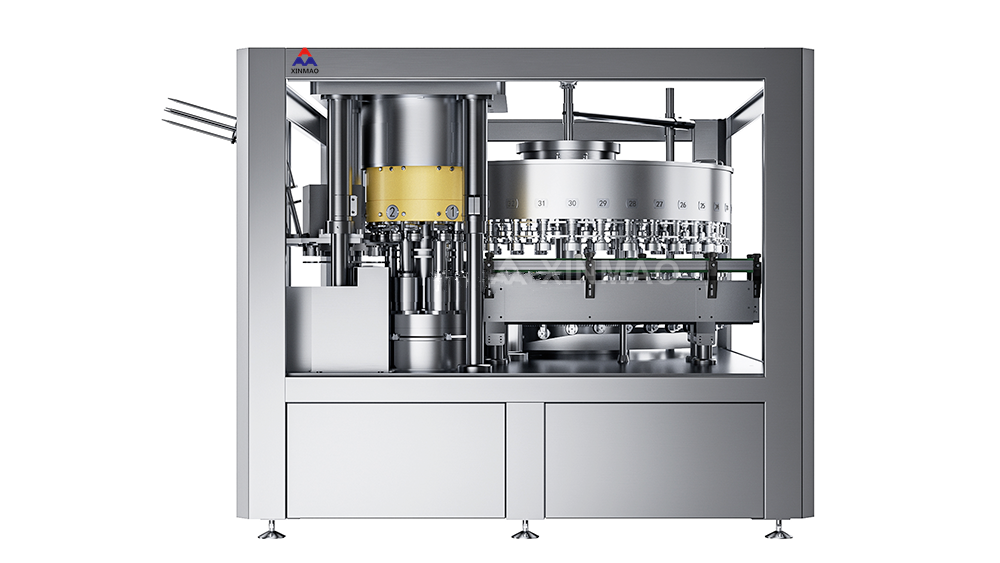
Why Bottling Machine Monoblocks Deliver Superior Line Efficiency
Eliminating Transfer Delays and Bottlenecks with Single-Frame Integration
Monoblock bottling systems bring together the whole process from cleaning to filling right through to sealing all within one compact unit instead of having those steps spread across different stations connected by conveyor belts. When containers move between machines in traditional setups, there are lots of points where things can go wrong. Bottles get stuck, they line up incorrectly, and these problems lead to unexpected shutdowns that waste time and money. Processing everything inside a single frame changes this completely. The bottles just keep moving along without interruption, which means production runs much smoother day after day. Factories report around a 28 percent reduction in downtime related to transfers when switching to monoblock systems. This makes it easier to maintain consistent quality standards while also planning outputs more accurately for customers who need their products on schedule.
Throughput Gains: 22% Average Increase vs. Linear Configurations
Monoblock systems deliver a 22% average throughput increase over linear setups, according to PMMI's 2023 packaging equipment benchmark report. This gain arises from three integrated advantages:
- Continuous motion technology eliminates speed mismatches between process stages
- Compact footprint reduces container travel distance and inertia losses
- A centralized PLC synchronizes all functions—rinsing, filling, and capping—without delay or drift
Without accumulation zones, reorientation steps, or buffer conveyors, monoblocks consistently operate at rated capacity. That consistency allows manufacturers to scale output without expanding floor space or labor headcount.
Hygienic Assurance Through Closed-Loop Bottling Machine Design
Minimizing Contamination Risk by Removing Open Transfers and Manual Handling
In traditional linear production lines, bottles get exposed to regular air and touched by workers as they move from one station to another. This is actually a big problem when it comes to keeping sensitive items clean, especially things like bottled water, milk drinks, and medicines that need to stay sterile. Monoblock systems work differently because everything happens inside a closed, connected space. When there are no open areas where bacteria can enter and fewer times when people handle the bottles directly, the chances of germs getting into the product drop dramatically. Plants that switched to monoblock technology have seen their ATP swab test failures go down around 94%. That's pretty impressive evidence that surfaces stay cleaner and overall conditions improve quite a bit.
ISO 22000–Compliant Sanitary Engineering in Integrated Rinsing, Filling, and Capping
Monoblock systems satisfy ISO 22000 standards thanks to their specially designed sanitary features. These include surfaces that drain properly with at least a 3 degree slope, clamps that come off quickly when cleaning is needed, and flow meters connected magnetically so they don't touch the product directly. The built in clean in place or CIP system makes it possible to automatically sterilize all the important parts like rinse nozzles, fill valves, and capping units. This cuts down on cleaning time by roughly 40 percent according to industry data. At the same time, these systems keep things microbially compliant whether processing thin juices or thick pharmaceutical solutions where contamination risks are much higher.
Precision Control Across Liquid Viscosities and Cap Types in One Bottling Machine
Adaptive Filling Systems for Consistent Volume Accuracy (0.5–5000 mL, Low-to-High Viscosity)
The latest monoblock machines come equipped with smart filling systems that automatically compensate for different liquid thicknesses and volumes, delivering around half a percent accuracy in measurements from just half a milliliter all the way up to five thousand milliliters. These systems work equally well whether dealing with runny electrolyte solutions or thick creams and lotions because they rely on accurate pumps combined with continuous monitoring of how fast liquids are flowing through them. When manufacturers switch between products, there's no longer any need to stop production lines or reset equipment settings. This cuts down on wasted materials and keeps companies compliant with regulations like those set by the FDA regarding proper labeling requirements for underfilled containers. For businesses packaging multiple products at once or working under contract arrangements, this flexibility makes their operations much more efficient overall.
Smart Torque Calibration and Cap Integrity Monitoring in Automatic Capping
The integrated capping system automatically adjusts torque levels for different types of closures including screw caps, snap-on lids, and pump dispensers. It applies just the right amount of rotational force around 8 to 12 Newton meters generally to make sure the seals hold tight without damaging threads. Electromagnetic actuators work alongside fast acting sensors that check each cap every half second or so, catching any faulty ones before they get packaged further down the line. This helps keep carbonated drinks from leaking out and preserves the sterile conditions needed for medicine bottles. When switching between products, setup times can be cut nearly in half since there's no need to manually tweak torque settings anymore. Plus, the system keeps detailed records of all torque measurements throughout production runs, which makes tracking batches much easier during quality checks and regulatory inspections.
FAQ
Why are monoblock bottling machines considered more efficient? Monoblock bottling machines integrate all stages of the bottling process into one unit, reducing transfer delays and bottlenecks, and ensuring more consistent production and higher throughput.
How do monoblock systems help in maintaining hygiene? These systems operate within a closed-loop, reducing contamination risks by eliminating open transfers and manual handling, which is crucial for producing sterile products like medicines.
What is the throughput increase with monoblock systems? Monoblock systems can deliver an average throughput increase of 22% compared to linear configurations, allowing for better scaling without expanding physical or labor resources.
Can monoblock systems handle different products efficiently? Yes, they are equipped with adaptive filling systems and smart torque calibration, which allow them to manage a variety of liquid viscosities and cap types seamlessly.