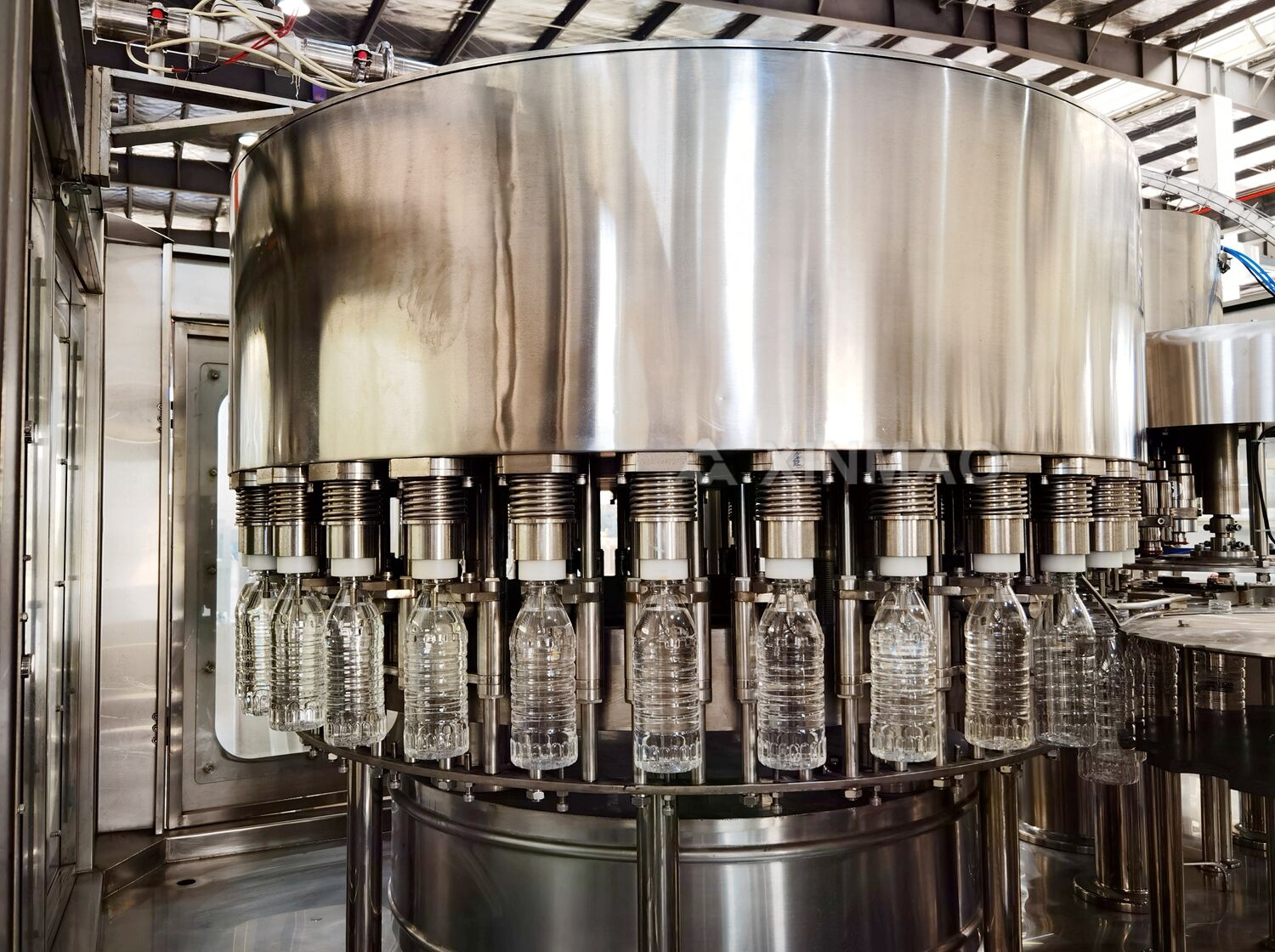
Key Components of a Water Bottle Filling Machine System
Bottle Handling: Unscramblers, Rinse Stations, and Precision Conveyors
Water bottle filling operations today depend heavily on sophisticated bottle handling systems that keep everything running smoothly from start to finish. These systems often feature unscramblers which take all those randomly placed containers and line them up properly, either through spinning discs or platforms that vibrate until bottles fall into place. Some facilities can handle upwards of 30,000 bottles each hour thanks to these mechanisms. After alignment, the bottles head over to rinse stations where powerful jets between 15 and 30 pounds per square inch blast away dirt and germs, making sure everything meets strict FDA requirements for cleanliness. The conveyor belts themselves are pretty impressive too, with special servo controls that space each bottle within half a millimeter accuracy. This careful spacing prevents any smacking together during transport and makes sure everything stays synchronized with what comes next in the production line. Industry stats show that when all these components work together properly, manufacturers typically lose less than 0.3% of their product during packaging, which is actually quite remarkable considering how many bottles pass through these systems every day.
Filling Mechanisms for Water: Volumetric, Gravity, and Time-Pressure Systems
How accurately we fill containers impacts everything from product quality to meeting regulations and controlling costs. Volumetric filling systems, which use things like piston cylinders or calibrated flow meters, can deliver pretty exact measurements with about a 1% margin of error. These work best when dealing with those hard plastic PET bottles. Then there are gravity fed fillers that rely on the weight of the liquid itself to get consistent fills. They're great for thin liquids like purified water and can handle around 200 bottles per minute. For carbonated drinks, time pressure systems mix compressed air with carefully timed valves to fill without losing CO2 or causing overflow issues. According to recent numbers from the Beverage Production Report in 2023, volumetric systems actually cut down on wasted water by roughly 18% over traditional gravity methods when running at full speed.
Capping and Sealing: Screw, ROPP, and Induction Options for Water Bottles
Good sealing matters a lot when it comes to keeping products safe, extending how long they last on shelves, and building trust with customers who buy them. For regular plastic bottles, screw cappers work by applying controlled amounts of force between 5 and 15 Newton meters through those rotating chuck mechanisms we see at bottling plants. Then there's ROPP capping technology which puts those telltale aluminum seals onto glass bottle necks. These create pretty much watertight seals with leakage rates below 0.01%, making them great for preventing tampering. Induction sealing takes things even further by using electromagnetic heat to fuse foil liners right underneath the cap itself. This creates an almost completely airtight barrier that's especially important for high end bottled waters needing to stay fresh for two whole years on store shelves. According to research published in the Journal of Food Protection back in 2022, bottles sealed this way maintain their water quality characteristics about 98% longer compared to just regular screw capped options, even when stored under different conditions.
Seamless Integration from Blow Molding to Filling
Modern bottling operations demand flawless coordination between production stages to maximize efficiency, hygiene, and output.
Synchronizing Automatic Water Bottle Filling Machines with Blow Molders
Getting the timing right between blow molding and filling operations removes production bottlenecks and keeps everything clean throughout the process. Modern servo systems can match conveyor speeds within about half a percent variance, so fresh bottles move straight from the mold to the filler without anyone needing to handle them in between. According to last year's Beverage Production Report, this kind of integrated system cuts down on contamination risks by roughly two thirds compared to older setups where these processes were separate. Before any liquid goes into the bottles, real time optical sensors check their shape and wall thickness, flagging anything out of spec for rejection. For extra protection against contaminants, buffer areas maintain ISO Class 7 standards with laminar airflow patterns and proper filtration systems throughout the entire transfer zone.
Real-Time Process Control and Hygiene-Critical Flow Optimization
PLCs handle adjustments to fill volumes, capping torque settings, and conveyor speeds based on real time sensor data from throughout the production line. For hygiene reasons, most equipment requires 316L stainless steel parts where materials touch, plus systems that work with Clean-in-Place protocols. Laminar air hoods are installed above key areas too. These measures have slashed contamination problems down to just 11% in latest FDA checks. The filling heads come equipped with automatic viscosity compensation features so they maintain around 1% accuracy even when temps fluctuate during runs. Pressure differences between molding stations and filling zones stop dust and other particles from getting inside. Putting all these controls together reduces setup changes by about 40%, and boosts Overall Equipment Effectiveness metrics roughly 22 points higher than what we see with traditional manual operations.
Downstream Packaging Automation for Water Bottling Lines
Labeling, Date Coding, Case Packing, and Palletizing Integration
Bottling solutions aren't just about the filling machines anymore. They include all sorts of end-of-line automation that keeps track of products throughout the process, meets regulations, and gets items ready for the marketplace. Modern labeling systems can place required product info on packages with incredible precision around half a millimeter accuracy. Most facilities use date coding equipment to print batch numbers and expiry dates right on containers or their labels through various methods including lasers, thermal inkjets, or those continuous inkjet printers we see so much these days. When it comes to packaging, automated case packers gather those filled bottles into standard cartons, sometimes into trays or even shrink wrapped bundles. These operations typically rely on flexible robotic arms that handle everything from six packs up to full dozen or twenty four pack arrangements without missing a beat. After that comes the palletizing stage where machines stack all those cases neatly onto either plastic slip sheets or traditional wooden pallets for shipping. According to recent data from Packaging Digest in 2023, integrating all these functions together cuts down manual labor by about 85%. The result? Products look consistent, meet all necessary regulations, and keep pace with what's coming out of the filling lines upstream.
FAQ
What is the purpose of bottle unscramblers in a filling machine system?
Bottle unscramblers are used to align randomly placed bottles properly. This alignment facilitates efficient handling of up to 30,000 bottles per hour in a filling operation.
How do volumetric filling systems improve water bottling efficiency?
Volumetric filling systems like piston cylinders or calibrated flow meters ensure precise measurement with around 1% accuracy, which reduces water wastage by approximately 18%.
Why is induction sealing important for bottled water?
Induction sealing provides an airtight barrier underneath the cap, keeping bottled water fresh for up to two years and maintaining 98% of its quality characteristics compared to regular screw caps.
How does synchronization between blow molding and filling reduce contamination risks?
Synchronized operations ensure bottles move directly from molding to filling without manual handling, reducing contamination risks by about two-thirds.