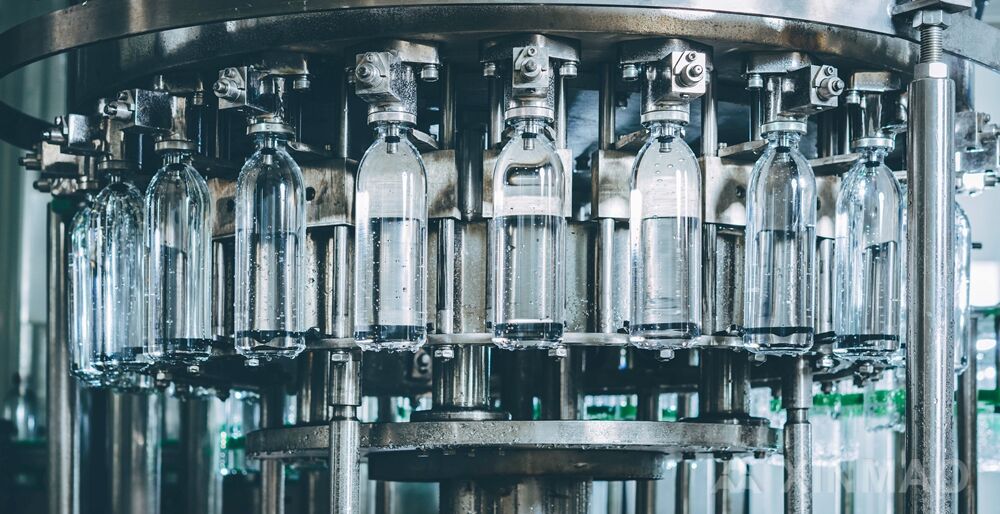
How Water Bottle Machines Enable Rapid Custom Design Changes
Rising Demand for Customized Bottles in Branding and Retail
According to the Packaging Trends Report from 2023, around two thirds of consumer brands have started using custom bottle designs to stand out in crowded markets. Modern water bottle manufacturing equipment makes this possible through small batch production runs for everything from brand specific bottles to those made for special events or personalized items. The ability to produce these shorter runs fits right into current retail approaches where companies release limited edition products and create packaging tailored to local markets. Brands can adjust their offerings much faster when consumer tastes start changing direction.
Agile Design Transitions Through Modern Machine Technology
Advanced water bottle machines leverage servo-driven actuators, digital twin simulations, and modular mold systems to accelerate design iterations. A leading manufacturer’s 2024 model reduced mold reconfiguration time by 73% using:
- Quick-release mold clamps for tool-free component swaps
- Auto-calibrating alignment systems that eliminate manual adjustments
- Cloud-based design libraries enabling instant pattern uploads
These innovations allow brands to test 5–7 design variants per day—up from just 1–2 with older equipment—dramatically speeding up time-to-market.
Reducing Downtime During Mold and Shape Swaps
Smart tooling systems have cut average mold changeover time from 90 minutes to under 15 minutes through integrated technologies:
| Feature | Time Savings | Accuracy Improvement |
|---|---|---|
| RFID-tagged molds | 64% | ±0.01mm tolerance |
| Automatic height mapping | 52% | 98% alignment match |
| Hybrid cooling channels | 41% | 0.3°C temperature stability |
With faster transitions, operators can run 3–5 times more design batches daily without sacrificing cycle efficiency.
Case Study: Fast Design Switching in a High-Volume OEM/ODM Facility
A Taiwan-based manufacturer serving 12 global beverage brands deployed intelligent water bottle machines to manage 47% more SKUs. Over eight months, they achieved:
- 27-second mold swaps (down from 8.5 minutes)
- 19% higher output despite 33% smaller batch sizes
- $284k annual savings in retooling labor
Predictive maintenance algorithms further reduced unplanned downtime by 61%, proving how flexible automation improves both agility and cost-efficiency at scale.
From Concept to Production: The Custom Bottle Design Workflow
Step-by-Step Process: Design to Final Output
Modern water bottle machines streamline the journey from idea to finished product through a six-stage workflow:
- Concept Development – Brand teams define bottle dimensions, materials, and visual identity
- 3D Modeling – CAD software converts sketches into precise digital prototypes with accurate volume and ergonomics
- Mold Engineering – CAM systems produce molds within ±0.05 mm tolerance
- Material Testing – Automated systems validate structural integrity across 12+ stress scenarios
- Prototyping – Smart machinery generates 20–50 test units for real-world evaluation
- Mass Production – IoT-enabled machines achieve 98.7% first-pass yield for runs up to 500,000 units
This integrated process ensures consistent quality while supporting rapid iteration.
Digital Workflows for Color, Font, and Image Placement
The RIP (Raster Image Processor) software helps match Pantone colors consistently across different printing stations, keeping color differences below 1 Delta E between production runs. Designers can now tweak gradients from 5 to 100% opacity instantly through cloud platforms, adjust font spacing down to 0.1 mm increments, and scale images using SVG vector files without losing quality. Switching to this digital workflow has cut down on the number of times artwork needs revising. One print shop reported cutting their revision cycle time by almost two thirds when they moved away from old school methods. The savings in time and materials make it worth the investment for most businesses serious about print quality.
CAD and CAM Integration in Bottle and Mold Design
Tight integration between CAD and CAM systems allows concurrent development of bottle geometry and production tooling. Key capabilities include:
| Design Feature | Machine Capability |
|---|---|
| Threaded necks | 8-axis CNC mold cutting |
| Curved surfaces | 5D laser ablation |
| Micro-textured grips | EDM (Electrical Discharge Machining) |
This synergy has slashed mold development time from 12 weeks to just 18 days—even for complex designs.
Rapid Prototyping and Testing with Smart Machinery
Modular water bottle machines now produce functional prototypes in 2–6 hours using:
- 3D Printing – MJF (Multi Jet Fusion) for full-color concept models
- CNC Machining – Food-grade UHMWPE units for drop testing
- Vacuum Casting – Silicone molds for 100–500 trial units
Integrated pressure testing (up to 150 PSI) and leak detection (0.01 ml/min sensitivity) ensure 99.4% of designs meet ISO 14001 standards before mass production begins.
Advanced Customization Techniques: Printing, Engraving, and On-Demand Options
Modern water bottle machines offer diverse customization options tailored to brand needs and market demands.
Comparing Screen Printing, Digital Printing, and Laser Engraving
Screen printing still works out pretty well when someone needs to print lots of items with those big, simple color logos. The catch is getting started can cost anywhere between five hundred bucks to twelve hundred dollars depending on how complex the design gets. Then there's digital printing which handles all sorts of colors and different text across products, so it makes sense for smaller batches or special edition stuff. For really detailed work or adding unique numbers to each item, laser engraving hits the spot. It cuts right into materials without needing any ink or other supplies, which saves money in the long run even if the initial investment seems steep.
Laser Engraving Benefits: Durability and Premium Aesthetics
Laser-engraved designs resist UV exposure, abrasion, and repeated cleaning, retaining clarity for 5–10 years under normal conditions. The etched texture adds a premium tactile feel, which is why the technique is favored for high-end skincare, spirits, and specialty beverages.
High-Speed Equipment for Mass Production Design Flexibility
Rotary laser systems and 12-color digital printers enable design changes in under 15 minutes, supporting batch sizes from 500 to 50,000 units. Modular setups allow simultaneous application of multiple techniques—such as printed labels and engraved batch codes—without interrupting production flow.
Direct Print vs. Label-Based Customization: Pros and Cons
| Method | Durability | Cost (10k units) | Lead Time |
|---|---|---|---|
| Direct printing | 8–10 years | $0.18–$0.35/unit | 3–5 days |
| Pressure-sensitive labels | 2–4 years | $0.07–$0.12/unit | 1–2 days |
Direct printing bonds the design into the bottle surface, offering superior durability for reusable or outdoor products. Labels provide faster turnaround for promotions but may peel in humid environments. Many manufacturers now use hybrid systems that apply both methods on a single line, maximizing flexibility.
Scaling Custom Bottle Production for Global Brands and OEMs
Today’s water bottle machines can produce over 500,000 units daily while accommodating batch-specific designs, according to 2023 packaging industry data.
Mass Production with Batch-Specific Customization
Automated systems integrate real-time design changes into high-speed lines, enabling seamless switches between matte finishes, embossed logos, and gradient colors—all without stopping production. This flexibility supports seasonal campaigns and regional variants, with machinery maintaining 98% uptime even during complex design transitions.
OEM and ODM Manufacturing: Balancing Flexibility and Compliance
Manufacturers use ISO-certified digital workflows to align client branding with regulatory requirements. For instance, pharmaceutical OEMs implement FDA-compliant anti-counterfeit engravings alongside recycled PET beverage bottles in the same facility—a dual capability that reduces compliance costs by 37% (Global Packaging Trends 2024).
Engineering Precision in Custom Mold Development
| Aspect | Traditional Methods | Modern CAD/CAM Systems |
|---|---|---|
| Mold Design Time | 12–16 days | 3–5 days |
| Precision Tolerance | ±0.5 mm | ±0.05 mm |
| Prototype Iterations | 6–8 cycles | 1–2 cycles |
Using 5-axis CNC machining and AI-driven simulation tools, modern systems reduce mold defects by 89% compared to manual processes.
Future Trends: Digital Integration and On-Demand Bottle Manufacturing
Cloud-connected production hubs are emerging to fulfill hyper-customized orders as small as 500 units with 48-hour turnaround. According to a 2024 McKinsey report, 30% of consumer brands are projected to adopt decentralized, AI-managed bottling networks by 2027—driving down inventory waste and shipping emissions through localized, demand-responsive manufacturing.
FAQ
Why are custom bottle designs important for branding?
Custom bottle designs enable brands to stand out in crowded markets and can be tailored to specific events, markets, or consumer tastes, providing a competitive edge.
How do modern water bottle machines speed up design changes?
These machines use technologies like servo-driven actuators and digital twin simulations to reduce reconfiguration time and allow testing of multiple design variants daily.
What are the benefits of laser engraving on bottles?
Laser engraving offers durable, premium aesthetics that withstand UV exposure and abrasion, making it ideal for high-end products and long-lasting designs.