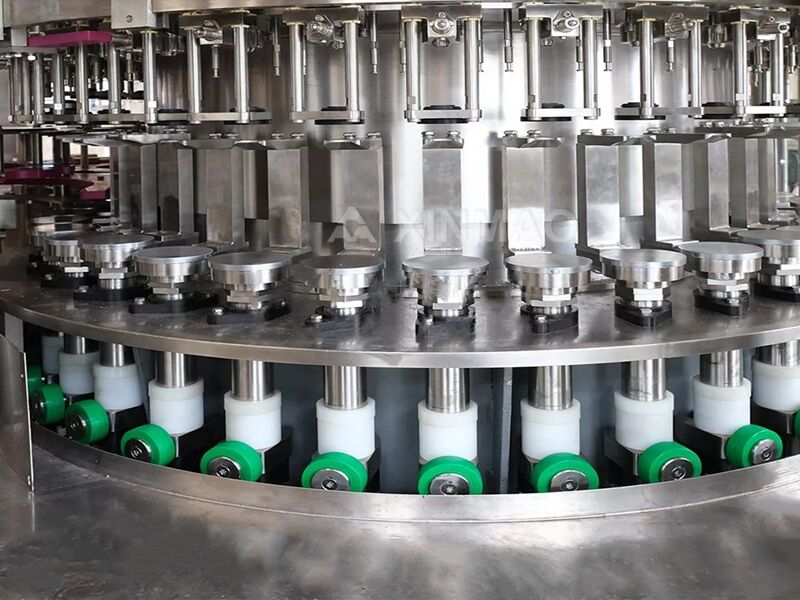
How Oxidation Impacts Beer Quality During Filling
The role of oxygen in degrading beer flavor and aroma stability
When beer comes into contact with oxygen during the filling process, it starts a chain reaction that breaks down those precious iso-alpha acids and hop-derived terpenes we all love for their bitterness and complex aromas. Recent research from 2023 showed something pretty startling too: if beer has just 0.1 parts per million of dissolved oxygen, about a third of those lovely citrusy aroma compounds disappear after only 30 days sitting on shelves. What makes this so frustrating is that during fermentation, yeast actually eats up oxygen, but once we get to packaging, the beer is basically sitting there helpless against even tiny traces of oxygen. We're talking about amounts as small as 0.02 ppm here, which might not sound like much until it starts making our favorite hoppy beers taste flat and stale way faster than anyone wants.
Common off-flavors caused by oxidation: Cardboard, sherry, and stale notes
Oxidation produces three primary off-flavors detectable at minimal concentrations:
- Cardboard from lipid oxidation, noticeable at just 0.03 ppm Total Package Oxygen (TPO)
- Sherry-like notes due to Strecker aldehyde formation in malt-rich beers
-
Stale bitterness via humulinone conversion in heavily hopped varieties
Sensory data shows 68% of consumers reject beers exceeding these thresholds (ASBC 2022), highlighting the critical need for oxygen control.
Cold-side oxidation risks after fermentation and during filling
Once the fermentation process completes, beer actually gets pretty vulnerable to oxidation since there's no active yeast left to grab up oxygen molecules. The finished product has a chemical makeup that reacts more readily with air, so all that time exposed during the filling process really affects how long the beer stays fresh on shelves. Brewers have responded with modern equipment that makes a big difference here. Closed loop transfer systems cut down oxygen entry points by around 90% when compared to older open systems. Plus, keeping things cool throughout the process slows down those unwanted reactions by somewhere between 40% and 60%, according to recent studies from MBAA in 2023. These improvements mean better quality control for breweries looking to maintain their product standards over time.
Case study: Dissolved oxygen impact on IPA shelf life and consumer perception
A 12-week study of 200 commercial IPAs demonstrated a clear link between TPO levels and sensory decline:
| TPO Level | Shelf Life (Days) | Consumer Rejection Rate |
|---|---|---|
| 0.05 ppm | 120 | 12% |
| 0.15 ppm | 60 | 41% |
| 0.30 ppm | 30 | 89% |
Breweries maintaining <0.08 ppm TPO using inert gas purging and pressure-controlled filling achieved 94% freshness scores at 90 days, underscoring the effectiveness of integrated oxygen management.
Critical Oxygen Entry Points in Beer Filling Machine Operations
Oxygen ingress through filler bowls, transfer lines, and bottle infeed systems
Most of the oxidation problems actually happen right at the filler bowl area. When things are running fast, all that turbulence pulls in atmospheric oxygen from the surrounding air, according to research published in Brewing Science Quarterly last year. The transfer line joints tend to expand when they go through those temperature changes back and forth, which creates tiny gaps between them. These little spaces let in between 0.2 and 0.8 parts per million of oxygen for every 100 liters that gets filled, making up around 15% of what ends up dissolved in the product overall. Then there's the issue with bottle infeed starwheels too. They sometimes misalign the containers as they come in, leaving anywhere from 12% to almost 20% of bottles exposed to regular air before the actual filling process even starts.
Headspace oxygen challenges during capping and final sealing
There's actually a short window between when beer gets filled and sealed where about 0.5 to 2.0 parts per million of oxygen can sneak into the headspace. This small amount turns out to be enough to break down around 40% of those hop compounds in IPAs just within a month according to recent research from ASBC Journal. Most standard crowners will create air gaps measuring roughly 0.8 mm in about 15% of all bottles. But when breweries switch to vacuum assisted sealing methods, these gaps shrink down below 0.1 mm mark, which really cuts down on oxidation after filling takes place.
Leakage risks from worn seals and improper container handling
Worn filler neck gaskets increase oxygen pickup by 300%; even a 0.05 mm gap can admit air at 1.2 L/min during operation. Similarly, rough handling of cans causes microfractures in side seams, enabling 0.02 ppm/day oxygen infiltration—enough to generate cardboard flavors before expiration.
Vulnerabilities in canning lines during product transition and gas purging
Liquid turbidity sensors show 70% of canning lines retain 4–6% residual oxygen after purging, primarily due to incomplete CO₂ displacement in lid zones, gas mixing during format changes, and moisture-induced sensor drift. A 2024 trial found reducing purge cycles from 8 to 5 seconds decreased oxygen ingress by 32% without sacrificing throughput.
Effective Oxygen Reduction Techniques in Beer Filling Machines
Counter-Pressure Filling: Mechanism and Benefits for Minimizing Dissolved Oxygen
When using counter pressure filling, the system actually fills containers with carbon dioxide prior to transferring the beer. This helps balance out pressures inside so there's less foaming during the process and also keeps oxygen from getting into the mix. The results? Dissolved oxygen stays at around 50 parts per billion or lower, which is way better than what we typically see with gravity fed methods that often hit over 200 ppb according to Ponemon's research from 2023. What makes this technique stand out is how well it protects those delicate hop flavors and slows down oxidation. That's why many breweries find it works especially well when making IPAs where freshness matters most, as well as those special barrel aged brews that need protection against premature aging.
Nitrogen Purging and CO₂ Blanketing to Displace Headspace Oxygen
Modern canning systems often employ nitrogen flushing techniques to clear out ambient air from those empty cans, while carbon dioxide creates an inert barrier over the beer just before it gets sealed up. Combine this with vacuum assisted capping methods and breweries see a dramatic drop in residual oxygen levels - around 89% reduction actually. The results speak for themselves too. Breweries that implement these dual phase gas management strategies consistently find their pale ales maintain better flavor profiles for about 18% longer when put through those accelerated aging tests. Makes sense really, since controlling oxygen exposure is one of the biggest challenges in preserving craft beer quality over time.
Comparative Performance: Traditional vs. Advanced Filling Technologies
| Technology | Oxygen Pickup (ppb) | Foam Loss (%) | Speed (bottles/min) |
|---|---|---|---|
| Gravity Filling | 220 | 4.2 | 80 |
| Counter-Pressure | 45 | 1.1 | 65 |
| Rotary Vacuum-Sealed | 28 | 0.7 | 120 |
While traditional fillers struggle to stay below 150 ppb, rotary vacuum systems achieve near-anaerobic conditions through continuous chamber evacuation, making them ideal for high-volume, quality-sensitive operations.
Emerging Trend: Automated Inert Gas Control and Real-Time Saturation Monitoring
The latest filling equipment comes equipped with closed loop oxygen sensors that tweak purge cycles according to what they measure in real time. What this means is that these systems can keep dissolved oxygen levels at or below 20 parts per billion even when switching between different containers, which really helps maintain product quality when running mixed packs. Brewers also get access to integrated data systems that let them monitor how much oxygen gets into their beer during processing. This kind of tracking creates useful reference points for things like maintaining good head retention and extending shelf life without compromising taste.
Integrating Oxygen Control into Packaging Design and Process Standards
Optimizing Sealing Technologies for Bottles, Cans, and Kegs to Limit Oxygen Ingress
Modern filling equipment works much better when combined with improved sealing techniques, bringing dissolved oxygen levels down below 20 parts per billion in most cases. The newer double seam can lids that include polymer liners cut oxygen getting inside by around two thirds compared to what we used to see with regular designs according to research from Brewing Science Journal last year. For crown corks, there are now oxygen scavenging versions available that stop about 85% of outside air from entering containers. Meanwhile stainless steel keg connectors equipped with those quick disconnect valves keep headspace oxygen content under 0.1% throughout typical 60 day dispensing periods. These improvements make a real difference in product quality for brewers concerned about oxidation issues.
Best Practices: Combining Counter-Pressure Filling, Gas Purging, and Temperature Control
Top-tier breweries integrate three proven strategies:
- Counter-pressure filling: Maintains 12–15 PSI during transfer to prevent gas exchange
- Nitrogen purging: Lowers residual headspace oxygen to <0.5% before sealing
- 2°C process cooling: Reduces oxygen solubility by 40% compared to room-temperature filling
Facilities using this triad reported 98% fewer oxidation complaints than those relying on single-method approaches (Brewers Association 2023).
Avoiding the Quality Paradox: Premium Beer Compromised by Packaging Oversights
Despite premium ingredients, 23% of craft brewers face quality rejections due to <0.2 mL oxygen ingress per container—equivalent to 1/4 teaspoon per 1,000 barrels. This “invisible threshold” leads to widespread consumer detection:
| Oxidation Level | Consumer Detection Rate |
|---|---|
| 0.1 ppm DO | 12% |
| 0.3 ppm DO | 89% |
Proactive solutions include inline DO sensors linked to automated gas adjustment valves, forming closed-loop systems that sustain ≥0.05 ppm oxygen from filler to pallet.
Measuring and Monitoring Oxygen Levels for Consistent Beer Freshness
Inline Dissolved Oxygen and Headspace Sensors in Modern Filling Systems
The latest generation of filling equipment comes with built-in dissolved oxygen sensors that can pick up readings down to about 10 parts per billion, while premium models hit around plus or minus 2 ppb accuracy according to Brewing Science Institute research from last year. These advanced systems keep track of dissolved oxygen in the liquid itself as well as the space above it where oxygen might linger, which means no more guessing games with old fashioned manual tests. Alongside this, infrared technology on canning lines scans gas compositions at impressive speeds - sometimes as many as fifty times every single second. When those readings show too much oxygen floating around in the headspace area (anything over 0.05%), the system throws out warnings so adjustments can be made right before containers get sealed shut.
Using Real-Time Oxygen Data to Enhance Quality Control and Process Adjustments
Live oxygen monitoring enables dynamic responses:
- Adjust nitrogen purge duration when DO exceeds 50 ppb in transfer lines
- Activate CO₂ back-pressure if headspace O₂ surpasses 0.3% during filling
- Optimize filler bowl temperatures to ≥18°C, reducing DO uptake by 18%
Breweries using predictive analytics with real-time data reduced oxidation-related recalls by 76% compared to those relying on batch testing (Brewers Association 2023).
Building a Proactive QC Framework Around Oxygen Management Metrics
Leading operations implement a three-tiered alert system:
| Level | DO Threshold | Action Required |
|---|---|---|
| Green | <30 ppb | Normal operation |
| Amber | 30–50 ppb | Line inspection |
| Red | >50 ppb | Immediate purge |
By tracking these metrics across runs, breweries achieve 92% consistency in packaged beer freshness (Global Brewing Tech Report 2024) and see 68% fewer consumer complaints about stale flavors.
FAQ Section
Why is oxidation in beer filling an issue?
Oxidation during beer filling can degrade beer flavors and aromas, introducing off-flavors like cardboard, sherry-like notes, and stale bitterness.
How can breweries reduce oxidation during filling?
Breweries can reduce oxidation by using counter-pressure filling, nitrogen purging, CO₂ blanketing, and vacuum assisted sealing methods.
What technologies help maintain beer freshness?
Modern technologies like inline dissolved oxygen sensors, real-time saturation monitoring, and automated inert gas control help maintain beer freshness by reducing oxygen levels below harmful thresholds.
Table of Contents
- How Oxidation Impacts Beer Quality During Filling
- Critical Oxygen Entry Points in Beer Filling Machine Operations
- Effective Oxygen Reduction Techniques in Beer Filling Machines
- Integrating Oxygen Control into Packaging Design and Process Standards
-
Measuring and Monitoring Oxygen Levels for Consistent Beer Freshness
- Inline Dissolved Oxygen and Headspace Sensors in Modern Filling Systems
- Using Real-Time Oxygen Data to Enhance Quality Control and Process Adjustments
- Building a Proactive QC Framework Around Oxygen Management Metrics
- FAQ Section
- Why is oxidation in beer filling an issue?
- How can breweries reduce oxidation during filling?
- What technologies help maintain beer freshness?