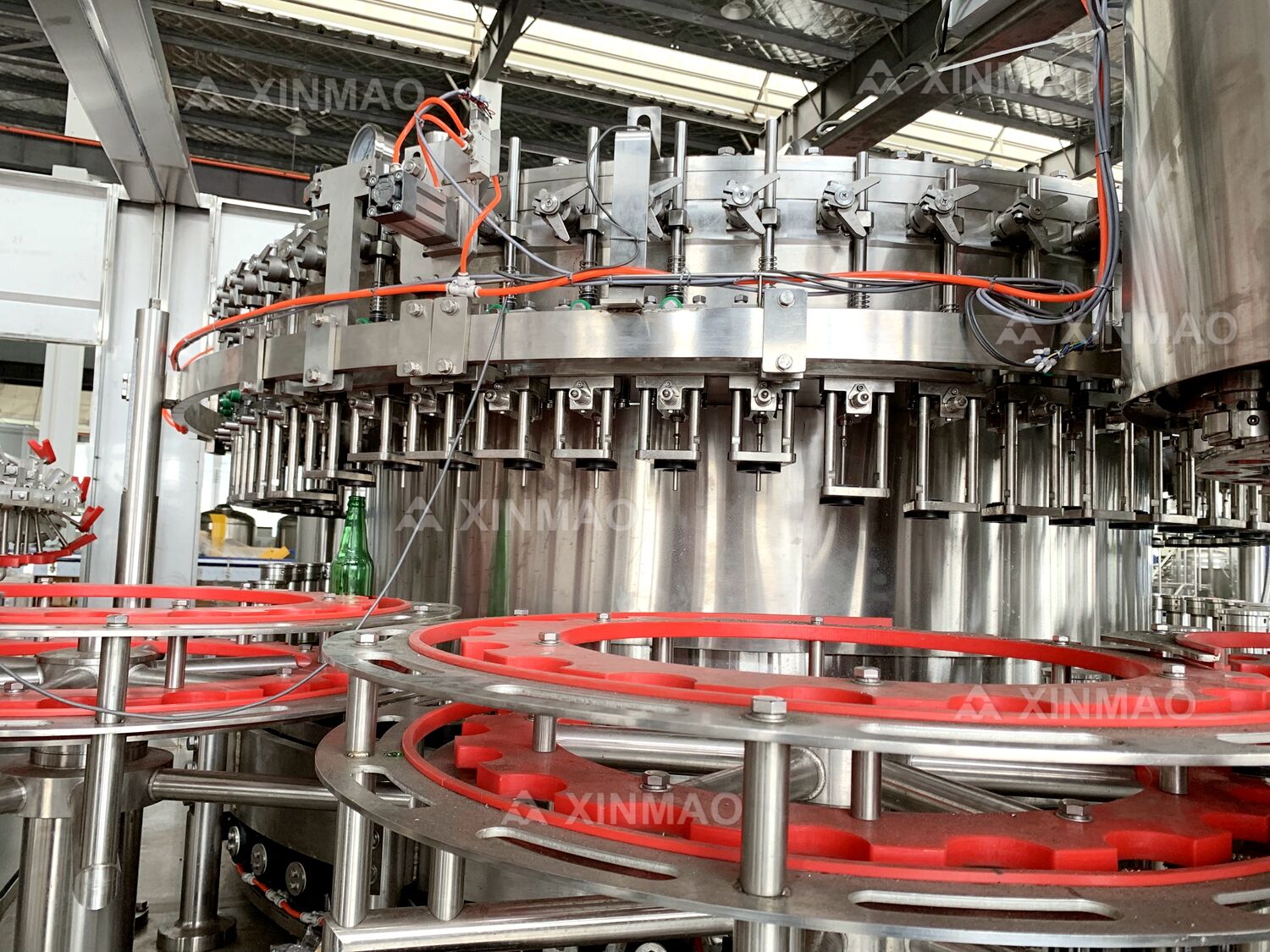
Boosted Production Efficiency with Automatic Carbonated Drink Filling Machines
High-Speed Isobaric Filling and Continuous Operation
The latest carbonated drink filling equipment relies on what's called isobaric tech to keep the pressure balanced between bottles and the main tank. This setup stops valuable CO2 from escaping when transferring drinks and keeps that fizz intact throughout the process. Many modern facilities now run on rotary continuous systems where cleaning, filling, and sealing happen all together in one smooth sequence without those annoying stop-start interruptions that used to plague older models. The machines are equipped with super accurate flow meters and pressure sensors that hit about plus or minus 0.5% precision for each fill. They also adjust automatically for different drink viscosities so operators don't have to worry about switching settings manually whether they're running through cola batches or sparkling juice lines. Industry data from 2023 shows these advanced systems cut down wasted product by around 23% compared to their semi-auto counterparts, plus they handle full time operations without breaking a sweat even during peak production hours.
Reduced Downtime and Labor Dependency Through Full Automation
Modern production lines can reduce human involvement by around 90% thanks to robotics, smart control systems, and advanced camera inspections. AGVs roll around the factory floor bringing empty containers where needed, while high-tech cameras spot problems with bottles that aren't filled properly or positioned correctly, eliminating the need for workers to check each item manually. The predictive maintenance software keeps an eye on important parts such as seals and valves, sending alerts when something starts showing signs of wear long before it breaks down completely. One large beverage plant saw their unexpected stoppages drop by nearly two thirds once they installed these automated systems according to Food Manufacturing Journal's report from last year. What used to take a team of twelve workers is now handled by just one person at the control panel. This means big savings on payroll expenses and dramatically reduces those costly mistakes that happen when tired hands fumble with repetitive tasks all day.
Enhanced Food Safety and Hygienic Integrity in Carbonated Beverage Packaging
Carbonated drink filling machines designed for automation actually boost cleanliness levels significantly. They're built with stainless steel, have sanitary welds, and feature enclosed paths where drinks move through the system, all of which help prevent bacteria from hiding anywhere. The machines come equipped with Clean-In-Place systems that can thoroughly clean everything without needing to take parts apart. Industry reports from 2024 show that these closed systems cut down on contamination risks by around 85% when compared to traditional methods where people handle things manually. Some newer models even go further by adding special coatings that fight microbes on surfaces and creating positive pressure zones inside to stop airborne germs from getting in. Since there are fewer places where humans need to touch components during operation, these automated setups consistently meet strict food safety requirements set by organizations like EHEDG. This helps keep consumers safe and maintains the reputation of brands throughout each batch produced.
Lower Total Cost of Ownership and Sustainable Operations
Waste Reduction Through Automated Quality Inspection and Defect Rejection
Vision systems working at high speeds along with multiple point sensors catch all sorts of problems in containers like when they're not filled properly, have wrong labels, or structural issues. These systems can check over 30 thousand bottles every single hour. When something goes wrong, the system rejects it right away before those faulty items get further down the production line. This cuts down on wasted materials quite a bit actually around 15 percent less than what happens during manual checks. The whole automated process takes out guesswork and keeps things consistent across the board for quality control purposes. Only products that meet all requirements make it to packaging stage without holding up the entire production line either.
Energy and Resource Efficiency in Modern Carbonated Drink Filling Machine Designs
Modern machinery is getting greener thanks to servo driven motion controls that cut down on power usage by around 40% compared to old school pneumatic systems. The heat recovery modules are pretty cool too they grab all that wasted thermal energy from cleaning processes and reuse it to warm up products before they go into the system. For carbonation, there are these closed loop CO2 recovery systems that stop gas from escaping during filling operations. This keeps carbonation levels spot on with only tiny variations below 0.15%. All these tech upgrades mean companies spend less money on utilities throughout the whole life of their equipment while still making sure everything runs smoothly and the end product stays high quality.
FAQ
What is isobaric technology? Isobaric technology is used in the latest carbonated drink filling equipment to maintain the pressure balance between bottles and the main tank, preventing CO2 from escaping during the transfer of drinks.
How does automation impact labor dependency? Automation significantly reduces the need for human involvement in the production process by incorporating robotics, smart control systems, and advanced camera inspections, cutting back on labor by about 90%.
What are Clean-In-Place systems? Clean-In-Place systems allow for thorough cleaning of filling machines without needing to take parts apart, enhancing cleanliness and hygiene.
How do modern filling machines enhance energy efficiency? Modern carbonated drink filling machines are designed with servo driven motion controls and heat recovery modules that considerably reduce energy consumption, making them more sustainable.