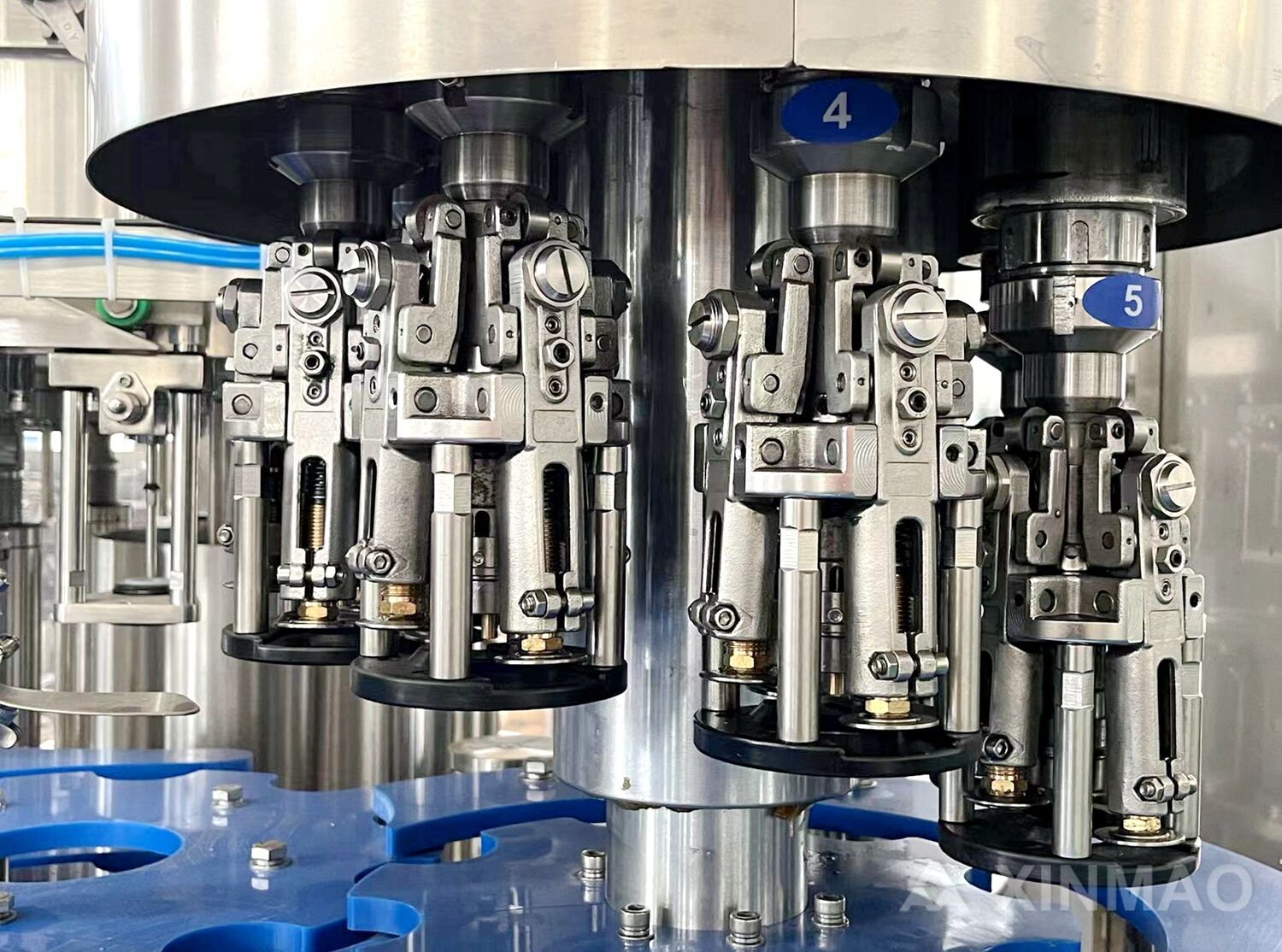
How High-Speed Soft Drink Filling Machines Achieve Speed Without Sacrificing Accuracy
The Engineering Behind 1,200+ bph Performance in Modern Soft Drink Filling Machines
Today's soft drink filling equipment can handle over 1,200 bottles per hour thanks to advanced servo systems replacing old school mechanical parts. These machines use electromagnetic flow meters along with optical sensors to keep track of fill levels down to about 0.1% accuracy, which basically stops those pesky underfills and overfills that cost companies money through wasted product. The synchronized rotary mechanisms combined with specially designed valves allow containers to be handled quickly yet gently, ensuring consistent portions whether it's standard 12 oz cans or bigger 16 oz bottles. What really makes these systems stand out is their non-contact filling approach that keeps syrup from splashing around and cuts down on contamination risks when switching between different drinks. And since they automatically adjust for viscosity changes and temperature fluctuations, operators don't need to constantly tweak settings manually. This automation results in speed improvements of around 30% compared to what we saw with older generation machines back in the day.
| Performance Factor | Traditional Systems | Modern Systems | Improvement |
|---|---|---|---|
| Max Throughput | 24,000 bph | 36,000+ bph | 50% faster |
| Fill Accuracy | ±1.5% | ±0.1% | 15x tighter |
| Changeover Time | 45+ minutes | <15 minutes | 70% reduction |
Preserving Carbonation and Product Integrity Under High-Pressure Filling Conditions
Getting carbonation right in beverage filling lines requires some serious engineering work, especially when trying to keep those CO2 levels stable during fast production runs. Modern machines can actually push around 9 times the volume of CO2 into each container, all while keeping pressures tightly controlled so none of that precious fizz gets lost as bottles move along the line. Engineers use these fancy computer models called CFD simulations to tweak bottle shapes and conveyor wheel designs, which helps prevent the liquid from sloshing around too much. This is super important when dealing with over 400 containers passing through every minute. The whole system relies on closed loop pressure controls that squeeze just enough air into the headspace during filling and sealing processes to maintain proper carbonation levels for storage. Special sensors constantly monitor dissolved oxygen levels and catch any problems immediately, while other devices double check that each bottle has the correct amount of product according to food safety standards. All these layers working together mean drinks stay tasty and bubbly even when plants are running at ridiculous speeds of over 90 thousand units per hour.
Automation and Real-Time Intelligence in Soft Drink Filling Machines
Servo-Driven Precision vs. Legacy Mechanical Systems: Why Modern Soft Drink Filling Machines Deliver Greater Flexibility
Old school mechanical systems basically depend on those fixed camshafts and gears, which makes them pretty limited when it comes to adapting to different bottle shapes or recipe modifications. Newer filling machines powered by servos have swapped out all those stiff parts for motors that work together while controlling every single nozzle separately. What this means is no more messing around with mechanical adjustments whenever there's a product changeover. According to some data from the Packaging Line Efficiency Benchmark in 2023, this cuts down downtime by around 70% compared to older setups. These machines also feature these really precise valves that can tweak the flow rate depending on what kind of liquid is being processed. They handle everything from fizzy colas right through to thick juice blends packed with pulp, and none of this requires swapping out hardware components. For companies producing small batches or seasonal drinks, this kind of flexibility helps cut waste significantly. Plus, there's programmable torque control built in too, which reduces the chances of spills when dealing with those delicate plastic bottles.
Closed-Loop Control and IoT Integration for Adaptive Fill Accuracy Monitoring
Today's filling lines make use of IoT sensors along with closed loop feedback systems to keep fill volumes within about half a percent accuracy even when running over 1,200 bottles per hour. Pressure transducers constantly watch those liquid levels as they go through the system. At the same time, flow meters send their readings right to the PLCs, which then tweak the valves almost immediately. These ongoing adjustments help deal with all sorts of issues that can pop up during production runs. Think about how temperature changes might affect carbonation levels or what happens when syrup gets denser than expected. One big name in the business recently saw their cloud connected equipment cut down on wasted product by around thirty percent thanks to better predictions about how viscous things would get. Operators can now see important numbers like fill accuracy rates, oxygen getting into containers, and whether seals hold up properly right there on their dashboards. Seeing these metrics helps catch problems early so nobody has to fix them after defective products already left the line. The whole setup means less downtime fixing things after they break and more time focusing on making improvements ahead of time.
Maximizing Uptime and Output: OEE-Driven Optimization for Soft Drink Filling Machines
Leveraging OEE Analytics to Diagnose Bottlenecks in High-Speed Soft Drink Filling Lines
Soft drink manufacturers are increasingly turning to Overall Equipment Effectiveness (OEE) analytics when trying to find those sneaky inefficiencies hiding in their filling machine operations. When production teams track things like availability rates, how well machines perform, and quality issues, they often spot problems that keep coming back again and again. Misaligned capping heads are a common headache, along with all sorts of issues caused by changes in liquid viscosity. According to the latest Beverage Industry Report from 2024, temperature swings during carbonated drinks filling actually account for about 12% of downtime on those super fast production lines. What makes this approach so valuable is that it stops companies from just fixing problems after they happen. Instead, they can focus on specific fixes like adjusting conveyor belt speeds to match the timing of filler valves, which helps prevent those frustrating product jams that slow everything down.
The 3-Pillar Framework: Balancing Throughput, Fill Accuracy, and Maintenance Efficiency
Leading plants adopt a holistic OEE framework built on three interdependent pillars:
- Throughput optimization: Servo-driven fillers achieve 1,200+ bph by reducing mechanical changeover time by 29%
- Accuracy preservation: IoT sensors maintain ±0.5% fill volume consistency—even with foaming or high-viscosity liquids
- Predictive maintenance: Vibration analysis on rotary pumps cuts unplanned downtime by 40%
This integrated strategy elevates average OEE scores from 65% to 89% within six months, while reducing material waste by 18% through precision fill adjustments.
FAQ Section
What is the main advantage of modern soft drink filling machines over traditional ones?
Modern machines achieve significantly higher speeds and fill accuracy thanks to advanced servo systems and electromagnetic flow meters, ensuring efficient and accurate filling processes.
How do modern machines maintain carbonation in beverages during filling?
They control CO2 levels using closed-loop pressure controls and specialized computer models to optimize bottle shapes and conveyor design, reducing carbonation loss during high-speed filling.
What is the role of IoT in modern filling machines?
IoT sensors improve fill accuracy within 0.5% and enable real-time monitoring of critical metrics while integrating with PLCs for adaptive control, reducing wastage and downtime.
How do OEE analytics enhance soft drink filling lines?
OEE analytics help identify and address inefficiencies such as misaligned capping heads and viscosity-induced issues, maximizing uptime and output efficiency.