Manual Bottling vs. Automated Systems for Gazlangan Ichimliklar: The Waste Gap
Walk into a small-scale gazlangan ichimliklar operation using manual filling — a pressurized tank, a hand-operated filling nozzle, an operator timing each fill by watching the liquid level rise through the bottle neck — and the evidence of product waste is everywhere. The floor around the filling station is sticky with dried soda syrup from foam-over spills. A plastic tub under the filling nozzle catches the overflow from bottles that foamed past the neck before the operator could close the valve. Empty bottles waiting to be filled sit exposed to ambient air and dust because there is no rinsing station. The operator's fill timing varies by ±0.3 seconds from bottle to bottle — producing fill levels that differ by 5–8 mm, with the low fills rejected at quality inspection and the high fills wasting 3–5 ml of product per bottle that the consumer never drinks.
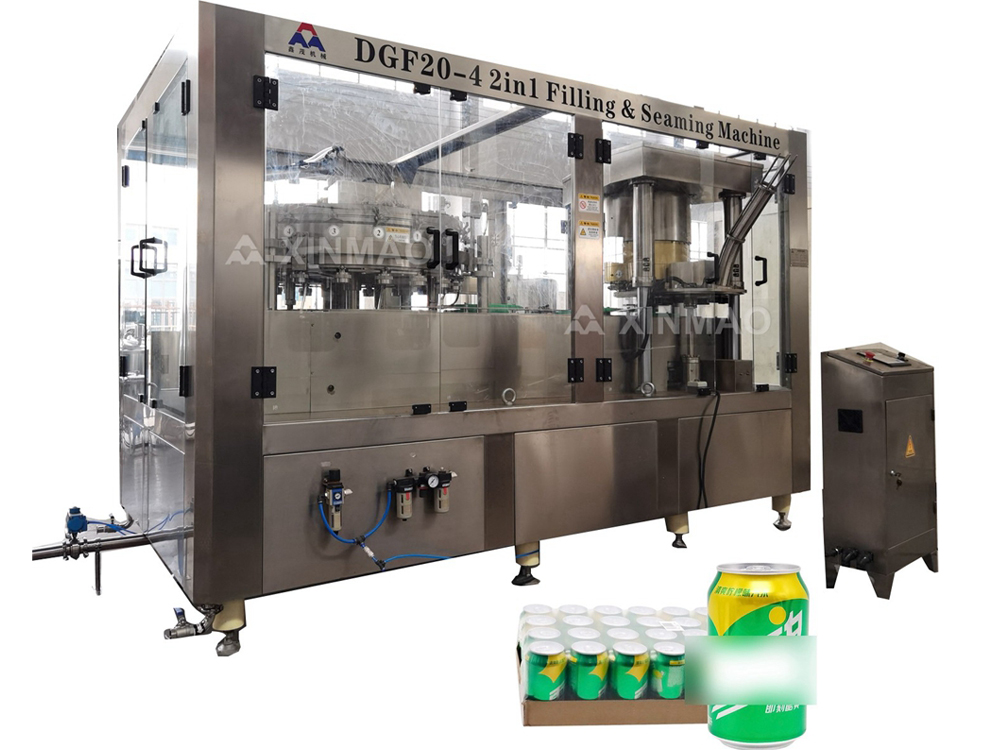
An automated gazlangan ichimliklar filling system, by contrast, eliminates every one of these waste streams mechanically. The bottle rinser blasts each empty bottle with treated water or ionized air to remove dust and debris. The isobaric filling valve pressurizes the bottle with CO₂ to match the filler bowl pressure, opens the product valve, fills to a precise level controlled by the valve's volumetric shutoff (not the operator's reaction time), and closes — all in 1.5–2.0 seconds per fill cycle at 36,000 BPH. The capping head applies the closure to a consistent torque, sealing the CO₂ inside. The filled bottle exits the machine without a drop of product on its exterior, without a millimeter of fill-level variation, and without the CO₂ loss that manual filling cannot prevent because the open bottle is exposed to atmospheric pressure during and after the fill. Zhangjiagang Xinmao Drink Machinery (Xinmao Machinery) has deployed automated gazlangan ichimliklar filling lines across 80+ countries, from high-speed 36,000 BPH PET lines to compact 3,000 BPH glass-bottle lines for craft soda producers — each system producing the waste-elimination economics that manual filling can never achieve.
The Waste Math: Where the Savings Come From
Three Waste Streams That Automation Eliminates
Manual filling generates waste in three categories that automated isobaric systems eliminate. Product overflow waste — foam-over during filling that spills product onto the floor — typically represents 8–15% of total throughput in a manual carbonated-fill operation because the operator cannot control CO₂ breakout once the bottle is open to atmosphere. Automated isobaric filling reduces this to under 0.5% because the bottle is never open to atmosphere during filling. Fill-level variation waste — bottles rejected for underfill or overfill — typically represents 3–5% of manual-fill output because human reaction time cannot match the millisecond precision of a volumetric filling valve. Automated fill level variation is under ±1.5 mm — essentially zero rejects for fill-level deviation. CO₂ content variation — bottles with inconsistent carbonation because some sat open longer than others between fill and cap — affects 100% of manual-fill output to some degree, creating the brand-damaging quality inconsistency that drives consumers to competitor products. Automated systems maintain consistent CO₂ in every bottle because the fill-cap interval is mechanically controlled to under 1.0 second.
Real-World Application: A Craft Soda Producer's Automation Decision
A craft soda producer in Eastern Europe bottling gazlangan ichimliklar in 330 ml glass bottles with crown corks had been operating with a manual filling setup — two filling heads, two operators, and a handheld capper — producing approximately 600 bottles per 8-hour shift. The labor cost for two operators was approximately 32,000 per year. Product waste from foam-over, underfill rejects, and broken glass bottles ran approximately 14% of total production — roughly 18,000 bottles per year lost, representing 9,000 in wasted product at the producer's wholesale price.
The producer invested in a Xinmao Machinery compact glass-bottle gazlangan ichimliklar filling line — a 3-in-1 rinser-filler-capper monoblock running at 3,000 BPH. The line now produces 3,000 bottles in a single hour — output that previously required five 8-hour shifts. Product waste dropped from 14% to under 1%. One operator now runs the entire line (the second operator was reassigned to packaging), and the annual labor saving of 16,000 plus the 9,000 in recovered product waste recovered the equipment investment in under two years. The producer now fulfills orders in one day that previously required a full week — enabling the business to accept larger retail-chain contracts that were impossible under manual production.
Frequently Asked Questions
What is the minimum production volume to justify automated gazlangan ichimliklar filling?
At approximately 500,000 bottles per year (roughly 1,500 bottles per day), the product-waste savings and labor reduction of automated filling typically offset the equipment cost within 2–3 years. Below this volume, semi-automatic systems (automated filler with manual bottle handling) may offer a better ROI. Xinmao Machinery offers both semi-automatic and fully automatic systems.
How long does it take to switch an automated line between products?
A standard product changeover (same bottle size, different flavor) takes 10–15 minutes — flush the syrup dosing system, change the syrup supply, and run 20–30 bottles to flush residual flavor from the filler bowl. A full bottle-size changeover (different bottle diameter, height, and cap type) takes 30–60 minutes with Xinmao's quick-change starwheel and guide-rail design. Recipe storage in the PLC recalls filling parameters for previously run products.
What training do operators need for an automated line?
Two operators per shift: one monitoring the filler control panel (PLC touchscreen with fault indicators and parameter displays) and one managing bottle supply and packaging output. Xinmao provides 2–3 days of on-site training during installation, covering machine operation, recipe management, daily cleaning, and basic fault diagnosis.
Can automated lines handle both still and carbonated gazlangan ichimliklar?
Yes — Xinmao's DCGF-series machines operate in isobaric mode for carbonated products (CO₂ pressurization active) and gravity mode for still products (pressurization disabled, filling by gravity flow). Switching between modes takes approximately 5 minutes via the PLC interface.
What maintenance does an automated carbonated filling line require?
Daily: CIP cleaning cycle (30–45 minutes), visual inspection of filling valves for drip or leakage, conveyor lubrication check. Weekly: filling-valve seal inspection, capping-head torque verification, CO₂ supply filter replacement. Monthly: filler bowl pressure test, conveyor belt tension adjustment, sensor calibration. Xinmao's maintenance schedules are documented in the machine manual and supported by the global service network.
How do I finance a gazlangan ichimliklar filling line?
Options include outright purchase, equipment leasing, and supplier-financed payment plans. Xinmao Machinery's sales team discusses financing structures during the quotation process. The product-waste savings alone typically cover 30–50% of the equipment cost over the first three years, providing a self-funding mechanism for producers transitioning from manual to automated filling.