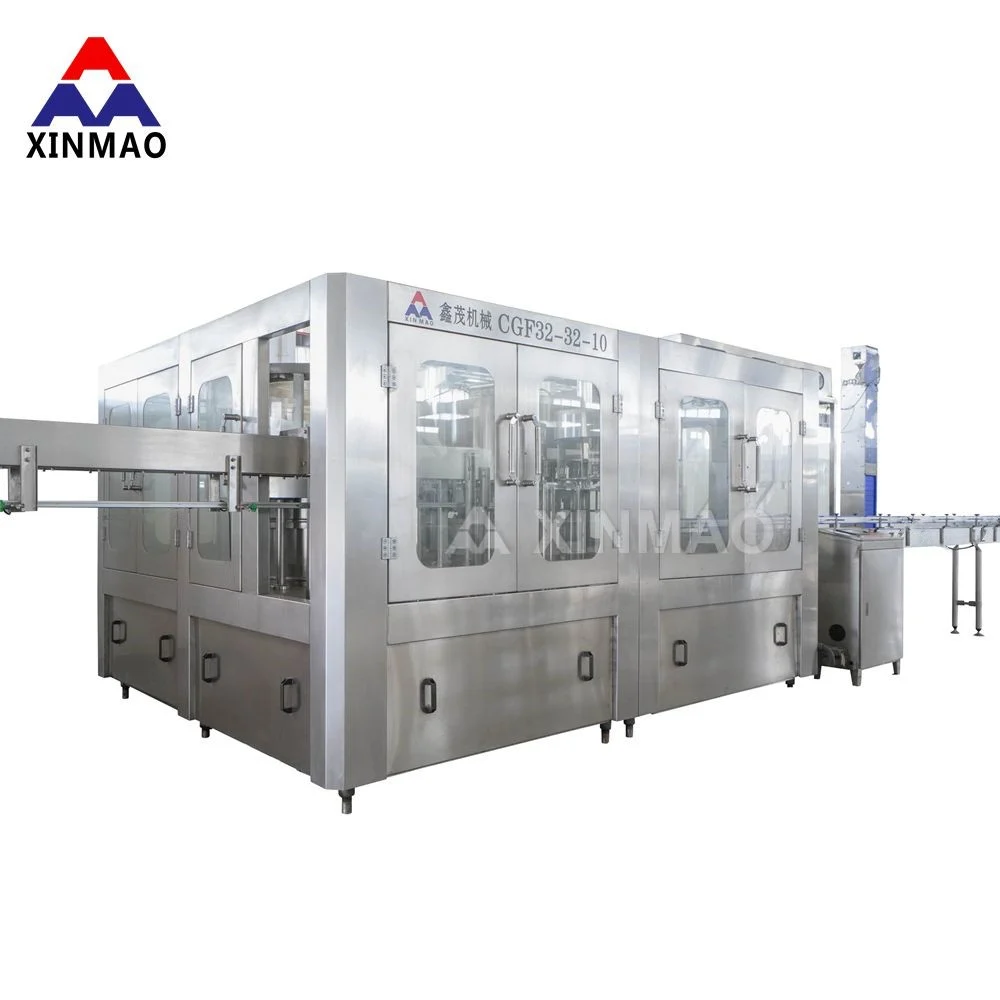
Why Pre-Shipment Inspection Matters
A water bottle machine operating 16 hours daily accumulates roughly 5,000 hours annually. Filling valves cycle 500,000+ times per year, conveyor bearings rotate continuously, pneumatic cylinders actuate with each bottle transfer. Poor manufacturing quality accelerates wear from years to months. Pre-shipment inspection catches material substitutions, assembly shortcuts, and calibration errors that specification sheets conceal.
The inspection window is narrow. Once the machine ships through customs to the buyer's facility, discovering a manufacturing defect means either accepting reduced performance or navigating warranty claims while production halts. The cost of two inspection days is negligible compared to commissioning delays measured in weeks of lost production.
A South American bottler's factory inspection revealed the conveyor motor was a local substitute rated for 30% less continuous duty than specified. Discovery delayed shipment five days while the correct motor was installed — five days versus three weeks of downtime from a burnout three months into production.
Mechanical Component Inspection
Filling Valve Verification
Filling valves are the most mechanically active components. At 5,000 BPH with 20 heads, each valve cycles 250 times hourly and roughly 600,000 times annually. Material quality and assembly precision directly determine maintenance frequency.
Inspection confirms all product-contact surfaces are 304 or 316 stainless — not lower-grade stainless that pits under continuous water exposure. Valve seals must be EPDM or silicone food-grade material, not generic rubber compounds that leach taste and degrade within months. Visual inspection under magnification identifies molding defects — flash lines, surface porosity — causing premature leakage.
Request valve disassembly and reassembly demonstration. The procedure should use common tools, not specialized factory tooling making field maintenance supplier-dependent. A valve requiring 20 minutes to rebuild is acceptable; one requiring two hours and alignment jigs indicates problematic maintenance costs.
Frame Weld Quality
The frame supports filling carousel weight while resisting motor drive vibration. Weld quality determines whether the structure remains rigid or develops fatigue cracks.
Inspect frame welds for uniform bead profile, absence of undercut, and complete fusion at intersections. Stainless welds on product-contact sections should show pickling paste treatment — the dull gray surface indicating post-weld passivation restoring corrosion resistance. Untreated stainless welds develop rust within months in humid bottling environments. Xinmao Machinery provides pickled and passivated fabrication as standard.
Conveyor Transfer Alignment
Bottle conveyors transferring containers between rinsing, filling, and capping require precise alignment with star-wheel transfer points. Even 2–3mm misalignment causes repeated jams — not catastrophic but accumulating enough stoppages to reduce throughput 5–10%.
Request a dry-run demonstration with the buyer's actual bottle type for 5–10 minutes of continuous operation. Bottles should transfer smoothly between conveyor and star wheel without hesitation, scraping, or audible clicking indicating guide rail contact.
Electrical and Control Verification
PLC and HMI Testing
The PLC managing fill timing, conveyor speed, cap feeding, safety interlocks, and fault detection must match specification: Siemens, Allen-Bradley, or equivalent industrial-grade controller with spare parts availability in the buyer's region.
Test fault simulation: trigger a bottle jam sensor, cap feeder empty condition, and emergency stop. The HMI should clearly identify fault location and type — not a generic message requiring guesswork. Request complete electrical schematics and PLC program backup enabling local technician troubleshooting.
Motor and Drive Verification
Motor nameplates should confirm manufacturer and IP protection class. Motors in washdown areas need IP65 or IP66 for water jet resistance. Variable frequency drives controlling conveyor speed must be accessible for parameter adjustment without removing enclosure covers.
Factory Capability Assessment
The factory visit reveals quality indicators beyond specifications: organized component storage, calibrated assembly tooling with documented records, in-process inspection with written acceptance criteria, and finished machine testing areas matching the buyer's installation conditions.
Request contact information for customers operating the specific model for 12+ months in the buyer's region. Regional references validate adaptability to local power quality, ambient temperature, and technical support conditions.
Frequently Asked Questions
What are the most critical components to inspect on a water bottle machine?
Filling valves (material grade, seal quality, disassembly ease), frame welds (passivation uniformity), and conveyor alignment at transfer points. These three categories identify most premature wear defects. Electrical component verification confirms specification compliance.
Should buyers visit the factory or hire third-party inspectors?
Factory visits allow direct manufacturing quality observation. Third-party inspectors provide independent assessment without travel cost. Combining third-party pre-inspection with buyer factory visit for final acceptance provides comprehensive verification.
What documentation should accompany machine shipment?
Complete electrical schematics, PLC program backup, assembly drawings with parts list, maintenance manual with service intervals, spare parts catalog, and factory test report. Xinmao Machinery provides comprehensive documentation with every delivery.
How should factory acceptance testing be conducted?
Run the machine with the buyer's actual bottle type at specified speed for two continuous hours minimum. Measure fill consistency across all heads, cap torque on 50+ sample bottles, and count stoppages. Documented results provide the baseline for commissioning comparison.
What warranty terms are standard for water bottle machines?
Twelve to twenty-four months from shipment or twelve months from commissioning, whichever occurs first. Warranty covers manufacturing defects in materials and workmanship, excluding wear items (seals, O-rings, belts) and damage from improper operation.
How can buyers verify stainless steel grade during inspection?
Portable XRF analyzers provide non-destructive composition verification in seconds. The analyzer distinguishes 304 from 201 stainless through nickel content — 304 contains 8–10.5% nickel while 201 contains 3.5–5.5%, preventing material substitutions undetectable by visual inspection.