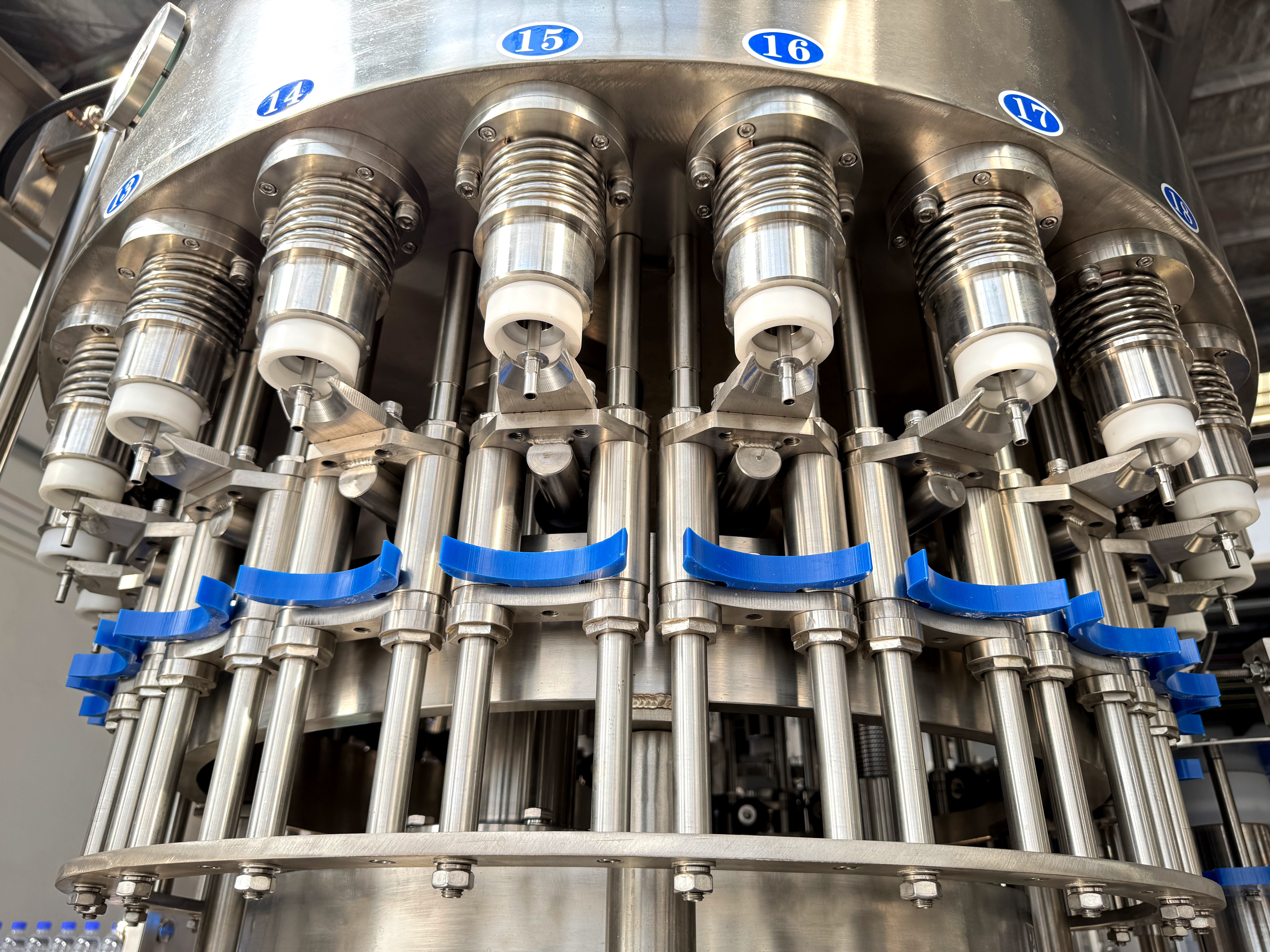
Purified Water Filling Machine Purchasing Guide: Building an Efficient and Intelligent Production Line
Faced with thousands of manufacturers and complex technical parameters, a water company ultimately chose an integrated solution that combined water treatment and filling. The production line was commissioned a full 20 days ahead of schedule after the equipment arrived.
01 Market Status and Technological Trends
The filling production line industry is in a rapid growth phase. Market data shows that the domestic filling production line market size reached 38.67 billion yuan in 2025, and is expected to exceed 43 billion yuan in 2026.
For water companies, the simple "capacity first" concept is outdated. Modern purchasing decisions focus more on equipment technical stability, customization capabilities, and full lifecycle services.
Current industry development shows several clear trends. The level of intelligence continues to improve, with some PLC intelligent control systems achieving a 95% automation rate.
These technological changes are not just about increased efficiency, but a redefinition of the entire production process.
02 Core Technical Elements of Filling Machines
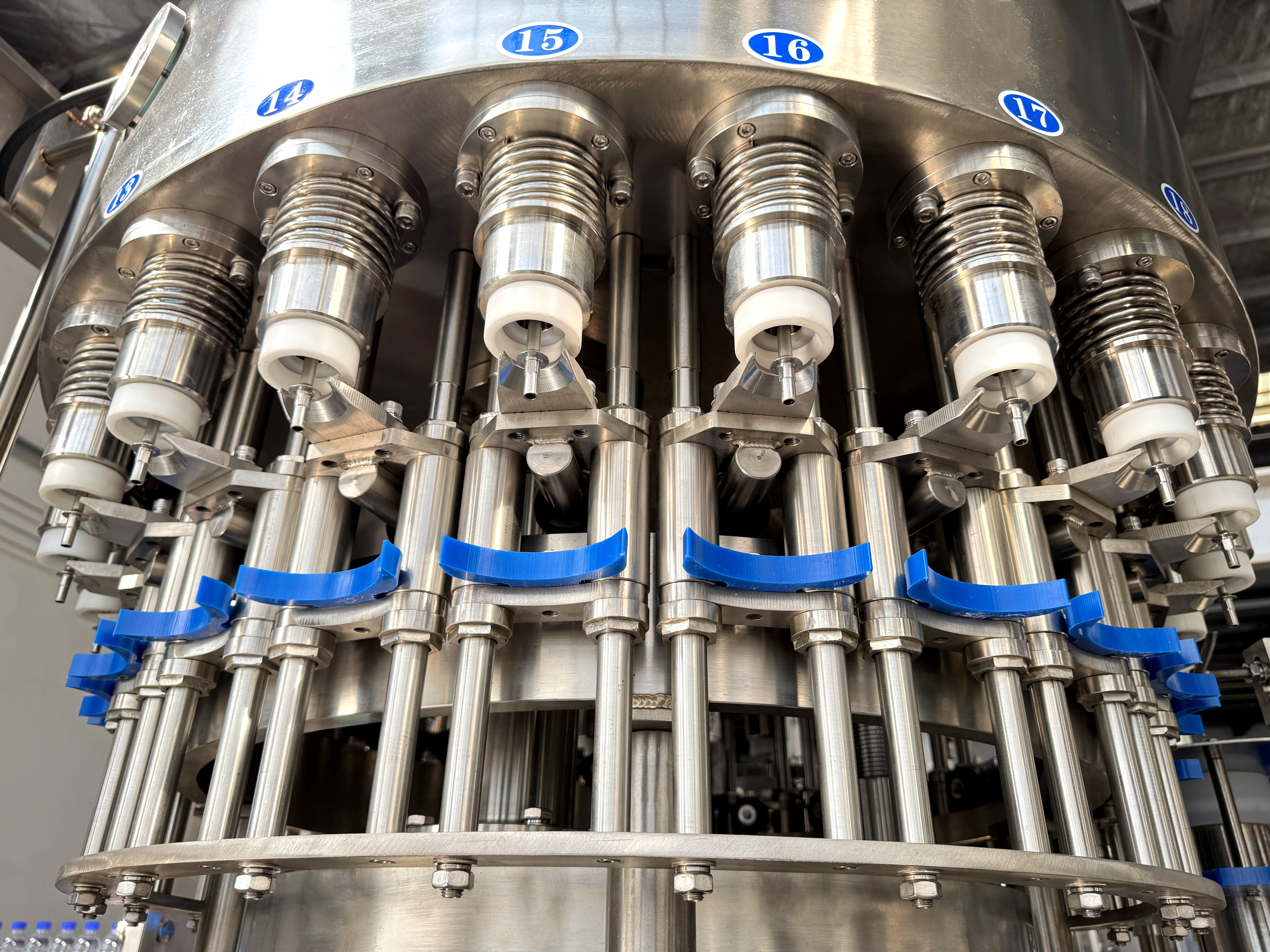
When purchasing a filling machine, companies must understand several core technical indicators. Filling accuracy is one of the core parameters for measuring equipment performance; high-end equipment can usually control the error within ±3ml.
Filling speed directly relates to the production line capacity, and there are significant differences between different specifications of equipment. For example, a common purified water filling machine can process 15,000 bottles (500ml specification) per hour.
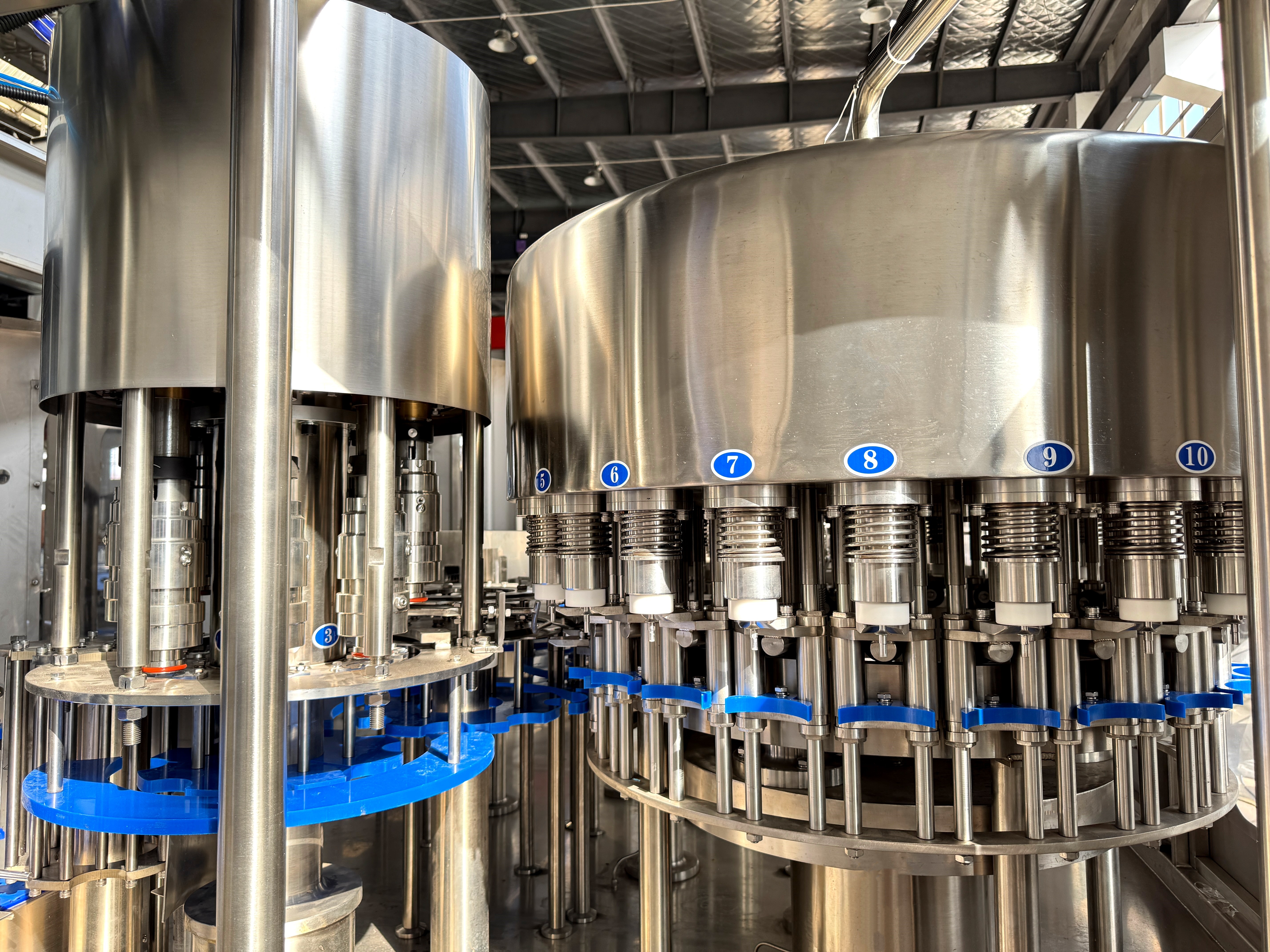
The equipment material not only affects hygiene and safety but also determines the equipment's lifespan. Food-grade 304 stainless steel has become the industry standard.
The intelligence level of the control system directly affects operational convenience and production stability. Modern equipment mostly uses PLC intelligent control systems, supporting touch screen control for human-machine interaction.
03 Purchasing Process and Key Considerations
Purchasing a filling machine should follow a systematic process. First, it is necessary to analyze your own needs, including capacity requirements, bottle specifications, and budget constraints.
According to the "2026 Food and Beverage Industry Production Equipment Procurement White Paper," the core considerations for corporate procurement have shifted to multi-dimensional comprehensive evaluation.
In the technical evaluation stage, focus on the manufacturer's core capabilities. A company located in Zhangjiagang, Jiangsu, has equipment that can reduce the conductivity of raw water from 1200 μS/cm to the ultra-pure water level of 0.055 μS/cm. Service capabilities should not be overlooked; comprehensive after-sales service can significantly reduce equipment operation and maintenance risks. It is recommended that companies choose suppliers that offer 24-hour response and free on-site maintenance within one year.
04 Mainstream Equipment Types and Application Scenarios
There are many types of filling machines, adapting to different production needs. The fully automatic three-in-one filling machine is one of the most mainstream equipment types currently available, integrating rinsing, filling, and sealing functions, with a total power consumption of only 4.5KW.
According to the filling principle, the equipment can be divided into atmospheric pressure filling machines, pressure filling machines, and vacuum filling machines. For non-carbonated beverages such as fruit juice and tea drinks, atmospheric pressure filling machines are a suitable choice.
Based on production capacity requirements, small-scale filling equipment is suitable for startups or small-scale production. These devices have relatively low investment costs and can usually fill 500-3000 bottles per hour (500ml specifications).
Equipment layout is also important; common types include in-line and rotary filling machines. In-line equipment is more compact and fully automated, capable of filling up to 200 containers per minute.
05 Water Treatment and Filling Integration Solutions
In modern water production enterprises, water treatment and filling are no longer isolated processes. The same CIP/SIP system must cover the three major modules of water production, mixing, and filling.
Integrated solutions have become an industry trend. Many leading suppliers provide both water treatment equipment and filling production lines.
Water quality directly determines the shelf life of the filled product, so the quality of front-end water treatment is crucial. The "Detailed Rules for the Review of Food Production Licenses for Liquid Foods" issued by the State Market Supervision Administration in October 2024 has included the "water treatment unit" as a key control point in the filling process.
Technologically advanced suppliers usually provide highly integrated solutions, such as integrating "blow-fill-cap" technology into a single machine, condensing bottle preform molding, sterilization, filling, and capping processes, saving 30% of floor space.
06 Risk Avoidance and Long-Term Benefits
Choosing a filling machine should not only consider current needs but also focus on long-term operation. Food safety risks are the primary consideration; it must be ensured that the equipment meets national hygiene standards, and that parts in contact with water are non-toxic, odorless, and corrosion-resistant. Common purchasing mistakes include focusing too much on the initial purchase price while neglecting the total cost of ownership. True value for money should consider factors such as equipment sales price, operating energy costs, maintenance costs, service life, and return on investment.
To avoid the embarrassment of buying equipment that can't be used, companies should choose suppliers that offer trial runs or on-site demonstrations. Ensure the equipment is compatible with your specific bottle types; different bottle types usually require changing the filling heads and bottle gripping devices.
Supply chain stability is another often overlooked factor. The timely supply of parts after equipment failure directly impacts production line downtime.
At Zhangjiagang Xinmao Machinery in China, the PLC intelligent control system is flashing a steady green light, and its 95% automation rate has increased the production efficiency of this water plant by 25% compared to traditional equipment, while reducing energy consumption by 12%.
In this factory, integrated containerized solutions are being prepared for shipment to Africa. These systems will help local communities establish their own bottled water production lines within 30 days.