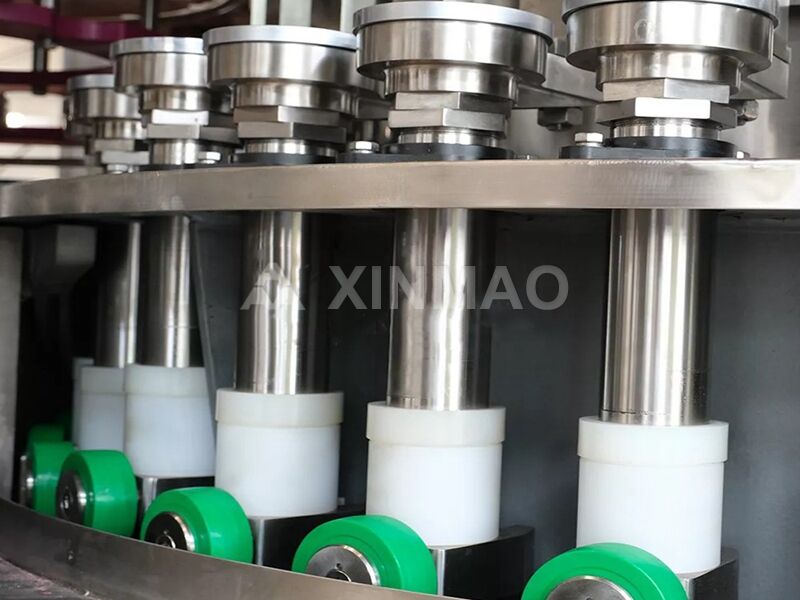
Production Speed and Capacity: BPH Performance of Glass Bottle Filling Machines
Throughput Benchmarks: Manual (5–50 BPH) vs. Automatic (100–1,200+ BPH)
Manual glass bottle fillers typically handle between 5 to 50 bottles each hour, with operators manually doing everything from filling to capping and checking quality visually. These machines work well for small batches like craft drinks, laboratory testing samples, or special edition products, but they just aren't built for regular large scale production. Automatic systems tell a different story altogether, pumping out anywhere from 100 to over 1,200 bottles per hour thanks to their smooth continuous operation. Bottles move right along through filling, sealing, and inspection without stopping. Standard rotary automatic machines can manage around 300 to 500 bottles per hour with just one person watching over them. Some high speed versions go way beyond that mark, hitting over 1,200 bottles an hour with advanced multi nozzle fillers controlled by servos. The difference in speed is massive compared to manual options. This means faster turnaround times for orders and businesses don't need to hire extra staff just to keep up with production demands.
Scalability and Line Integration for High-Volume Glass Bottle Filling Machines
Glass bottle filling machines designed with modular architecture make scaling operations much easier. When companies need more capacity, they can simply add extra filling heads, upgrade drives, or install new control modules without tearing out the whole system. These machines also work seamlessly with conveyor belts coming in from earlier stages and connect naturally to capping stations, labeling machines, and case packers at the other end. This creates complete packaging lines that handle over 500 bottles per hour consistently. Manual systems tell a different story though. They basically operate as standalone workstations. To scale production, businesses have to duplicate entire setups along with hiring more staff, which leads to management headaches and takes up precious floor space. That's why most manufacturers turn to automated solutions when they want to grow incrementally based on actual market needs rather than sticking with manual methods that only really work for small batch productions or experimental runs before commercial launch.
Labor, Training, and Operational Reliability of Glass Bottle Filling Machines
Staff Requirements: From Single-Operator Manual Units to Automated Line Supervision
Filling glass bottles manually requires someone standing right there all the time. Usually just one person handles everything at their station from placing the bottles to checking how full they are and then putting on the caps. The number of workers needed goes up exactly as production does. Want to double what gets filled? Better hire twice as many people too. Things change when automation comes into play. A single tech can watch over about ten different filling points at once thanks to systems that give instant feedback and make adjustments automatically. According to what we see across the industry, companies cut down on labor costs somewhere between 40% and 60% after switching to automated systems. That leaves employees free to do better things such as making sure processes work properly, figuring out why something went wrong, and keeping track of all the paperwork required for regulations.
Human Error Reduction and Process Consistency in Automatic Glass Bottle Filling Machines
Automated filling systems can hit around 0.5% accuracy when it comes to volume measurements, which is way better than what most manual processes manage (usually somewhere between 3% and worse). These machines work so consistently thanks to their servo controlled nozzles, properly set flow meters, and those smart PLC systems that keep everything locked down regardless of who's operating them or what shift it is. The vision inspection part really shines too. It catches bad bottles and tosses them aside at over 120 units every minute. Plus, all this gets logged automatically for tracking purposes without needing extra setup work. Facilities that have these systems running typically see about 98% time on the clock without breakdowns and cut back on product recalls by roughly 30%. Makes sense really since there's just less room for human error once these precision tools take over.
Total Cost of Ownership: ROI Analysis for Glass Bottle Filling Machines
Upfront Investment: Manual ($2K–$15K) vs. Automatic ($25K–$250K+) Glass Bottle Filling Machines
The upfront costs for hardware can vary quite a bit. Manual systems typically cost between two thousand and fifteen thousand dollars. Automated setups generally begin at about twenty-five thousand and can go all the way up past two hundred fifty thousand for those really fast, fully integrated production lines. But here's something interesting most people overlook. The actual purchase price makes up just thirty five to forty five percent of what companies end up spending overall. What really eats into budgets are things like labor expenses, material waste, energy bills, and equipment downtime. This is exactly where automation shines brightest. Research shows that going automated cuts down on labor costs by almost half. Factories also see around thirty eight percent fewer losses from errors when they switch to automated processes. Plus, machines designed with efficiency in mind can slash resource usage by as much as twenty five percent compared to traditional methods.
Break-Even Timeline: Labor Savings, Downtime Reduction, and Output Gains
Most producers recover their automation investment within 12–18 months through three compounding advantages:
- Labor efficiency: One operator manages an entire automated line versus five or more for equivalent manual output
- Downtime mitigation: Sealed environments and Clean-in-Place (CIP) systems prevent 92% of contamination-related stoppages
-
Revenue acceleration: A 500+ BPH line operating at 50% utilization generates approximately $18,000 in monthly revenue
Over a 10-year lifecycle, cumulative operational savings average $740,000–making automation not just a productivity upgrade, but a strategic capital decision for growth-oriented producers.
Hygiene, Precision, and Regulatory Compliance in Glass Bottle Filling Machines
Sealed Environments, Clean-in-Place (CIP), and FDA/CE Compliance for Sensitive Products
When it comes to making medicines, supplements, or drinks that need protection from oxygen exposure, keeping things clean simply cannot be ignored. The automated glass bottle filler machines work with completely sealed environments during the filling process. These seals stop dust particles and tiny germs from getting inside while the product is being filled. This helps maintain sterile conditions needed for injections or keeps those health boosters fresh on store shelves. There are also these built-in Clean-in-Place systems that run special cleaning fluids through all the inner parts of the machine without needing to take anything apart. Tests show this cuts down bad bacteria risks almost entirely, around 99.7%, and saves a lot of time too compared to old fashioned hand cleaning methods. Most facilities report saving between 60% to 70% of their cleaning time when switching to these automated systems.
Getting regulations right isn't something companies can hope for later it's absolutely necessary now. The FDA's 21 CFR Part 11 rules in the US and the CE marking requirements from the EU Machinery Directive demand processes that can be audited and repeated consistently when it comes to controlling contamination and maintaining data integrity. What happens if companies ignore these rules? The cost is huge. Product recalls typically run around $740k based on research from the Ponemon Institute. That kind of financial hit makes smart businesses rethink their approach. Today's modern equipment integrates Clean-In-Place systems with electronic batch records and timestamped audit trails. These features transform what used to be tedious regulatory paperwork into actual working processes that build customer confidence and help products reach markets faster without all the red tape headaches.
| Compliance Feature | Function | Impact |
|---|---|---|
| Sealed Chambers | Blocks external contaminants | Prevents product spoilage in aseptic filling |
| CIP Integration | Automated sterilization cycles | Ensures repeatable sanitation, eliminates human error |
| Audit Trails | Digital process logging | Meets FDA/CE documentation requirements |
FAQs: Glass Bottle Filling Machines
What is the efficiency difference between manual and automatic glass bottle filling machines?
Manual machines manage 5-50 bottles per hour, ideal for small batches. Automatic systems can fill 100 to over 1,200 bottles per hour offering a more efficient solution for large-scale production.
How does automation reduce labor costs?
Automated systems require fewer employees, reducing labor costs by 40-60% as one technician can oversee multiple automated stations compared to several workers needed for manual operation.
What are the regulatory compliance benefits of automated glass bottle filling machines?
Automated systems include CIP and electronic audit trails fitting into FDA & CE compliance frameworks, reducing contamination risks and supporting consistent data documentation.
Table of Contents
- Production Speed and Capacity: BPH Performance of Glass Bottle Filling Machines
- Labor, Training, and Operational Reliability of Glass Bottle Filling Machines
- Total Cost of Ownership: ROI Analysis for Glass Bottle Filling Machines
- Hygiene, Precision, and Regulatory Compliance in Glass Bottle Filling Machines
- FAQs: Glass Bottle Filling Machines