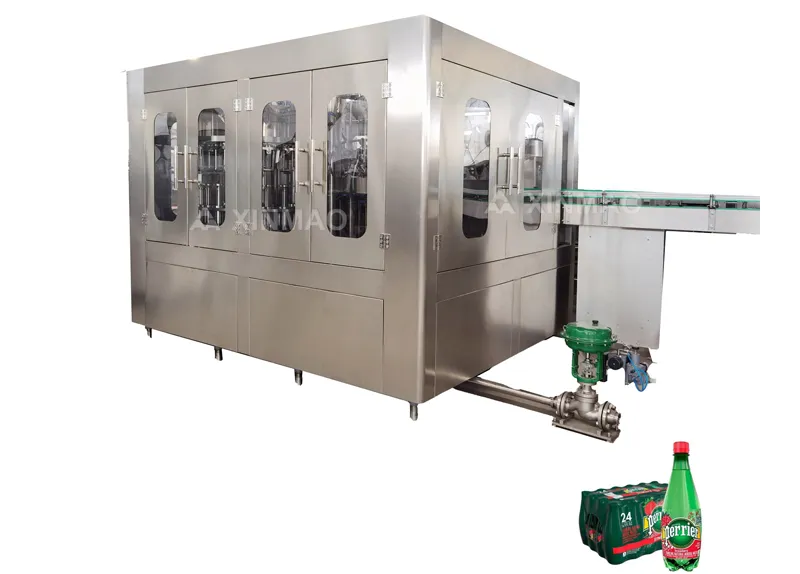
Where to Buy a Beverage Filling Machine with CE Certified Quality?
A buyer compared two beverage filling machine quotes and picked the cheaper one stamped "CE." On delivery, the declaration named a directive that did not apply, the manual was a loose translation, and the guard interlocks were undocumented. The line passed a local check only because the inspector caught it; a real audit would have stopped production. That story is the warning behind "where to buy": the certificate is only as good as the proof behind it. CE is a claim backed by a file, and the buyer's job is to read the file.
CE Is a Claim, Not a Stamp of Perfection
A beverage filling machine with CE marking carries the manufacturer's declaration that it meets EU law. The mark itself is not issued by a government. Quality lives in the technical file — the design risk assessment, test reports, and standards list — that must exist and be producible on demand.
Start With the Supplier, Not the Catalog
The right source is one that can show the file, name the standards, and survive a video audit of the build. A beverage filling machine from a shop that dodges those questions is a liability, however low the price.
Risk Analysis: What Goes Wrong
Fake or Irrelevant Certificates
Some marks copy the logo without a real declaration. A beverage filling machine may cite a directive for a different product. Verify the document names the right machinery, the right directives, and a dated signature, not just a picture of a sticker.
No Notified Body Involvement
Higher-risk machines need a notified body's input for certain directives. A beverage filling machine that skips a required NB opinion fails the moment a real assessor looks. Know which directives your line triggers and ask for the NB number.
Hygiene and Safety Gaps
A cert that ignores ISO 14159 or ISO 13849 leaves microbial and injury risk. A beverage filling machine with thin hygiene design fails food audit even with a CE mark. The mark covers the law; it does not guarantee your process will pass.
Professional Analysis: What CE Covers
The Machinery Directive
The EU Machinery Directive 2006/42/EC sets essential health and safety requirements for a beverage filling machine — guards, controls, stability, ergonomics. Low Voltage and EMC directives add electrical and interference rules. Together they form the CE baseline for selling into the EU.
Self-Declaration Versus Notified Body
Many machines are self-declared by the maker under the Machinery Directive. Others, where a relevant hazard standard is not fully applied, need a notified body. A beverage filling machine buyer should ask which path was taken and see the evidence, because the path affects how much to trust the claim.
Beyond CE: The Quality System
ISO 9001 shows the maker runs a consistent process; ISO 22000 shows food-safety management around the line. A beverage filling machine from an ISO 9001 shop is easier to audit and support, even outside the EU where CE does not apply.
Authoritative References and Standards
Compliance Framework
The EU Machinery Directive 2006/42/EC, with the Low Voltage and EMC directives, defines CE for a beverage filling machine. ANSI B11 and NFPA 79 cover machine and electrical safety in the US; OSHA sets workplace rules. ISO 14159 and 3-A guide hygienic design; ISO 13849 covers safety controls. Request the specific standards in the technical file.
Verifying the Claim
A serious supplier provides the declaration, the standards list, test or assessment records, and the manual in the target language. XM Filler, for example, ships these documents with each beverage filling machine so the buyer can confirm scope before the container lands, rather than discovering gaps at commissioning.
Practical Value: A Sourcing Checklist
How to Select a Supplier
Shortlist makers that publish cert scope and name standards. For a beverage filling machine, ask for the CE declaration, ISO 9001, and food-safety alignment, plus two reference plants running your product. A video factory walk and a sample of the technical file separate real suppliers from sticker-only ones.
Verification Steps
Read the declaration: does it name the machine model, the directives, and a signature? Confirm a notified body number if the hazard level requires one. For a beverage filling machine, cross-check the standards list against ISO 14159 and ISO 13849 so hygiene and safety are actually covered.
Commissioning and Use
On arrival, run a clean-in-place check, a guard and E-stop function test, and a timed output trial. A beverage filling machine should match its file; any gap means a non-conformance to record and resolve before full production.
Maintenance and Records
Keep the cert file with the line serial, recalibrate sensors, and sanitize on schedule. XM Filler provides setup cards and spare lists so the beverage filling machine stays compliant and the audit trail stays intact across years of operation.
Real-World Takeaway
A beverage filling machine with CE quality is bought from a supplier who can prove the claim — declaration, standards, tests, and a supportable file. Vetting the document beats trusting the sticker, and the effort pays back at the first audit that could have shut a weaker line down.
Frequently Asked Questions
Question: Does CE guarantee a beverage filling machine is safe?
Answer: CE means the maker declares the machine meets EU essential requirements, backed by a technical file. It is not a government quality grade. A beverage filling machine can carry CE and still have poor hygiene if ISO 14159 was not applied. Verify the declaration, standards, and tests rather than trusting the mark alone.
Question: How can a fake CE certificate be spotted?
Answer: Check that the declaration names the exact machine model, the correct directives (Machinery, LV, EMC), a date, and a signed responsible person. A beverage filling machine with only a logo sticker, a vague translation, or a directive for another product is a red flag. Ask for the technical file and a notified body number if the hazard level requires one.
Question: Is a notified body always required for CE?
Answer: Not always. Many machines are self-declared by the maker under the Machinery Directive when relevant harmonized standards are fully applied. A beverage filling machine with incomplete safety-standard coverage may need a notified body's opinion. Ask which path was used and see the evidence before purchase.
Question: What standards should the technical file list?
Answer: Expect the Machinery Directive 2006/42/EC with LV and EMC, plus ISO 14159 for hygienic design, ISO 13849 for safety controls, and ideally ISO 9001 and ISO 22000 for process and food safety. A beverage filling machine file missing hygiene and control standards leaves audit gaps the buyer must close.
Question: Should a buyer audit the factory?
Answer: Yes, at least by video, and on-site for large orders. A beverage filling machine supplier should show the build, the test rig, and the cert file without hesitation. Reference plants running the same product confirm real performance. XM Filler shares these documents and references so the buyer verifies scope before the machine ships.
Question: Does CE matter outside the EU?
Answer: CE is an EU requirement, but the discipline behind it — guards, E-stops, hygienic design, documented risk assessment — helps anywhere. A beverage filling machine built to CE scope with ISO 9001 support is easier to audit and maintain globally. US sites still follow ANSI B11, NFPA 79, and OSHA, which a good CE file often already addresses.