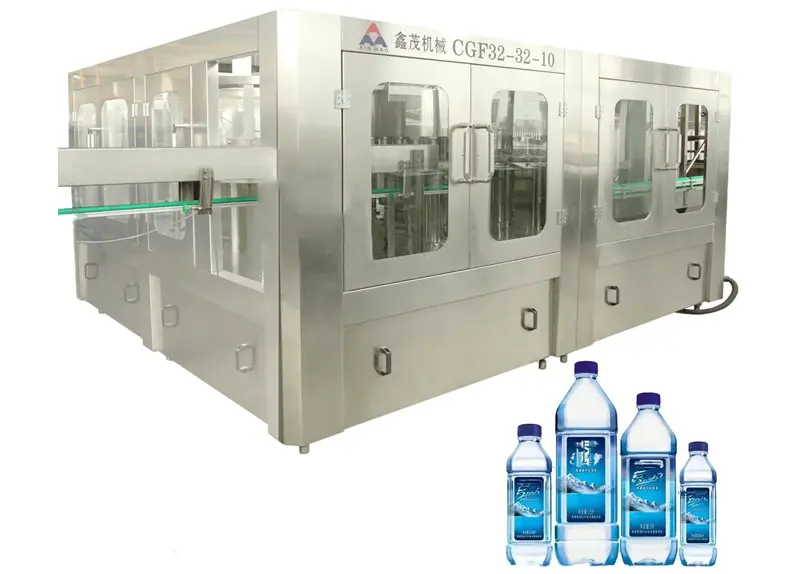
A bottled-water plant ran three shifts and still missed peak orders because operators hand-fed bottles at the infeed and eyeballed fill levels. The team installed an air-conveyor infeed, a monoblock water bottle filling machine, and inline fill-level cameras. Headcount stayed flat; output rose about 40% in a month. The gain came from removing manual handling and inspection, not from adding people. That case is the whole answer: labor-free output grows when the machine absorbs the steps humans were doing slowly.
Output Is a System, Not a Spigot
A faster filler alone does little if bottles are fed by hand and rejects are found by eye. A water bottle filling machine lifts throughput when it sits inside an automated chain — infeed, fill, cap, inspect, pack — with humans supervising, not touching every bottle.
Automate the Repetitive, Keep People for Judgment
Machines excel at steady, repeated motion; people excel at setup, judgment, and exception handling. A water bottle filling machine designed this way frees labor for changeovers and quality calls instead of feeding a hopper.
Risk Analysis: Where Gains Leak Away
Changeover Downtime
Switching bottle sizes can eat hours if formats are manual. A water bottle filling machine without quick-change tooling forces a crew to rebuild the line, killing the output gain. Format change should be minutes, not a shift.
Manual Quality Checks
Eyeballing fill level misses low fills that become complaints. A water bottle filling machine without inline inspection pushes that labor onto people who cannot watch every bottle. Cameras and rejectors do it at line speed.
CIP Labor
Clean-in-place should run with minimal staffing. A water bottle filling machine with poor CIP access needs a crew with brushes. Automate the cycle and the labor saving extends past production into sanitation.
Data Blindness
Without run data, stalls go unexplained. A water bottle filling machine that cannot report stops hides the real bottleneck, so output plateaus while everyone guesses. Visibility is part of the labor-free gain.
Professional Analysis: The Levers
Monoblock Integration
A rinser-filler-capper in one frame removes transfers between stations, a classic labor and time sink. A water bottle filling machine in monoblock form needs fewer hands to keep bottles moving and fewer points where a bottle jams and needs retrieval.
Servo and Timing Control
Servo drives hold fill time and cap torque tightly, cutting variation and rejects. A water bottle filling machine with consistent timing needs less operator tweaking, so the line holds rate through the shift without constant attention.
Inline Inspection and Reject
Fill-level, cap-presence, and date cameras catch faults at speed. A water bottle filling machine paired with rejectors removes the human inspector from the conveyor. The labor moves to reviewing trends, not watching bottles.
OEE Thinking
Overall Equipment Effectiveness multiplies availability, performance, and quality. A water bottle filling machine that cuts changeover, rejects, and stalls raises all three, and the output climbs without adding people — that is the math behind the 40% case.
Authoritative References and Standards
Quality and Food Safety
ISO 9001 shows the maker runs a consistent process, useful when a water bottle filling machine must repeat results across shifts. ISO 22000 sets the food-safety system; ISO 14159 shapes hygienic design so CIP is fast and complete. These support both output and compliance.
Machine Safety and Compliance
ISO 13849 covers safety controls — guards, interlocks, E-stops — on a water bottle filling machine. ANSI B11 and NFPA 79 address machine and electrical safety in the US; OSHA sets operator rules. CE marking ties the machine to the EU Machinery Directive 2006/42/EC with Low Voltage and EMC. Request the certs in writing.
Practical Value: Specifying the Gain
How to Select
Choose monoblock layout, servo fill and capper, quick-change tooling, and inline inspection. A water bottle filling machine should offer automated infeed and CIP plus run-data export. Get a reference run showing output per operator, not just nameplate speed.
Inspection on Arrival
Run a timed trial recording real bottles per labor hour, reject rate, and changeover time. For a water bottle filling machine, confirm guard function and CIP cycle. Keep certs and the test report with the line serial for the audit and the business case.
Safe Use Steps
Train operators on setup, guards, and E-stop; let the machine run the repeatable work. A water bottle filling machine should alarm on jams and deviations so one supervisor covers more line. Never defeat interlocks to chase uptime; stops cost less than injuries.
Care and Maintenance
Sanitize on schedule, recalibrate load cells, and act on trend data before breakdowns. XM Filler provides setup cards, spare lists, and data-export notes so the water bottle filling machine sustains higher output with the same crew and avoids surprise downtime.
Real-World Takeaway
A water bottle filling machine boosts output without more labor by absorbing feeding, filling, capping, and inspection into one automated, monitored chain. Spec monoblock, servo, inline checks, and quick changeover; train people for judgment, not repetition — and throughput climbs while headcount holds.
Frequently Asked Questions
Question: How does a filler raise output without hiring?
Answer: It removes manual handling and inspection from the line. A water bottle filling machine in monoblock form with automated infeed, servo fill, and inline cameras lets one supervisor cover more throughput. The gain comes from the machine doing repeated steps, while people handle setup and exceptions. Output rises, headcount stays flat.
Question: What is the biggest labor drain a machine removes?
Answer: Hand-feeding bottles and eyeballing fill levels. A water bottle filling machine with an air-conveyor infeed and fill-level cameras deletes both, catching low fills at line speed that human checks miss. Changeover and CIP labor are the next targets; quick-change tooling and automated CIP keep the crew small across the whole shift.
Question: Does automation hurt product quality?
Answer: Done right it helps. A water bottle filling machine with servo timing and inline rejectors holds fill and cap consistency better than manual checks, cutting complaints. Quality labor moves from watching bottles to reviewing trends. The risk is poor CIP access, so specify ISO 14159 hygienic design and verify the clean cycle on arrival.
Question: How is the gain measured?
Answer: Track bottles per labor hour, reject rate, and changeover time on a timed trial, then watch OEE — availability, performance, quality — in normal runs. A water bottle filling machine should export run data so stalls are explained, not guessed. The business case is the same crew producing more saleable cases per shift.
Question: Which standards should the machine meet?
Answer: ISO 9001 for process consistency, ISO 22000 for food safety, ISO 14159 for hygienic design, ISO 13849 for safety controls, ANSI B11 and NFPA 79 for machine and electrical safety, OSHA alignment, and CE under the EU Machinery Directive with LV and EMC. XM Filler supplies these so the water bottle filling machine passes audit.
Question: Can an older line be upgraded instead of replaced?
Answer: Often yes. Adding automated infeed, inline inspection, and servo upgrades to an existing water bottle filling machine recovers much of the gain at lower cost than a full buy. Confirm the frame supports quick-change tooling and data export first. XM Filler can assess the current line and propose the smallest change that frees the needed labor.