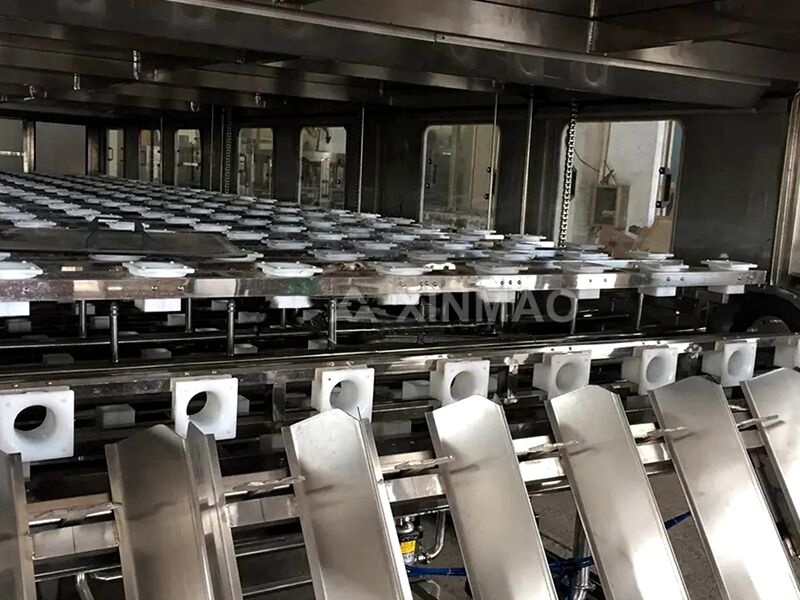
Ինչպես է 5 գալոնանոց ջրի լցման սարքը ապահովում բարելի մաքրությունը
Բազմաստիճան լվացման համակարգի հասկացությունը ջրի բարելների համար
Ժամանակակից 5 գալոնանոց ջրի լցման սարքերը օգտագործում են չորս փուլային մաքրման գործընթաց՝ բարելի մաքրությունն ապահովելու համար.
- Նախագանձական Հունարկում : Բարձր ճնշման (80–100 PSI) ջրի շիթեր 50–60°C ջերմաստիճանում հեռացնում են տեսանելի աղբը և մասնիկները:
- Լվացող միջոցով լվացում : Ալկալիական լուծույթը (200 մաս միլիոնից կոնցենտրացիա) լուծում է օրգանական մնացորդներն ու հանքային նստվածքները 140°F (60°C) ջերմաստիճանում:
- Դեզինֆեկցիոն լվացում : Պերքսեթիկ թթվի կամ օզոնային մշակման միջոցով վերացվում է միկրոօրգանիզմների 99,8%-ը՝ ապահովելով լրիվ արդյունավետություն 90–120 վայրկյան շփման ժամանակի ընթացքում:
- Վերջնական լվացում : Հակառակ օսմոսի ջուրը հեռացնում է քիմիական հետքերը՝ կանխելով խաչաձև աղտոտումը և համապատասխանելով NSF/ANSI 372 ստանդարտներին:
Այս համակարգային մոտեցումը համարյա մաքրում է դժվարամատչելի տարածքները, ինչպիսիք են թելային բացվածքներն ու կոճղերի տակի ճեղքերը, որոնք հաճախ բաց են թողնվում ձեռքով մաքրման ընթացքում:
Բարելի մաքրման և ախտահանման սարքավորումների հիմնական բաղադրիչներ
| Komponent | Ֆունկցիա | Շահագործման մետրիկ |
|---|---|---|
| Բարձր ճնշման ռոտացիոն շիթեր | Ապահովում են 360° ներքին ցայտեցում | 15–20 գալոն/րոպե հոսքի արագություն |
| Ջերմաստիճանը վերահսկվող տանկեր | Պահպանեք ախտահանիչի օպտիմալ արդյունավետություն | ±2°F ճշգրտություն |
| UV-C ստուգման սենսորներ | Հետևեք ախտահանիչի կոնցենտրացիային իրական ժամանակում | 0.5 ppm ճշգրտություն |
Սննդի համար նախատեսված ստեղնաձողից պատրաստված՝ այս մասերը դիմադրում են կոռոզիային կոշտ մաքրողներից և կանխում են բակտերիալ բիոֆիլմի առաջացումը՝ ապահովելով երկարաժամկետ հիգիենա և տևականություն:
Ավտոմատացման դերը անընդհատ բարելի հիգիենայում
Ավտոմատ համակարգերը պահում են միկրոբային մակարդակը 5 CFU/մլ-ի սահմաններում՝ ճշգրիտ կառավարման մեխանիզմների շնորհիվ.
- Կայունության ժամանակի ճշգրտություն՝ ±0.5 վայրկյան ցիկլի համար
- Իրական ժամանակում հաղորդակցության հսկում՝ համոզվելու համար լվացման ջրի մաքրության մեջ
- 3D լազերային սկանավորում, որը ավտոմատ մերժում է վնասված բարրելները
Այս հատկանիշները թույլ են տալիս 99,9% պրոցեսի համապատասխանություն՝ գերազանցելով ձեռքով կատարվող համակարգերը, որոնք ըստ FDA-ի 2023 թ. սանիտարական փորձաքննությունների միջինում համապատասխանում են միայն 78%
Համեմատություն՝ միաստիճան և բազմաստիճան մաքրում
| Մետրիկ | Մեկ փուլային | Բազմատարած | Դարձնել |
|---|---|---|---|
| Մնացորդային աղտոտող նյութեր | 120 CFU/մլ | <8 CFU/մլ | 93% |
| Ջրի ծախս | 50 լ/բարրել | 28 լ/բարրել | 44% |
| を超えցիկ ժամանակ | 120 վայրկյան | 90 վայրկյան | 25% |
Բազմաստիճան համակարգերը նաև 38% կրճատում են քիմիական նյութերի օգտագործումը և համապատասխանում են ISO 22000 սննդի անվտանգության պահանջներին՝ առաջարկելով գերազանց արդյունավետություն և համապատասխանություն միաստիճան համակարգերի համեմատ:
Արդյո՞ք լրիվ ավտոմատացումը միշտ ավելի լավ է փոքր ծավալով արտադրողների համար
Չնայած 5 գալոնանոց ջրի լցման մեքենաները հասնում են 98% որակի առաջին փուլի ցուցանիշի, փոքր ծավալով գործողությունները (<500 բարրել/օր) դեմ են առնում մի շարք մարտահրավերների.
- 60% ավելի բարձր պահպանման արժեք մեկ միավորի հաշվարկով
- Վերադարձի ժամանակահատվածը միջինում 18 ամիս է՝ համեմատած միջին ծավալով արտադրողների 8 ամսվա հետ
- 35% ավելի երկար փոփոխման ժամանակահատված տարբեր տարողների միջև անցնելիս
Փոքր ծավալով շիշ լցնողների համար, ովքեր ճկունություն են պահանջում, կիսաավտոմատ համակարգերը ձեռքով ստուգման կայաններով հաճախ ավելի տնտեսապես շահավետ և ճկուն լուծում են ապահովում
5 Գալոնանոց Ջրի Լցման Մեքենաներում Բազմաստիճան Լվացման Գիտական Հիմքը
Բազմաստիճան լվացման գործընթացի քայլ առ քայլ վերլուծություն
Ժամանակակից 5 գալոնանոց ջրի լցման մեքենաներում մաքրման ստանդարտը հետևում է գիտապես հիմնավորված հաջորդականության.
- Նախագանձական Հունարկում հեռացնում է խոշոր աղտոտումները՝ օգտագործելով տաք ջուր (50–60°C)
- Ալկալիական քիմիական լվացում քայքայում է սպիտակուցները, ճարպերը և հանքային աղերը:
- Լվացում բարձր ճնշման տակ (3–5 բար) ապահովում է լվացամիջոցի լրիվ հեռացում՝ առանց HDPE բարրելներին վնաս հասցնելու:
- Դեզինֆեկցիոն լոգանոց պերացետիկ թթվով կամ քլոր պարունակող լուծույթներով ապահովում է միկրոօրգանիզմների երկարատև ոչնչացում:
Այս գործընթացը ներդրումից առաջ ապահովում է 99 % տեսանելի մասնիկների հեռացում՝ սննդի անվտանգության համապատասխանության աուդիտներով հաստատված:
Ջրի ճնշման, ջերմաստիճանի և սանիտարիզատորի կոնտակտային ժամանակի օպտիմալացում
Արդյունավետ ստերիլացումը կախված է երեք կարևորագույն գործոնների հավասարակշռությունից.
- Ջրի ճնշում պետք է մնա 5 բարից ցածր՝ բարրելների դեֆորմացիան խուսափելու համար՝ միաժամանակ ապահովելով հիմնական մաքրում:
- Տաքություն պահպանվում է 150–180 °F սահմաններում՝ առավելագույնի հասցնելով ախտահանման արդյունավետությունը՝ առանց խախտելու պլաստիկի ամբողջականությունը:
- Ախտահանողի շփման ժամանակ համապատասխանում է NSF/ANSI 55 ստանդարտների կողմից պահանջվող նվազագույն 30 վայրկյանին:
±5°F կամ ±15 PSI-ից շեղումները կարող են նվազեցնել հարուցիչների ոչնչացման արագությունը 22–37%-ով, ինչը ընդգծում է խիստ շահագործման վերահսկողության անհրաժեշտությունը:
Ուսումնասիրություն. Միկրոբային բեռի նվազումը եռակի լվացման ստանդարտներից հետո
2023 թվականին կատարված վերլուծություն 12,000 մշակված բարրելների վերաբերյալ՝ համեմատելով մաքրման մեթոդները.
| Մետրիկ | Մեկ փուլային | Եռաստիճան |
|---|---|---|
| CFU/մլ միջին նվազում | 87% | 99.8% |
| Նյութի հայտնաբերում | 18% | 0.3% |
| Կառուցման ժամանակ | 90 վայրկյան | 140 վայրկյան |
Եռաստիճան համակարգերը ապահովում են դեղագործական մաքրության մակարդակ, թեև 35% ավելի երկար ցիկլային ժամանակը կարող է ազդել մեծ ծավալով արտադրողների արտադրողականության վրա:
Ինտեգրված 5 գալոնանոց ջրի լցման գծերի ավտոմատացված նախագիծ
Լվացման, լցման և փակման փուլերի սինխրոնացում
5 գալոնանոց ջրի լցման վերջին սերնդի սարքերը միավորում են մաքրումը, լցումը և կնքումը մեկ համակարգում: Երբ այս քայլերը իրականանում են մեկը մյուսի կողքին՝ առանձին տարածքների փոխարեն, ապա նվազում է անօթերի շարժման ընթացքում ներխուժման հնարավորությունը: Ամբողջ գործընթացը սկսվում է հիմնական լվացումից ալկալիական լուծույթներով, ապա անցնում է օզոնային մշակմանը, հետո ճշգրիտ ծավալի վերահսկմանը լցման ընթացքում և, վերջապես, ինքնաշխատ կերպով կիրառվող խիտ կնքումներին: Ինչպես նշված է անցյալ տարվա «Food Engineering» ամսագրում, այս տեսակի կառուցվածքը անընդհատ աշխատում է 100-ից 99 դեպքում, մինչդեռ ինտեգրված չհամակարգերը հասնում են մոտ 87% հուսալիության: Այն բուլկերի գործարանների համար, որոնք ամենօրյա մեծ ծավալներ են մշակում, այս լրացուցիչ տոկոսային ցուցանիշները ժամանակի ընթացքում մեծ նշանակություն ունեն:
Նյութերի տեղափոխման համակարգեր 5 գալոնանոց բարելների արդյունավետ մշակման համար
Ավտոմատացված փոխադրիչները և գրիպերները կարող են կատարել բարրելների փոխադրում, պտտում և դիրքավորում՝ նվազագույնի հասցնելով մարդու միջամտությունը: Խողովակների շարժման համակարգերը ապահովում են 300-400 բարրել/ժամ արտադրողականություն, իսկ էրգոնոմիկ լցման կայանները 50% կրճատում են օպերատորի հոգնածությունը (OSHA 2022 համապատասխանության տվյալներ), ինչը դրանք դարձնում է իդեալական աճող արտադրությունների համար:
Բարրելների մաքրման և սանիտարական մշակման սարքավորումների մոդուլային նախագծման միտումներ
Մոդուլային կառուցվածքների շնորհիվ օպերատորները կարող են շատ հեշտությամբ հարմարեցնել 5 գալոնանոց ջրի լցման սարքերը՝ պարզապես ավելացնելով կամ հեռացնելով լրացուցիչ մասեր: Փոխարինեք, օրինակ, նախնական լվացման ֆիլտրերին կամ նույնիսկ UV անտիսեպտիկ սարքերին, որոնք ոչնչացնում են բակտերիաները: Ամենալավ մասն այն է, որ քանի որ ամեն ինչ միանում է ստանդարտ միացումներով, փոփոխություններ կատարելը շատ երկար չի տևում: Շատերը նշում են, որ ամբողջ գործընթացը տևում է մոտ չորս ժամ: Եվ երբ ժամանում է արդիականացման պահը, ընկերությունները նաև մեծ գումարներ են խնայում: Խոսքը 30-ից 50 տոկոսով պակաս ծախսերի մասին է ընթանում համեմատած նոր սարքավորումներ գնելու հետ: Այն ձեռնարկությունների համար, որոնք սեզոնային են փոխում արտադրությունը, այս տեսակի ճկունությունը մեծ տարբերություն է կազմում:
5 Գալոնանոց Ջրի Լցման Մեքենաների Կատարողականի և Կայունության Չափորոշիչներ
Մաքրության Չափում՝ ATP Թեստավորում և Նստվածքների Վերլուծություն
ԱՏՖ ստուգման միջոցով լվացման հետևանքով մաքրությունը հաստատվում է, որտեղ առաջատար սարքերը հասնում են 5 ՌԼՄ (Հարաբերական լույսի միավորներ)՝ համապատասխանելով NSF/ANSI 372 չափանիշին: Լվացամիջոցի 0,5 մ.դ. (միլիոներորդ մաս) մնացորդների հայտնաբերմամբ զուգակցված այս մեթոդները միկրոբայական կրկնադիր աղտոտման ռիսկը 87%-ով կրճատում են միայն տեսողական ստուգումների համեմատ (Ջրի որակի ասոցիացիա, 2023):
Անվտանգություն, Ցիկլի տևողություն և Պահպանման հաճախադեպություն՝ Իրական տվյալներից
Ավտոմատացված համակարգերը պահպանում են 92% միջին անվտանգություն 450 ժամվա արտադրական ցիկլերի ընթացքում, օրական մշակելով 500-ից ավելի բարրելներ՝ նվազագույն լցման տատանումներով (2%): Կանխատեսող սենսորները հայտնաբերում են կորուստի վաղ նշանները՝ ինչպիսիք են լծակի վատթարացումը կամ պոմպի անարդյունավետությունը, սարքի ձախողմանից առաջ 48-72 ժամ տեղեկացնելով և անպլանավոր պահպանումը 34%-ով կրճատելով (Բարեխմի արտադրության ամսագիր, 2022):
Ջրի վերամշակում և կայունություն բազմաստիճան լվացման համակարգերում
Փակ ցիկլով ֆիլտրացումը վերականգնում է 65% պրոցեսային ջուր՝ պահպանելով 65°C ջերմաստիճանը, որն անհրաժեշտ է արդյունավետ սանիտարական մշակման համար: Ըստ 2023 թվականի կյանքի ցիկլի գնահատման՝ սա տողի համար տարեկան ջրի օգտագործումը 1,2 միլիոն լիտրով կրճատում է մեկ անցումային համակարգերի համեմատ, հասնելով 0,78 ջրային արդյունավետության վարկանիշի ISO 46001 ստանդարտների համաձայն:
Հաճախակի տրվող հարցեր (FAQ)
Ո՞ր մաքրման գործընթացն է օգտագործվում 5 գալոնայի ջրի լցման մեքենայում:
Մեքենան օգտագործում է չորս փուլային մաքրման գործընթաց, որն ընդգրկում է նախնական լվացում, լվացամիջոցով լվացում, սանիտարական լվացում և վերջնական լվացում՝ բարդելի մաքրությունն ապահովելու համար:
Ինչպե՞ս է ավտոմատացումը բարելավում բարդելի հիգիենան 5 գալոնայի ջրի լցման մեքենաներում:
Ավտոմատացումը պահպանում է միկրոբային մակարդակները ճշգրիտ կառավարման մեխանիզմների միջոցով, բարելավելով համադրումը և գերազանցելով ձեռքով համակարգերը:
Արդյո՞ք բազմաստիճան մաքրման գործընթացը ավելի արդյունավետ է, քան միաստիճանը:
Այո, բազմաստիճան մաքրումը գնահատելիորեն կրճատում է մնացորդային աղտոտիչները, ջրի սպառումը և ցիկլի տևողությունը՝ միաստիճան գործընթացների համեմատ:
Բովանդակության աղյուսակ
- Ինչպես է 5 գալոնանոց ջրի լցման սարքը ապահովում բարելի մաքրությունը
- 5 Գալոնանոց Ջրի Լցման Մեքենաներում Բազմաստիճան Լվացման Գիտական Հիմքը
- Ինտեգրված 5 գալոնանոց ջրի լցման գծերի ավտոմատացված նախագիծ
-
5 Գալոնանոց Ջրի Լցման Մեքենաների Կատարողականի և Կայունության Չափորոշիչներ
- Մաքրության Չափում՝ ATP Թեստավորում և Նստվածքների Վերլուծություն
- Անվտանգություն, Ցիկլի տևողություն և Պահպանման հաճախադեպություն՝ Իրական տվյալներից
- Ջրի վերամշակում և կայունություն բազմաստիճան լվացման համակարգերում
- Հաճախակի տրվող հարցեր (FAQ)
- Ո՞ր մաքրման գործընթացն է օգտագործվում 5 գալոնայի ջրի լցման մեքենայում:
- Ինչպե՞ս է ավտոմատացումը բարելավում բարդելի հիգիենան 5 գալոնայի ջրի լցման մեքենաներում:
- Արդյո՞ք բազմաստիճան մաքրման գործընթացը ավելի արդյունավետ է, քան միաստիճանը: