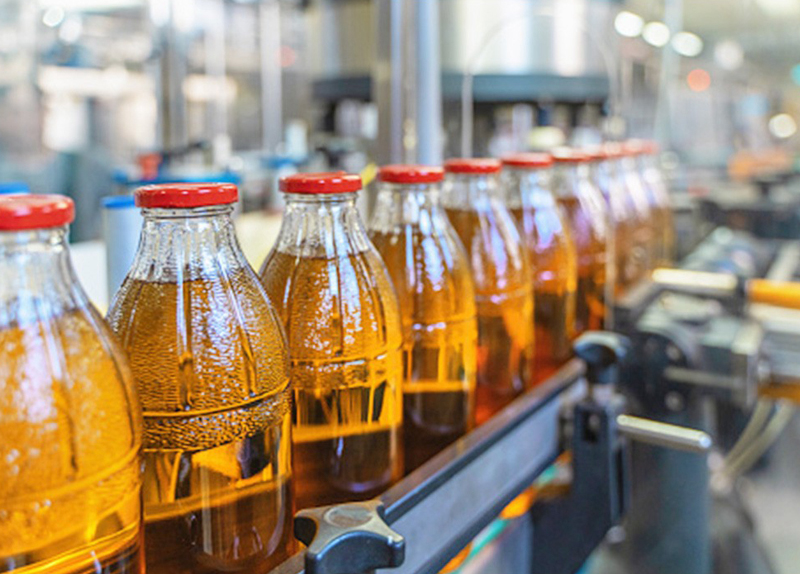
The Engineering of High-Speed Bottling
A water bottle filling machine above 20,000 BPH represents a fundamentally different engineering challenge than 3,000–8,000 BPH regional systems. At 36,000 BPH — filling 10 bottles per second — mechanical tolerances, control response time, and material handling must function with packaging-line precision rather than filling-machine pace.
The bottleneck shifts from filling to supporting systems. A 36,000 BPH filler achieves nothing if water treatment cannot supply 18,000 liters hourly, if bottle unscramblers feed below demand rate, or if labelers and shrink wrappers cannot match output. High-speed bottling is a systems integration challenge, not a machine purchase decision.
Bottle quality becomes critically important at high speeds. A 500ml PET bottle with consistent neck finish dimensions and uniform wall thickness transfers reliably through star wheels at speed. Bottles from different suppliers with minor dimensional variations cause jam frequencies that are manageable at 5,000 BPH but catastrophic at 30,000 BPH — one jam every 500 bottles at high speed means a stoppage every three minutes.
A Middle Eastern exporter upgraded from 10,000 BPH to a 24,000 BPH Xinmao monoblock. The filler installed in eight days. The water treatment expansion — adding a second reverse osmosis train and doubling storage — required four additional weeks. High-speed filling demands high-speed everything upstream and downstream.
Water Treatment for High-Volume
Supply Capacity
A 24,000 BPH water bottle filling machine at 500ml processes 12,000 liters hourly. Water treatment must deliver continuously, with buffer storage absorbing flow rate fluctuations between treatment and filler consumption. The buffer tank — typically 5,000–10,000 liters above 20,000 BPH — holds 20–40 minutes of production volume.
RO membrane sizing accounts for recovery rate. At 75% recovery, producing 12,000 liters of treated water requires 16,000 liters of feed water hourly. Municipal supply must support this demand; regions with intermittent supply need raw water storage for 4–8 hours of production.
Multi-Stage Treatment
High-speed bottling requires multi-barrier treatment: multimedia filtration removing suspended solids, activated carbon removing chlorine and organics, softening or anti-scalant dosing preventing membrane scaling, RO or nanofiltration producing purified water, and UV sterilization with ozone dosing for residual disinfection.
Xinmao Machinery supplies integrated water treatment matched to filler capacity, eliminating compatibility issues from separate sourcing. Single-supplier responsibility simplifies commissioning and ongoing support.
High-Speed Monoblock Configuration
Rotary Carousel Design
High-speed rotary fillers mount 40–80 valves on a carousel rotating at 3–8 RPM. At 36,000 BPH with 72 valves, each valve fills roughly 8 bottles per minute — about 7.5 seconds per cycle. Many valves operating simultaneously at moderate individual speed enable high total throughput.
Gravity flow for still water uses product tank level control maintaining consistent head pressure across all valves. Flow control nozzles minimize turbulence — critical when the same machine platform fills juice or dairy products that foam at high fill rates.
Neck-handling transport through star-wheel transfers provides positive bottle control at conveyor speeds exceeding 60 meters per minute. A bottle separating from the conveyor at this speed creates a projectile hazard; neck grippers eliminate this risk.
Servo-Driven Capping
Electromagnetic capping heads with individual torque control apply consistent tightening across 8–16 positions on the capping carousel. Each head's torque is set electronically and monitored cycle-by-cycle. Out-of-tolerance caps trigger automatic rejection downstream.
"No bottle no capping" interlocks prevent cap dispensing without bottles. Magnetic clutch systems disengage at target torque, preventing damage from misaligned caps or damaged threads.
Downstream Integration
Labeling and Coding
Roll-fed labelers at 30,000+ BPH use servo-driven cutters synchronized to bottle position sensors. Registration tolerance tightens at speed — small timing errors at 10 bottles per second produce larger positional errors than at 3 bottles per second.
Inkjet or laser coders printing dates and batch numbers synchronize with bottle flow. Automatic verification cameras downstream identify unreadable codes before packaging, preventing costly rework of palletized product with missing traceability.
Shrink Wrapping and Palletizing
High-speed shrink wrappers package bottles into multi-packs matching filler output without accumulation buffers. Robotic palletizers with multi-axis arms build pallet patterns continuously, with layer-forming conveyors organizing flow into rectangular arrays for stable loads.
The entire downstream system needs one consistent speed from filler through palletizer. A mismatch creates accumulation disrupting continuous flow. Line integration engineering — determining conveyor speeds, accumulation capacity, and machine spacing — separates systems achieving 90%+ OEE from those at 70–75% despite individual machines meeting specifications.
Frequently Asked Questions
What water treatment capacity is needed for a high-speed filling machine?
Treatment capacity should exceed filler consumption by 15–20%. A 24,000 BPH (500ml) line needs approximately 14,000–15,000 liters hourly of treated water. The buffer tank should hold 20–40 minutes of production volume.
How does bottle quality affect high-speed performance?
Dimensional consistency — neck finish diameter, base stability, wall uniformity — directly determines jam frequency and achievable throughput. Bottles with ±0.3mm neck tolerance run acceptably; ±0.8mm causes repeated transfer jams. High-speed lines demand higher bottle quality.
What is typical OEE for a high-speed filling line?
World-class lines achieve 85–90% OEE (availability × performance × quality). Lines at 70–80% typically suffer from upstream/downstream balance issues. Xinmao Machinery provides complete line integration engineering for OEE optimization.
How many operators does a high-speed bottling line require?
A 20,000–36,000 BPH line requires three to four operators: filler line controller, packaging supervisor, and one to two material handlers managing bottle, cap, and label replenishment.
What causes the most high-speed filling downtime?
Bottle jams at transfer points (35–40% of stoppages), label roll changes (15–20%), cap feeder jams (10–15%), and water treatment alarms (10%). Systematic root cause analysis of stoppage data identifies improvements producing the greatest OEE gains.
How long does high-speed line commissioning take?
Installation: 10–15 working days. Utility connections: 5–7 days. Dry-run testing: 3–5 days. Production ramp-up: 2–4 weeks. Total timeline from delivery to sustained rated-speed operation spans six to eight weeks.