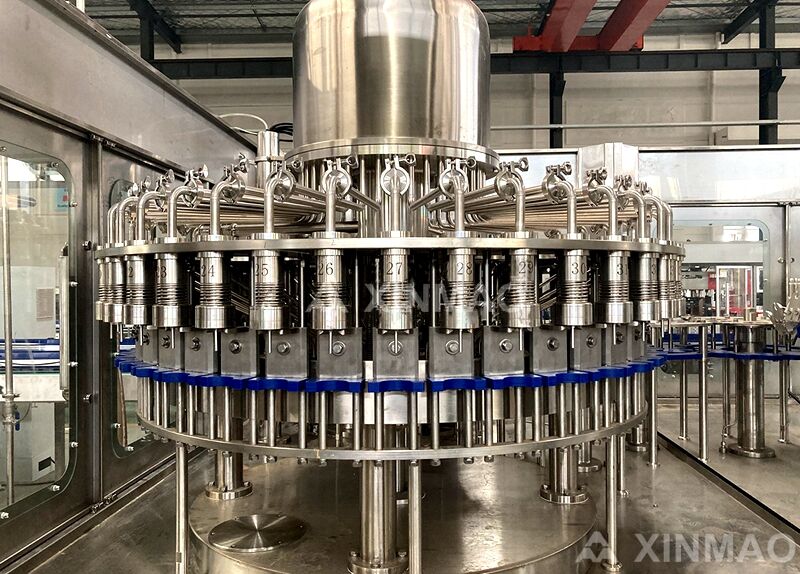
Juice-Specific Challenges Driving Filler Design
Acidity, pulp content, and thermal sensitivity: how juice properties dictate material compatibility and process control
The acidic nature of most juices, typically ranging from pH 2.8 to 4.0, means manufacturers must use 316L grade stainless steel parts if they want to stop corrosion issues. Pulp content adds another layer of complexity since it needs carefully calibrated nozzles to keep particles from settling in the filling lines. Citrus juices with high viscosity (around or over 1200 centipoise) require special piston fillers equipped with larger nozzles just to maintain proper flow rates. Apple juice without pulp works fine in standard gravity feed systems though. Temperature control becomes a real challenge too. Fresh juices start developing brown spots quickly when exposed to temperatures above 50 degrees Celsius, so plants usually opt for nitrogen flushed cold fill methods to preserve both taste and appearance. All these factors related to chemistry, texture, and heat management mean facilities have to follow strict FDA 21 CFR regulations along with EHEDG guidelines. Surface finishes need to stay below 0.8 micrometers roughness average to reduce bacteria buildup and prevent spoilage throughout production runs.
Hot-fill requirements (75–95°C) for shelf-stable juice: balancing microbial safety, flavor retention, and container integrity
The hot fill process achieves that critical 5 log reduction needed for products to sit on shelves without refrigeration, but it creates some serious challenges for packaging design. PET bottles need special pressure balancing systems to stop them from collapsing inward when cooled down after filling. Glass containers are another story altogether, requiring careful temperature control during heating that stays under 5 degrees Celsius per second to avoid cracking. Getting temperatures right matters a lot. If they drop below 85 degrees Celsius, certain bacteria like Alicyclobacillus can still survive and ruin the product. But push past 92 degrees and things start breaking down nutritionally too fast. We lose about 15% of thiamine and get unwanted caramelization effects in fructose that mess with flavor profiles. Today's juice filling machines handle these tricky requirements using precise timing controls. They hold the juice at around 185 degrees Fahrenheit (which is exactly 85 degrees Celsius) for between 30 to 45 seconds before bringing it down quickly. This method keeps those important aromatic compounds such as limonene intact while making sure the containers seal properly under pressure so they maintain their shape throughout storage and transport.
PET Bottle Compatibility with Juice Filling Machines
Preventing thermal deformation and neck distortion during hot filling: temperature limits, pressure compensation, and servo-controlled dwell timing
The glass transition point of PET around 70 degrees Celsius falls short of what's needed for typical hot-fill juice operations which run between 75 to 95 degrees. This temperature gap creates serious risks of thermal deformation during processing. Modern juice filling equipment addresses these issues through several built-in protections. First off, they use nitrogen pressure systems to prevent vacuum collapses. Then there are those servo controlled valves that keep bottles from sitting too long under heat, cutting down on overall exposure time. And let's not forget about the infrared sensors constantly checking bottle temps on the fly. If things get too hot (anything above 85 degrees for regular PET bottles), the whole line just stops automatically. All these features work together to maintain fill accuracy within half a percent even when running at blistering speeds of up to 12 thousand bottles per hour. Most importantly, they stop neck deformation problems that would otherwise mess up seals and cause all sorts of headaches later on during capping operations.
Sealing reliability on compressible PET necks: nozzle design, force calibration, and elastomer compatibility for juice contact
When PET bottles are sealed, their necks tend to compress under pressure, which means the actuation system needs to work differently compared to what's used for rigid glass containers. Most juice filling operations have settled on conical nozzles combined with actuators that limit force between about 15 to 25 Newtons. This range provides sufficient pressure for creating those tight, leak-proof seals while avoiding any lasting damage to the bottle shape. Choosing the right elastomers matters just as much. Fluoroelastomer gaskets stand up much better against citric acid and pulp sticking problems than regular EPDM or silicone alternatives. For even greater durability over time, many manufacturers now implement dual stage progressive cavity sealing methods that significantly boost equipment lifespan and reduce maintenance headaches down the line.
| Sealing Phase | Function | Juice Compatibility Feature |
|---|---|---|
| Primary | Immediate air-tight closure | Acid-resistant polymer coating |
| Secondary | Long-term integrity | Micro-textured surface preventing pulp buildup |
| Validated through thermal cycling tests simulating 12-month shelf life, this configuration achieves <0.01% leak rates—even with high-pulp orange or mango blends. |
Glass Bottle Compatibility with Juice Filling Machines
Mitigating thermal shock in glass: pre-heating, controlled cooling zones, and precision handling for consistent fill accuracy
Glass bottles can really struggle with thermal shock problems during hot-fill juice processing, particularly when they face those sudden temperature changes above 75 degrees Celsius. To handle this issue properly, manufacturers typically implement three main approaches. First up are preheating tunnels that slowly bring the bottle temperature up to around 60 degrees before filling starts, which helps reduce expansion stress. Then there's the controlled cooling phase where temperatures drop at about 1 to 2 degrees per minute after filling, preventing those tiny cracks from forming. Lastly, precision grip mechanisms keep the bottles centered during fast transfers through production lines, so nothing gets broken by impacts. The filling process stays pretty accurate too, staying within plus or minus half a percent even when temperatures fluctuate. This is possible because of those servo-controlled nozzles that retract properly and flow meters that adjust for pressure changes. All these measures not only meet important industry standards like ASTM D1209 and ISO 8555 but also make sure the juice stays safe and lasts longer on store shelves.
FAQ
What material is recommended for juice filling equipment to prevent corrosion?
316L grade stainless steel is recommended to prevent corrosion due to the acidic nature of most juices.
What are the challenges of hot filling juice in PET bottles?
PET bottles are prone to thermal deformation and neck distortion during hot filling, requiring special temperature limits, pressure compensation systems, and servo-controlled dwell timing.
How do glass bottles handle temperature changes during juice filling?
Glass bottles use preheating tunnels, controlled cooling zones, and precision handling to mitigate thermal shock during juice filling.